DIVERSEartLA 2026
The Biennials and Art Institutions in the Contemporary Art Ecosystem
DIVERSEartLA 2026 is a living examination of how contemporary art circulates, interfaces, and evolves across a global ecosystem of biennials and art institutions. This year, we present seven international Biennials, including Gwangju Biennial (Korea), Cuenca Biennial (Ecuador), NYLAAT Triennial (New York), SACO Biennial (Chile), and NoMade Biennial along with other significant platforms and leading institutions, all positioned within a shared ecological frame.
Since its founding in 1895, the Venice Biennale has remained the most influential model. After World War II, biennials and triennials across cities like São Paulo, Istanbul, and Johannesburg expanded global representation, embracing social critique and experimental media while navigating tensions around inclusion, markets, and cultural diplomacy.
Biennials invite urgency, experimentation, and immediacy. They illuminate emergent practices, foster cross-disciplinary collaboration, and host field-wide dialogues beyond the walls of traditional museums.
Art institutions provide durable memory, methodological rigor, and sustained programming, ensuring innovations are archived, contextualized, and accessible to future generations. Together, they form a dynamic continuum: sparks of innovation followed by reflection, stewardship, and dissemination, keeping the field responsive to diverse publics.
In Latin America and other regions contending with rapid sociopolitical change, biennials are re-emerging as laboratories of critical thought. They read and rewrite the conflicts of our time, migration, memory, community, body sovereignty, and territory, while foregrounding sustainability and resilience.
This edition pays particular attention to place: how venues, geography, and local communities shape biennial and museum activities, and how those activities, in turn, shape place through curatorial interventions, community projects, and participatory formats. You may encounter AGUAS, and other works that foreground care, connection, and collective action as a mode of inquiry and transformation.
DIVERSEartLA is curated by Marisa Caichiolo
Casablanca Biennal 2026
(Morocco, Africa)
Project: AGUAS
Artist: Eugenia Vargas Pereira
Curator: Marisa Caichiolo
Booth 112
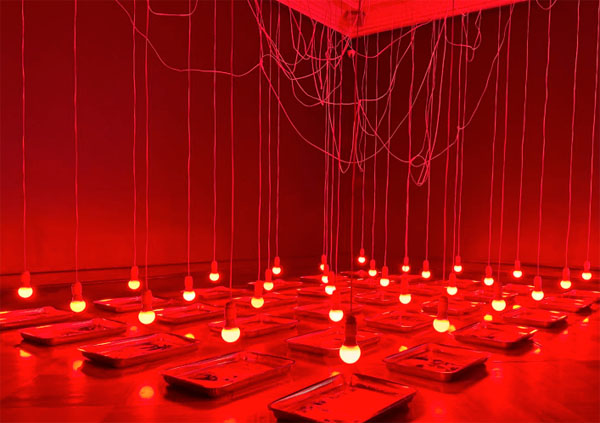
AGUAS is an ongoing exploration of rivers, inviting community participation through a ritual of river cleansing. For DIVERSEartLA, the artist presents AGUAS, centered on the Los Angeles River. Volunteers take selfies, which are placed in developing trays, becoming fleeting images that emerge and fade—mirroring our fragile connection to the natural world. Each participant becomes a visual narrator, witnessing the flow of the environment and the interdependence of humans and nature.
AGUAS is not just a meditation on environmental change; it is a collaborative act of care, listening, and restoration.
Eugenia Vargas Pereira has participated in numerous Biennials, including the Havana Biennial, Aperto X Venice Biennale, XX Biennial of Photography in Mexico City, Biennale Rotterdam, Casablanca Biennale, and the 50th Venice Biennale, among others.
Gwangju Biennial
(Korea)
Project: The Roads in You
Artist: Yoon Chung Han
Curator: Ho Tzu Nyen
Booth 113
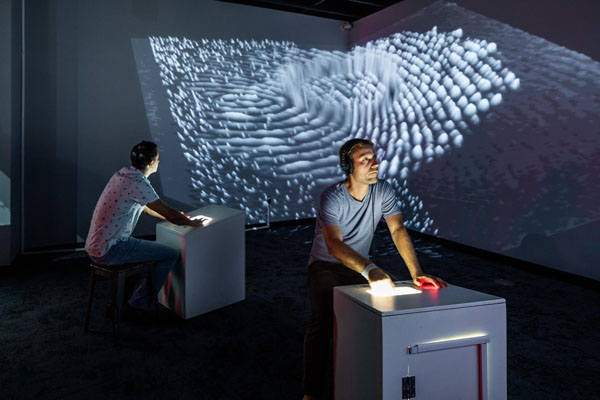
The Roads in You (formerly Roads of Your Veins) is an interactive biometric data artwork that invites participants to scan their veins and discover the roads that trace their unique vein patterns. Vein data, one of the most intriguing forms of biometric information, reveal intricate networks whose lines resemble the roads and pathways that surround us. The comparison highlights how our vascular networks and the roads of the world share principles of connectivity, flow, and direction, yet vary in speed, intensity, and condition.
This new work examines line segmentation, vascular structure, and the parallels between inner and outer routes, veins and roads alike, diversely weaving through bodies and landscapes. Participants may export their data as a personalized keepsake in the form of 3D-printed sculptures, turning a moment of data collection into a tactile, enduring memory of the encounter.
The Roads in You invites an exploration of the relationship between individuals and their environments, revealed through hidden patterns beneath the skin, vein recognition technologies, image processing, and artificial intelligence. It also gestures toward broader possibilities: how complex datasets can be interpreted through beauty, ambiguity, and wonder.
Notes for visitors: Your participation is voluntary. All data collected is anonymized and used solely for the artistic experience and the creation of your personalized keepsake, if you opt in. The project foregrounds curiosity about how we see and measure the body, environment, and the space they share. Consider how the intimate map of your veins can illuminate connections to the world around you, and what stories emerge when art, science, and technology meet.
World Textile Art Biennial
(Miami, USA)
Project: La Rueca “Forest Memory” (Textile Installation/Video Art)
Artists: Graciela Szamrey, Estela Agüero, Laura Briñón, Alicia Cardozo, Sandra , Patricia Farías, Estela Giletta, Laura González Stutz, Silvia Liberati, Eugenia Lozada, María Inés Márquez, Mirta Quiroga, Lucía Rivoira, Carmen Roca, Marta Ruffino, María Amalia , Mónica Tonelli and Patricia Uda
Curator: Pilar Tobón
Booth 111
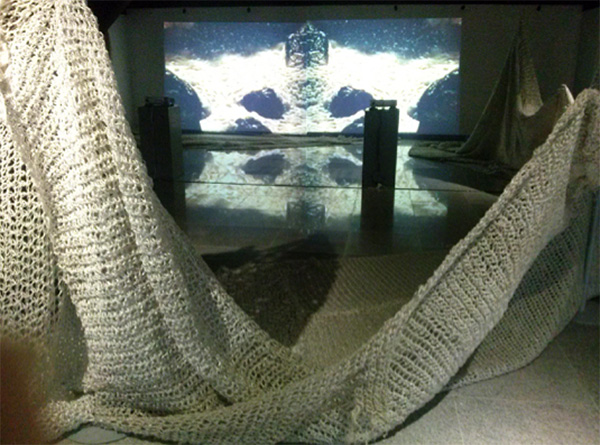
La Rueca, the first textile art space in Córdoba, Argentina, was created in 1974 by visual artist Graciela Szamrey. Artists exhibited their work through thread, the umbilical cord that, since ancient times, reveals identity. With the strength generated by love of the work, the group deeply researches the possibilities of textile art; from flat weaving to the latest contemporary trends. Threads, textures, warp and weft cross… and each finds in the other the exact half of a whole.
“Forest Memory”
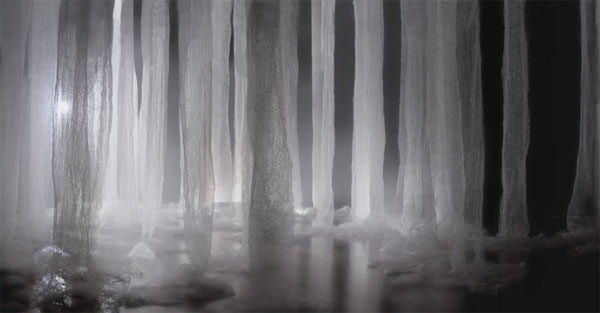
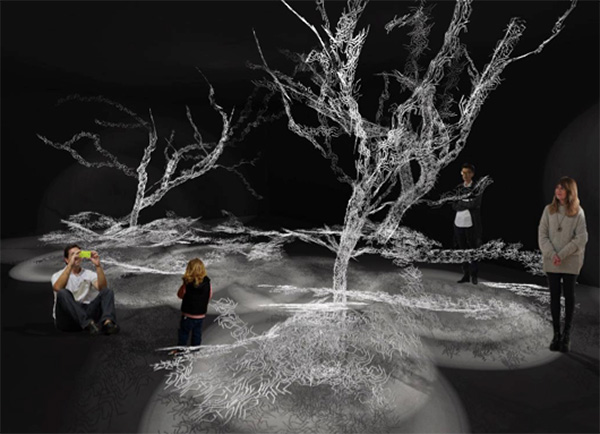
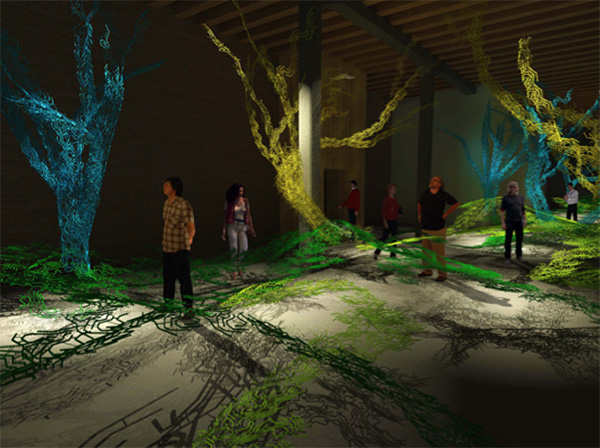
The devastation of forests in Argentina has social and environmental consequences of alarming scope. The awakening to such a local scenario led us to create this work, which, with the arrival of the pandemic, significantly broadened its meaning by connecting us with a global experience of destruction. Climate change and ecosystem degradation are some of the major aftermaths. The installation rehearses the scene of a forest in the process of fading to visualize and raise awareness about the environmental issue that affects the planet. The spectral weave of the absent forest is not only a trace that we record in memory and that saves us from the danger of oblivion but also a warning about the future that builds the ways of life of our civilizations.
Tephra Institute of Contemporary Art
(Reston, USA)
Project: Land-Escape and The Aura of Distance
Artist: Arden Bendler Browning (with programming by Matt Browning and sound composition by Phil Calato)
Co-Curators: Jonell Logan, Hannah Barco
Booth 114
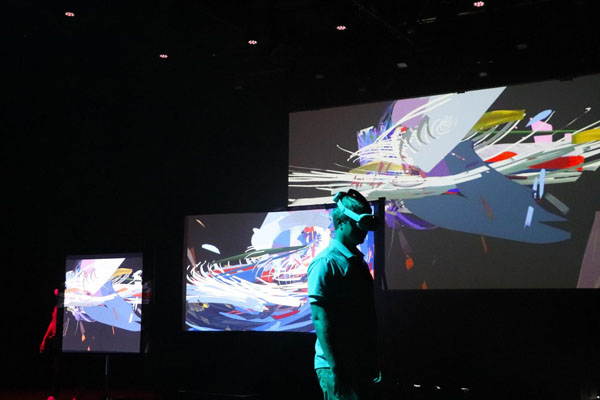
Land-escape and the Aura of Distance is a multi-faceted digital installation using projectors, colored light, Mixed Reality headsets, sound, and physical paintings.
Visitors will be able to explore a series of interactive abstract digital landscapes created by Bendler Browning in an ever-changing journey through virtual worlds. These imaginary spaces are inspired by plein air drawings made while moving through real world travels, and studio painted impressions of shelters and vistas.
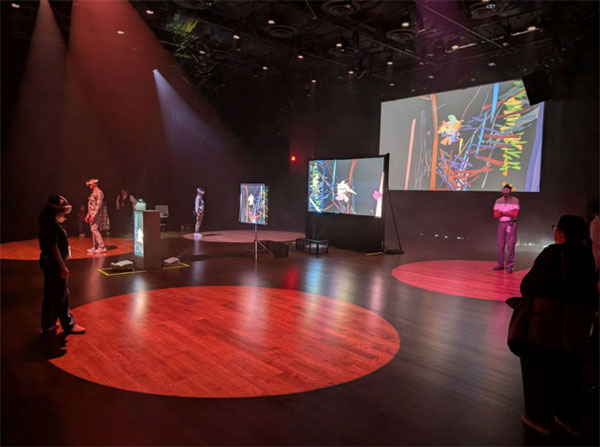
Donning a Mixed Reality headset, viewers will see their real world surroundings as well as gesturally painted virtual environments existing only within the headset. Visitors are presented with the opportunity to move through vibrant, immersive painterly environments while walking only steps within the exhibition space. The series of Mixed Reality environments offer a range of experiences, movements and viewpoints which offer agency into how much of any one place or time is possible to be seen or navigated. Environments include : windows revealing slowly drifting landscape paintings, with expanded gestures only visible through the window frames; a painting that has become the entire space of the floor and grown upward to resemble a jungle of painted marks which disappear when a visitor moves through them; a series of paintings which grow beyond their edges when an individual walks close to them; a painting growing downward from the ceiling, wondering whether the world makes any sense at all.
Within the physical environment but also visible through the headsets, visitors also encounter a series of large and small animated projections. The projections are the result of a live computer program which merges physical and virtual paintings and relays a fluid travelogue through an endless evolution of imagery. The two screens offer dual views of the same route marked by painting landmarks, but one view is a forward motion while the other is a reverse. While each individual has a personalized experience within their own headset, they can see other visitors also wearing a headset and moving through their own unique path. Participants simultaneously experience a communal space while sectioned away from each other, akin to virtual meetings and online interactions.
A pulsating soundtrack composed of natural and mechanical rhythms moves along with the projections and Mixed Reality environments. Birdsong, wind, footsteps, traffic, mixed with background punctuation from familiar artificial noise connects the installation to a hybrid sense of indoor/outdoor and organic/artificial. As the digital age and artificial intelligence continue to grow while the natural environment is threatened by climate change, this installation alludes to questions of what future landscape may be.
Marcos Ramírez Erre: Biennials of the Past, Themes of the Present
Artist: Marcos Ramírez Erre
Curator: Alma Ruiz
Booth 110
A transborder artist working between San Diego and Tijuana, Marcos Ramírez ERRE (b. 1961, Tijuana, Baja California) creates compelling works that critically explore border regions, encouraging viewers to reflect on their own connections to these spaces.
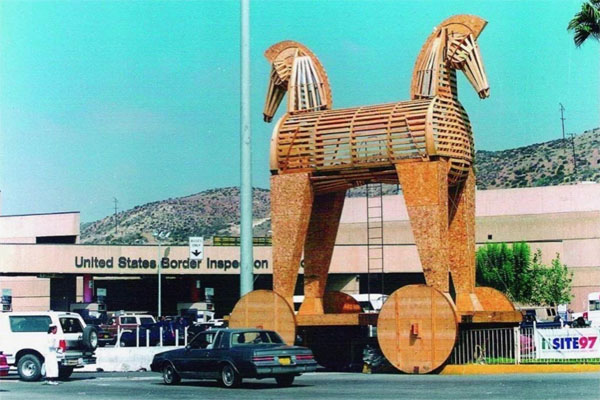
Beginning with InSite 97 in 1997 and ending with Site Santa Fe in 2014, the exhibition features works like Toy-an Horse (1997), a two-headed wooden horse straddling the border between the United States and Mexico, symbolizing the complex relationship that unites them, and Stripes and Fence Forever (Homage to Jasper Johns) (1997), a rusted metal piece resembling the border fence while referencing Jasper Johns, an American artist known for his depictions of the American flag, included in the 2000 Whitney Biennial in New York City.
In a prescient manner, ERRE’s contribution to the Second Moscow Biennale of Contemporary Art (2007), Russian Blue from The Road to Perdition series, presents a billboard-style list of countries Russia has invaded since 1921, emphasizing themes of expansionism and geopolitical conflict. This work, along with others, underscores ERRE’s bi-national identity, exemplifying what it means to live and work on both sides of the border, as described by writer and historian Edgardo Bermejo Mora.
Selected International Biennials by Marisa Caichiolo
New York Latin American Triennial – NYLAAT
(New York, USA)
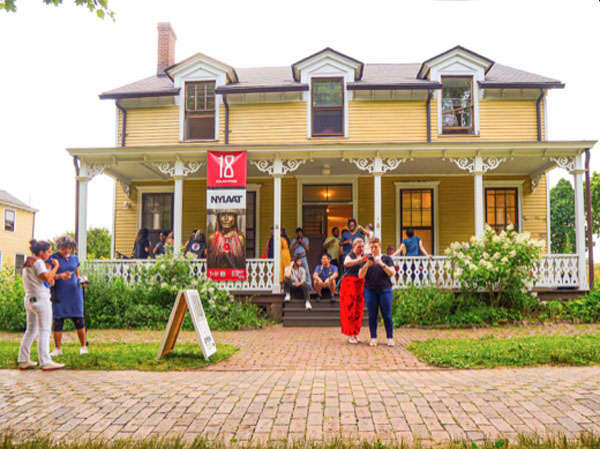
The New York Latin American Art Triennial (NYLAAT) has established itself as one of the most active institutional platforms dedicated to the promotion, research, and dissemination of Latin American art in the United States. With an internationally oriented curatorial model and a network of venues across New York City, the Triennial advances initiatives that strengthen Latin America’s cultural presence in one of the world’s most influential artistic capitals.
Its programming encompasses large-scale exhibitions, artist residencies, educational projects, specialized publications, and ongoing collaborations with museums, universities, and cultural organizations. These efforts foster a transnational dialogue that connects artists from Latin America and its diaspora with global audiences, expanding opportunities for recognition and visibility within the international art circuit.
More than a periodic event, NYLAAT functions as a dynamic institution that researches, supports, and amplifies diverse contemporary practices. Its mission is to create spaces of recognition for the multiple voices of Latin American art, promote new critical perspectives, and contribute meaningfully to the strengthening of Latin America’s presence within the global cultural landscape.
Cuenca Biennial – 40-Year Anniversary
(Ecuador)
The Game: Biennial of Biennials
The documentary addressing the XVII Cuenca Biennial unfolds as a visual research tool that, through the lens of play, explores the dynamics that influence the artistic and curatorial creation of this edition. Here, the camera acts as an epistemological resource that offers the opportunity to observe the phases of creation, their tensions and methodologies, unveiling the procedural aspect of each proposal and its staging.
Play, seen as a mental strategy, an experimental environment, and a flexible structure of meaning, becomes the core for analyzing the practices of the artists and curators involved. Each proposal is considered from an angle that highlights its internal logic, its systems of rules, its trial-and-error methods, and the shaping of alternative worlds. Likewise, the film investigates the curatorial role as an act of translation, negotiation of ideas, and mediation that organizes meanings within the exhibition space.
Through a meticulous approach, the visual record emphasizes the connections among curators, artists, works, conflicts, and staging; the critical actions that support each work; and the reflective processes that shape each exhibition. Thus, the film, in addition to capturing the process of installing the XVII Biennial, generates knowledge about it, positioning play as a category of analysis and a practice that shapes the artistic and curatorial dynamics of contemporary art.
Nomade Biennial
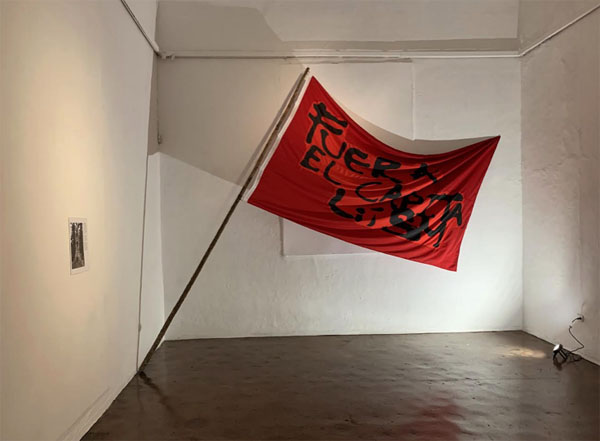
Nomade Biennial is a project created by the critic and curator Hernán Pacurucu from Ecuador and the visual artist and independent Chilean curator Víctor Hugo Bravo, from 2015 to the present. It is a space in transit, a multiple collectivity that, from autonomous and independent production, generates a series of reflections on the systems and visibility of contemporary art. A collectivity in transit generating thought, addressing border or institutional exhibition spaces, conducting workshops, publications of books, conferences, mobile residences, settlements, and multiple interdisciplinary alliances as a platform, a biosphere of autonomous economy, which articulates other forms of human relationship rooted in utopias, experiments, mistakes, and reflections in relation to the context.
Articulating a political and emotional view of the new forms of social gathering, fundamentally anchored in collaborative work and affects. Creating multiple networks that generate work nodes, enabling spaces and bringing people together under a common ideological umbrella. Cultivating from artistic creation possible scenarios of communication and coexistence that shape society. Nomade configures new ways of understanding the biennial format, developing a series of deconstructive strategies.
SACO Biennial
(Chile)
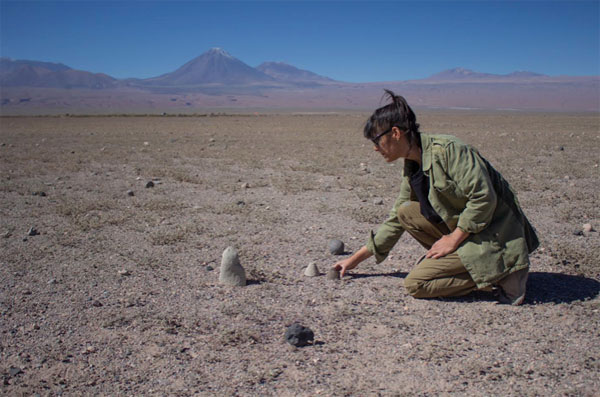
SACO Corporation is a nonprofit cultural organization that positions itself internationally due to the impact of its management and its quantitative and qualitative results in the major copper and lithium mining capital. Its work has expanded the visual arts in Latin America through exhibitions, research at the intersection of art and science, educational programs, interventions in natural spaces, and artistic residencies in the world’s driest desert.
Since 2012 it has developed the SACO Contemporary Art Biennial. Each edition is carried out under a different curatorial concept and is distinguished by its “museum without a museum” program, which transforms places not necessarily tied to culture into spaces where the community encounters art. Following the exhibitions, the artwork materials are reused, under a pioneering circular economy logic in the international biennale ecosystem. In addition to exhibitions, SACO organizes residencies, in which artists from around the world can approach the planet’s clearest skies, engage with the indigenous cultures of the region, and connect with leading scientists in fields related to the Atacama Desert, such as geology, microbiology, astronomy, among others.
The corporation’s mission is to establish a permanent center of reflection and dialogue through the artwork, addressing the absence of institutions dedicated to pursuing these aims in the Antofagasta region. All its educational activities come together in its permanent education program, a school without a school. To date, the Corporation’s activities have been carried out in Chile, Argentina, Mexico, Colombia, Brazil, Germany, Ecuador, Spain, Switzerland, Poland, and Norway.
World Textile Art Biennial
(Miami)
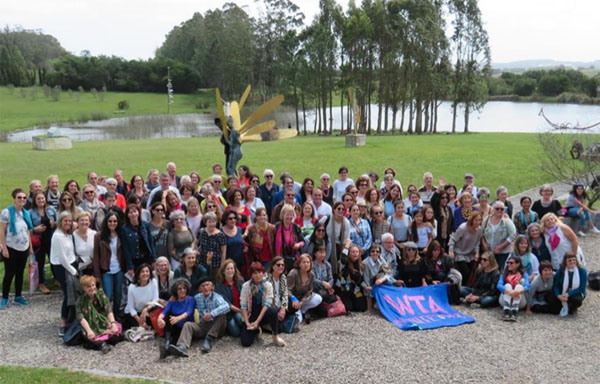
The WTA Organization was founded in 1997 in the city of Miami, Florida, United States, under the name Women in Textile Art. Pilar Tobón, a curator and Colombian textile artist, posed this great challenge given the need to reclaim textile art at local and global levels. Tobón has always pursued the objectives of supporting, disseminating, promoting, and fostering textile artists and their works.
In 2009, given the inclusive and universal character of textile art, the name was changed to World Textile Art. The World Textile Art Biennial has been held since 2000. It has taken place in the United States (2 editions), Venezuela, Costa Rica, Argentina, Mexico, Uruguay, Spain, and Chile.
To meet the outlined objectives, the director created the WTA Contemporary Textile Art Biennial, nomadic in nature, unique in its kind in the world. This first version was held in 2000 at the Museum of Latin American Art of Florida. With the Biennial, local cultural practices and the natural and human diversity of the host country are promoted and disseminated to visitors from around the world who attend the great textile gathering.
Gwangju Biennial
(Korea)
The Gwangju Biennale is an international contemporary art event founded in South Korea in 1995, established in memory of the 1980 Gwangju Democratization Movement. It is one of Asia’s oldest and most prestigious biennials, held every two years, and features exhibitions, performances, and educational programs from around the world. Hosted by the Gwangju Biennale Foundation and the city of Gwangju, it serves as a platform for cultural exchange and discourse, with a mission to promote art, cultural history, and the city itself.
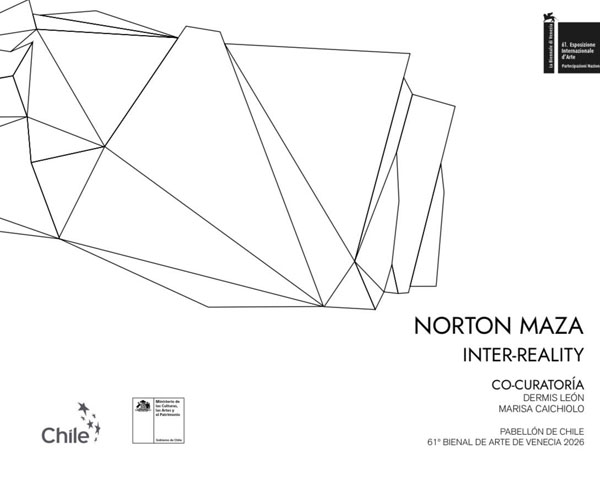
61st Venice Biennale 2026
Official Pavilion of Chile at the Arsenale
Co-Curated By: Marisa Caichiolo & Dermis León
Inter-Reality, by artist Norton Maza, curated by Marisa Cachiolo and Dermis León and managed by Claudia Pertuzé, also as part of the team Beatrice Di Girolamo and architect Mathias Klotz, was selected to represent Chile at the 61st Venice Art Biennale, an event to be held from May 9 to November 22, 2026, in the Italian city. Chile’s participation in the Venice Biennale is the result of inter-institutional collaboration between the Ministry of Cultures, Arts and Heritage, through its Secretariat of Visual Arts, the Ministry of Foreign Affairs, through the Division of Cultures, Arts, Heritage and Public Diplomacy (DIRAC), and the Embassy of Chile in Italy.
DIVERSEartLA 2025
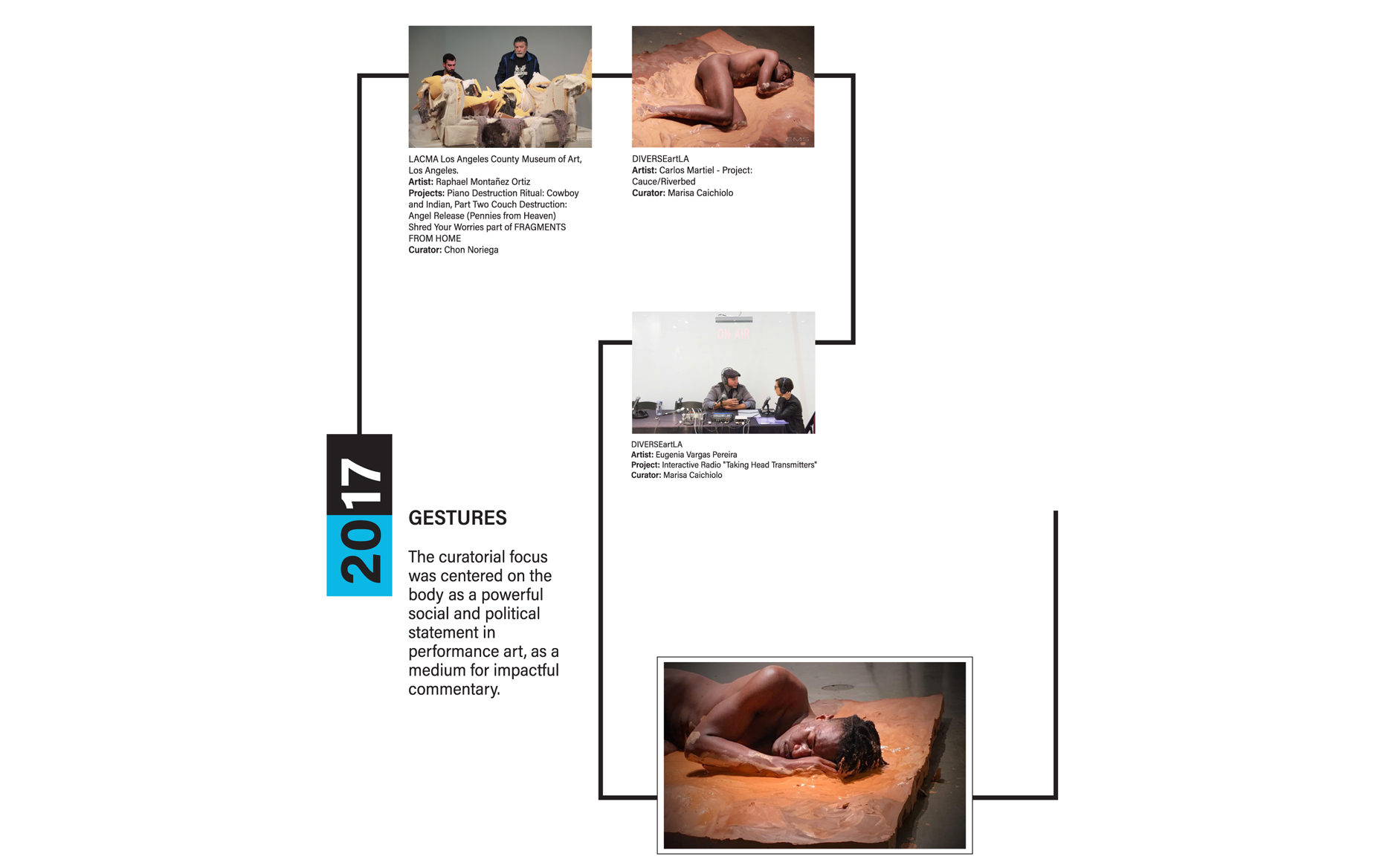
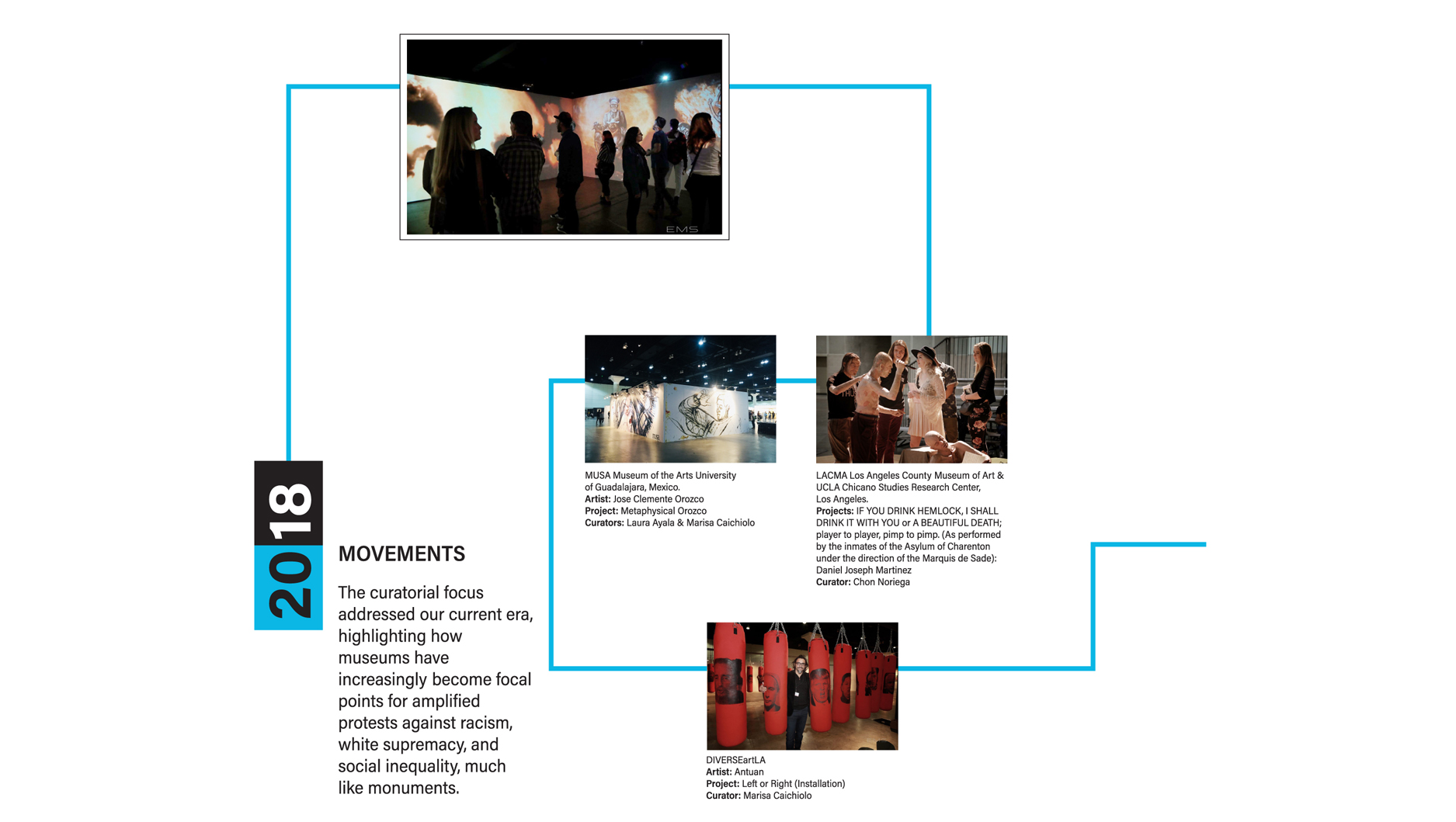
As the curator of DIVERSEartLA for the past eight years, I am excited to announce that this year’s curatorial project, in celebration of the 30th anniversary of the LA Art Show, will be a comprehensive retrospective celebrating the remarkable journey of DIVERSEartLA over the years.
This exhibition will serve as a grand timeline, showcasing all the projects undertaken by various museums and arts institutions affiliated with our platform. Visitors can look forward to an engaging display that highlights pivotal moments through videos of performances and installations from each year. This retrospective not only honors the creative contributions of our partners but also emphasizes the vibrant evolution of DIVERSE as a vital presence in the art community.
Marisa Caichiolo
2017
2018
2019
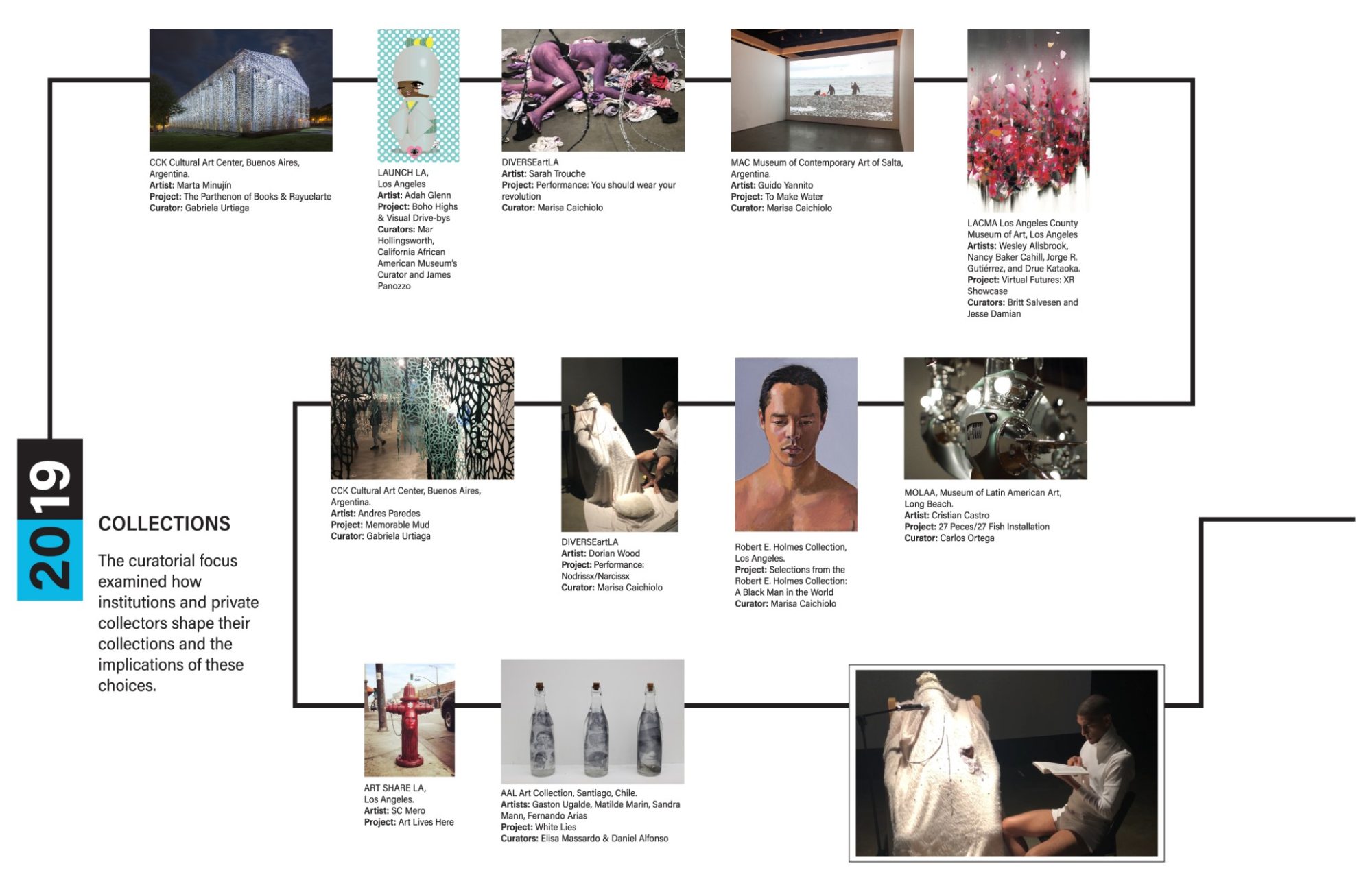
2020
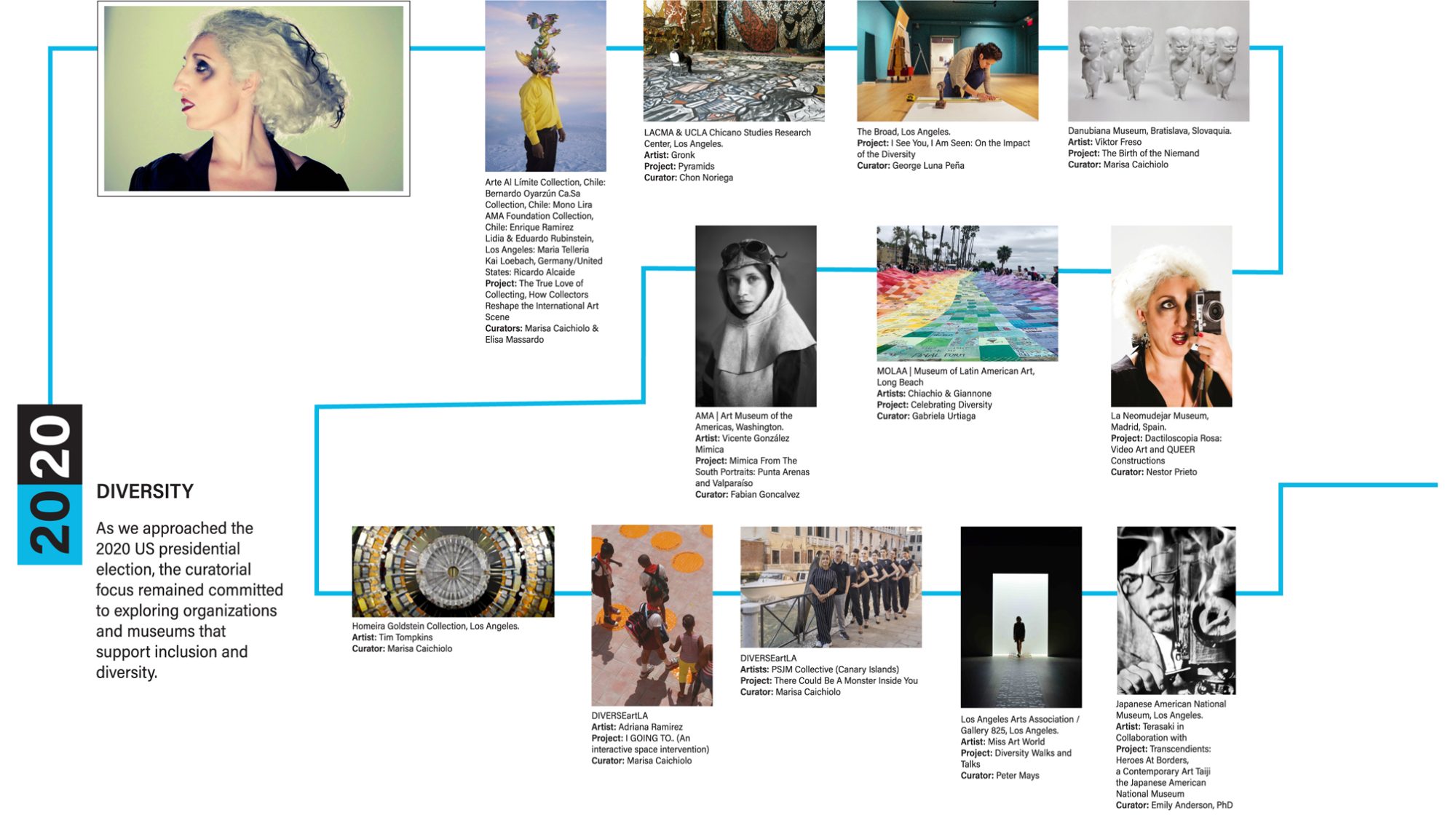
2021
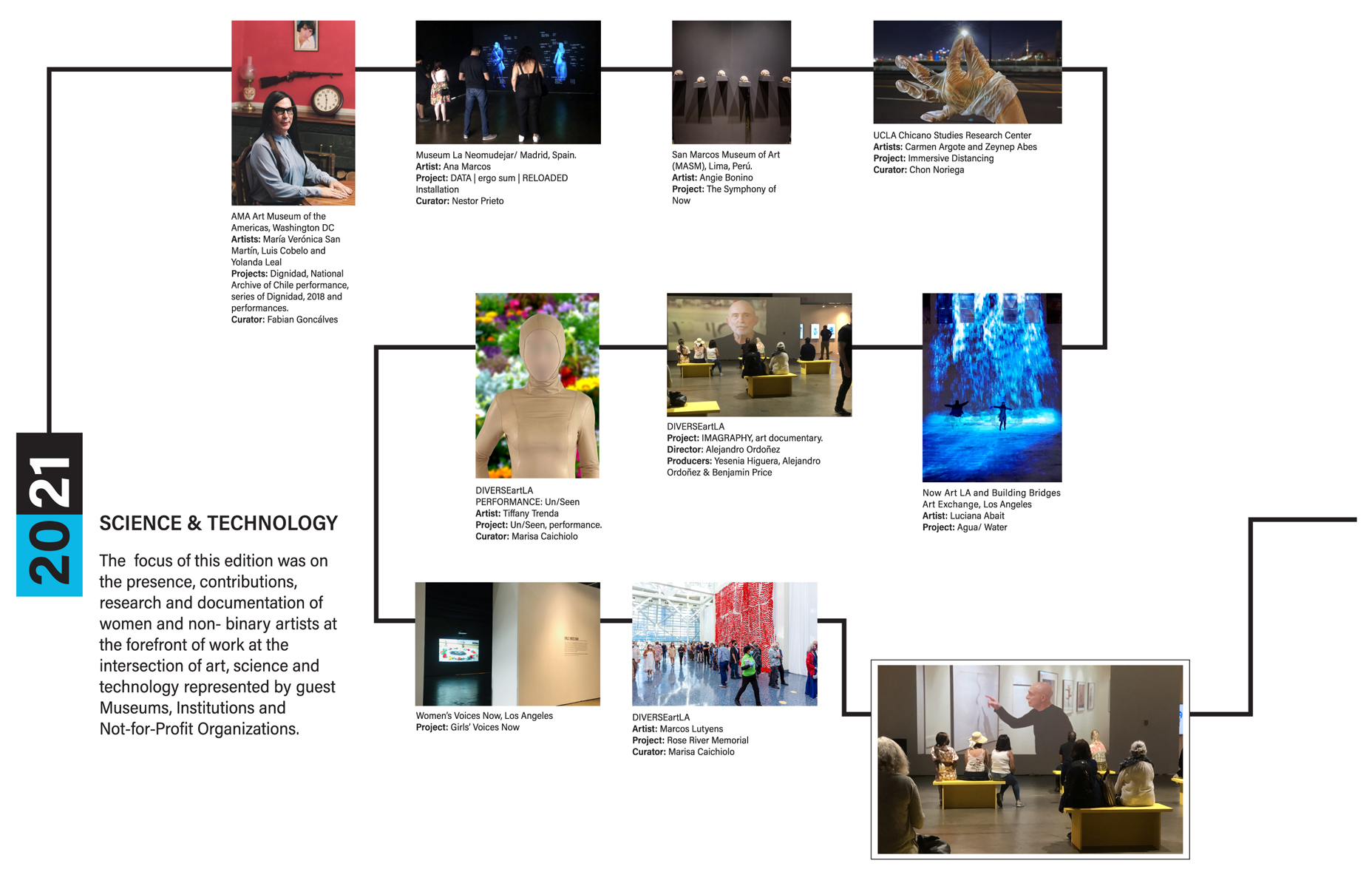
2022
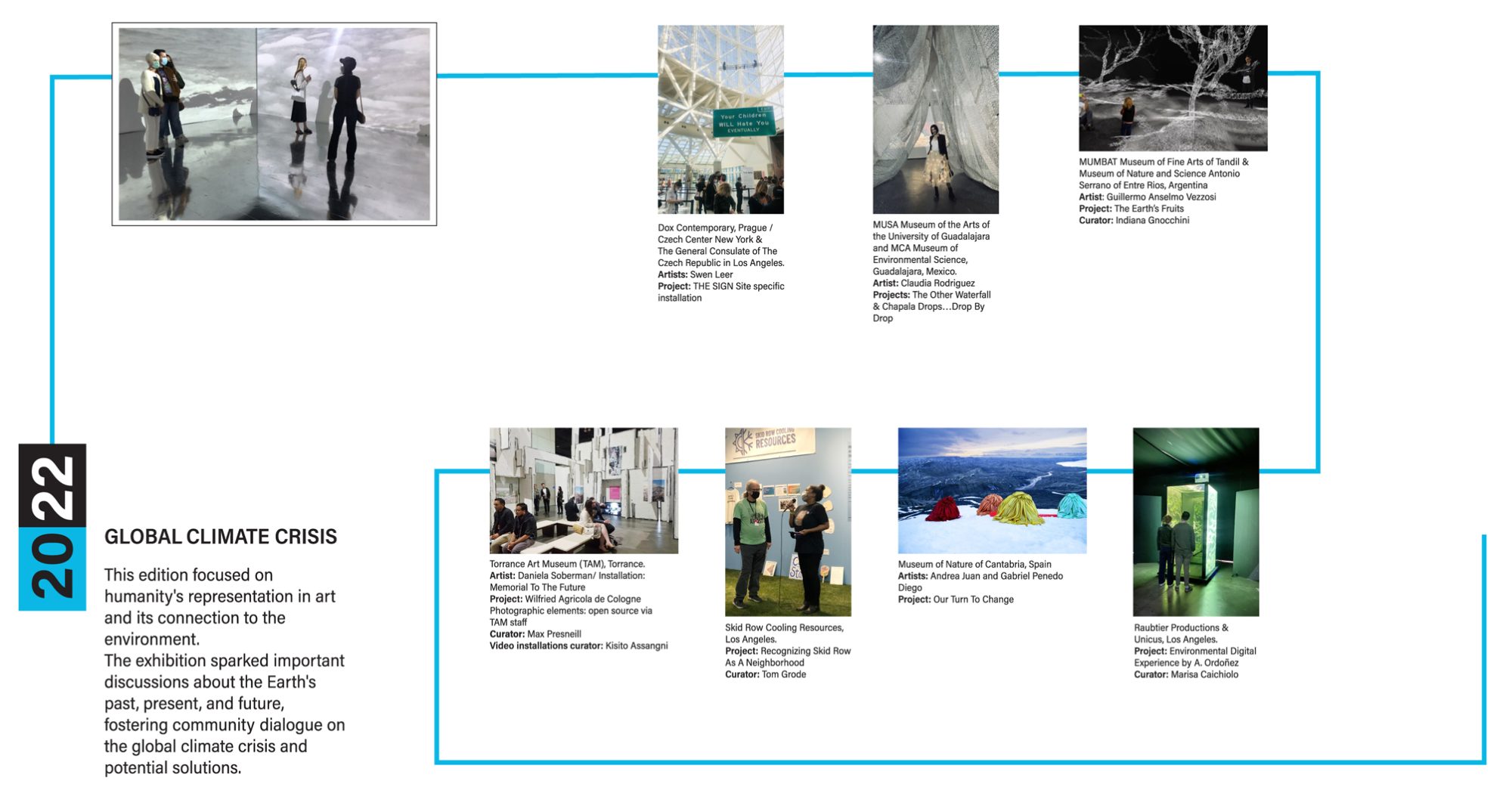
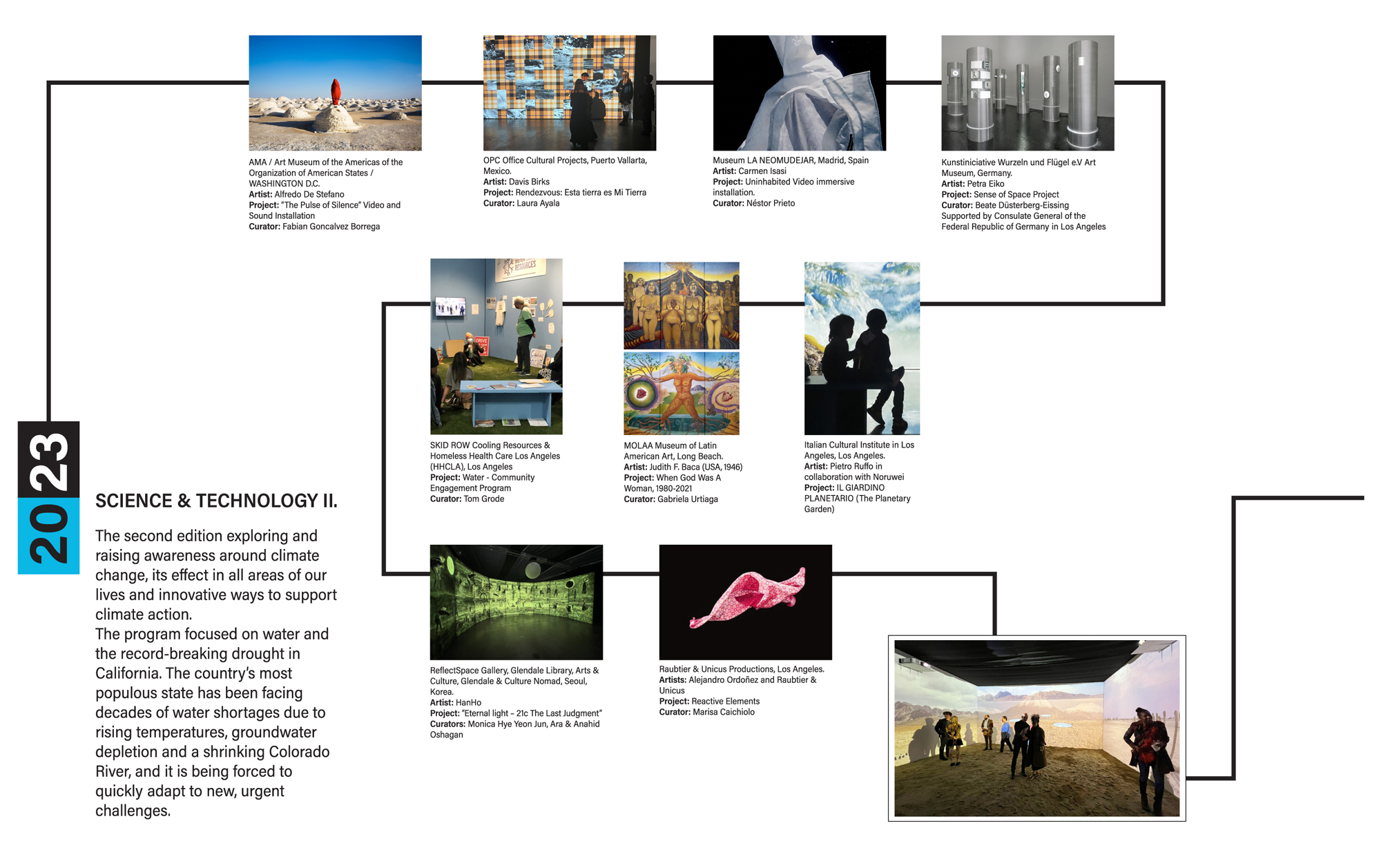
2023
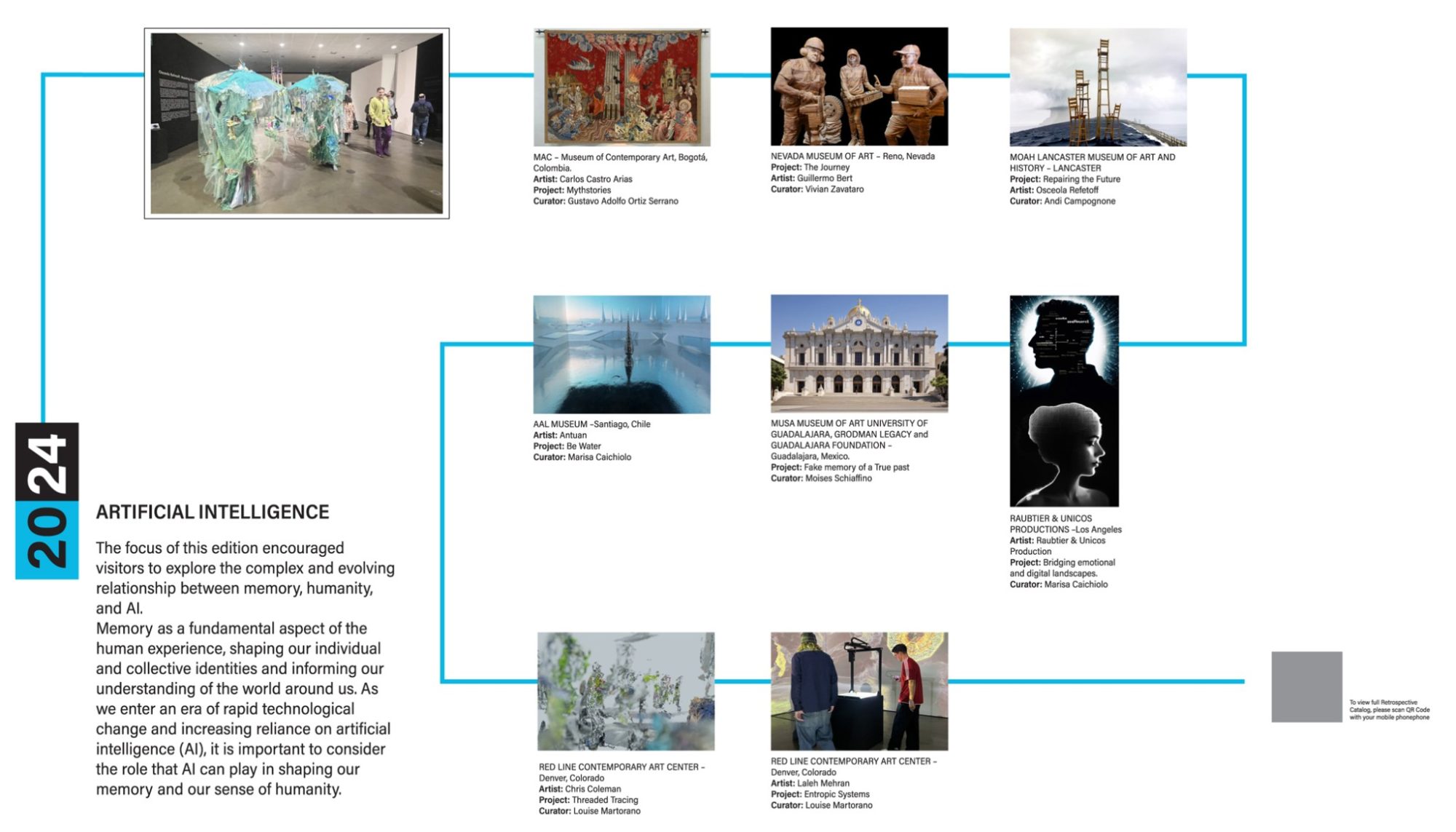
2024
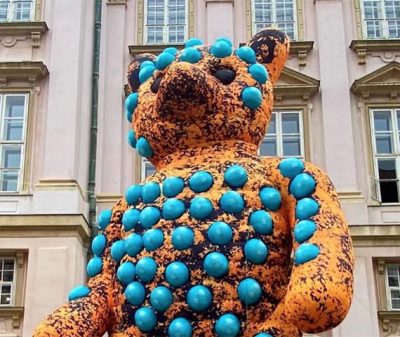
Ominka
Presented By Danubiana Museum Of Art
Bratislava, Slovakia
Project: Ominka
Artist: Viktor Frešo
Curator: Marisa Caichiolo
Lobby
Ominka by Viktor Frešo is a memory embodied in a family artifact transformed into monumental art. This sculpture is based on the story of the artist’s grandmother, a former singer who sacrificed her promising career to support her family. In 1964, she brought a Fool’s Gold brooch from the USA to Slovakia, a memento of her travels and a symbol of her unfulfilled dreams. Decades later, Frešo reinterprets this sentimental object, creating a monumental sculpture that serves as a metaphor for the illusions and fleeting nature of material aspirations – much like the deceptive glimmer of Fool’s Gold.
In this work, Frešo revisits central themes of his practice: the personal archive and the vanity of life. By enlarging this modest piece of costume jewelry into a monumental sculpture, he questions the significance we attach to material objects. The sculpture is both a tribute and a critique, reminding us that what remains after people are not the objects themselves but the stories they carry.
Bringing the sculpture back to the United States, the brooch’s original country of origin, completes a poetic cycle. It symbolizes a return to the roots of a family narrative and concludes a journey that spans generations and geographies. In essence, Frešo’s artwork becomes a reconstructed family portrait, piecing together fragments of his ancestors through artifacts, memories, and their reinterpretation as contemporary art. Since the medium of the work is an inflatable balloon sculpture, the air inside also symbolizes the memories that can never be permanently retained. When the balloon is finally deflated, it reflects the gradual fading of memories over time, carried by the breath that once gave it its shape.
DIVERSEartLA 2024
Through a range of media and approaches, this DIVERSEartLA edition will encourage visitors to explore the complex and evolving relationship between memory, humanity, and AI.
Memory is a fundamental aspect of the human experience, shaping our individual and collective identities and informing our understanding of the world around us. As we enter an era of rapid technological change and increasing reliance on artificial intelligence (AI), it is important to consider the role that AI can play in shaping our memory and our sense of humanity.
Through installations, interactive experiences, and thought-provoking artworks, visitors will be challenged to consider the ways in which AI is changing our relationship to memory and shaping our understanding of what it means to be human. It is important to consider potential challenges and risks associated with AI and memory. Reliance on external memory systems could lead to decreased retention and reliance on inaccurate or biased information.
Additionally, concerns about data privacy, security, and the potential for manipulation of collective memory should be addressed as AI continues to evolve.From AI-generated artworks to immersive virtual reality experiences that challenge our sense of self, the works in this edition invite us to consider the opportunities and challenges presented by AI and memory.
What does it mean to remember in an age of digital memory? How can AI be used to enhance our memory and our understanding of the world? And what are the ethical and social implications of relying on AI as a tool for memory and identity?
DIVERSEartLA Museum Acquisition Award by AAL Museum and AAL Magazine, Chile
DIVERSEartLA 2024 is proud to announce the second edition of the Museum Acquisition Award for Emerging Artists in Los Angeles.
Inspired by Spain’s La Neomudéjar Museum last year, the initiative seeks to support the art scene by promoting the acquisition of art works by leading national and international museums.The winner of the award will be chosen by Ana Maria Matthei, Museum Director and Magazine Founder as well as Marisa Caichiolo, Curator of DIVERSEartLA.
The award will be presented by Matthei, Caichiolo and LA Art Show Producer-Director Kassandra Voyagis in a special ceremony at the fair.
DIVERSEartLA is curated by Marisa Caichiolo.
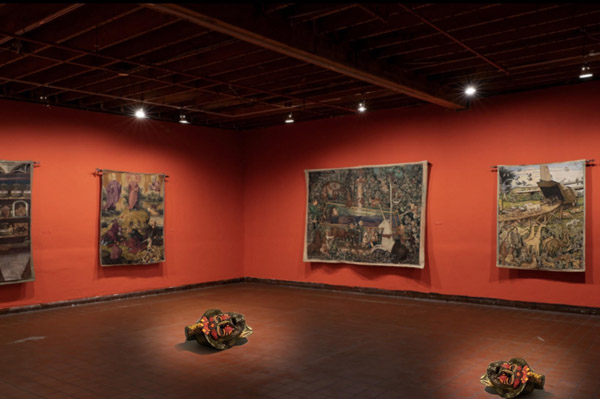
MAC – Museum Contemporary Art – Bogotá, Colombia
Project: Mythstories
Artist: Carlos Castro Arias
Curator: Gustavo Adolfo Ortiz Serrano
Booth 1162
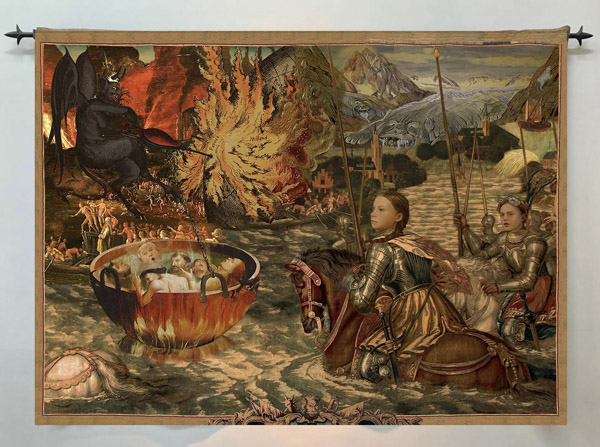
Myths are constructed to express realities beyond a logical understanding and help us to comprehend concepts that are difficult to explain with ordinary language. Carlos Castro’s work is located precisely where contemporary society faces a mirror but is afraid to open its eyes. Through the ancient medieval technique of tapestry and with the use of an iconography that links the ancient and the contemporary, he conceptually weaves a new understanding of our recent history with the biases of the hyper-communicated, transcultural, hybrid and eager for meaning society. In the midst of complexity, it is necessary to appeal to myth to approach our existence in a symbolic and binding way, a resource that enhances imagination and emotion to assimilate the succession of moments that will become history.
Each of Castro’s tapestries explore the relationship between myth and history; these woven tapestries illustrate contemporary myths by interlacing imagery from medieval tapestries and twenty-first-century news media. Castro’s work is also an invitation to create or recreate our own myths, those that allow us to transcend experience to redefine culture and the social meaning that is implicit in it.
Nevada Museum Of Art – Reno, Nevada
Project: The Journey
Artist: Guillermo Bert
Curator: Vivian Zavataro
Booth 605/706/1360
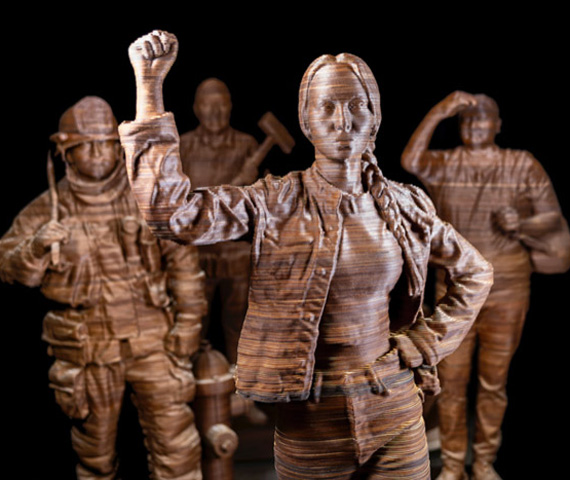
The Warriors are life-sized, laser-cut, wooden sculptures set in an environment that resembles a harsh desert landscape. Inspired by the 2,200-year-old Chinese Terracotta Warriors – 8,000 life-sized soldier statues excavated in Shaanxi province in 1974, Bert’s vision was to honor the warriors of our time by creating an army of immigrant heroes. The relationship between the individual and the collective group is apparent in the installation. Seen individually, the modern-day warriors are strong and proud, but when viewed together – and multiplied in the surrounding mirrors – they become an overwhelming and forceful army.
All the individuals depicted represent real people with real names – David, Alex, Margarita, Nalleli, Eduardo, Sabrina, and others – who stood at the forefront during and after the COVID-19 pandemic. Bert encourages us to think about the invisibility of Latinx workers, including nurses, farmers, firefighters, and activists, who kept the American economy thriving when most of the world stayed home. A visual tribute to strength and dedication, The Warriors pay homage to these fighters, acknowledging their courage, resilience, and warrior spirit.
Musa Museum Of Art University Of Guadalajara, Grodman Legacy And Guadalajara Foundation – Guadalajara, Mexico
Project: Fake memory of a True past
Curator: Moises Schiaffino
Booth 1364
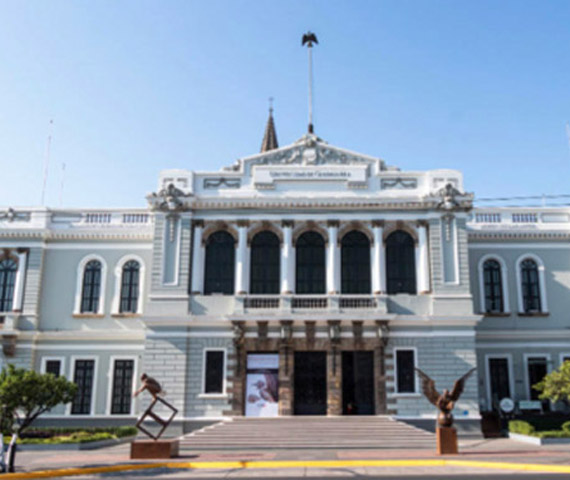
This project seeks to create a reflection on the use of artificial intelligence (AI) as a tool to generate a historical archive. Currently, what we know about history is thanks to the vestiges and testimonies that humans themselves have left and recorded. Our conception of yesterday depends on that legacy, but what would happen if in the future the account of what happened was in the hands of a virtual entity? Would the vision of the past be the same?
With this project, we will delve into the history of the University of Guadalajara and pay tribute to Raúl Padilla López, the most important cultural promoter and visionary that this institution has had and who promoted the creation of the MUSA Museum of Arts in 1994. This video installation tells the same story from two different visions: the human and the artificial, making a visual comparison of the memory that the human being has preserved with the one that, through algorithms, the AI has generated. Thus, the substantiated testimony and the speculative recreation will be confronted before the eyes of those who observe it, leaving the door open for reflection about the importance of writing our history by ourselves, so the truth about it could be as faithful as possible of what happened in reality.
Moah Lancaster Museum Of Art And History – Lancaster
Project: Repairing the Future
Artist: Osceola Refetoff
Curator: Andi Campognone
Booth 1366
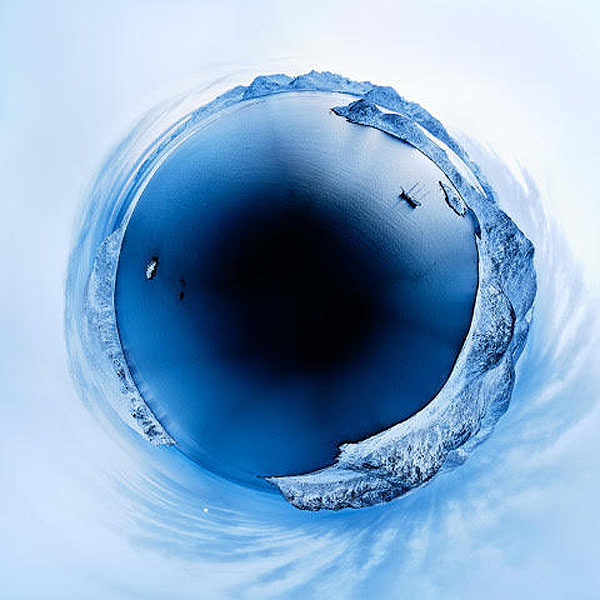
Lancaster Museum of Art and History (MOAH) is proud to present Osceola Refetoff: Repairing the Future, a multi-media exhibition focusing on global sea level rise. The centerpiece of the installation is a large-scale immersive audio-visual projection of the artist’s 8-minute film, Sea of Change.
The film’s original footage was shot by Refetoff in Svalbard, Norway, near the North Pole during his The Arctic Circle Artist & Scientist Residency. These visuals are paired with NASA satellite images of the Earth and graphics depicting NASA’s scientific measurements of current climate disruptions. AI-generated animation envisions possible future climate outcomes.
The project was edited with Juri Koll during Refetoff’s 2023 artist residency at Building Bridges Art Exchange in collaboration with Dr. Eric Larour, manager of NASA’s Earth Sciences Division at the Jet Propulsion Laboratory. The original soundtrack is written and performed by award-winning composer Paul Cantelon and Sultan + Shepard.
Blending hard science, documentary video, and impressionistic imaginaries, Refetoff is known for using aesthetic strategies to define and communicate an urgent need for both personal and systemic engagement, leveraging the natural beauty of remote regions to command our global attention toward local climate issues.
The exhibition will be accompanied by a performance from Hibiscus TV artists Kaye Freeman and Amy Kaps, and will also include a talk with Refetoff, curator Andi Campognone, and Rosanna Xia, L.A. Times climate journalist and author of California Against the Sea.
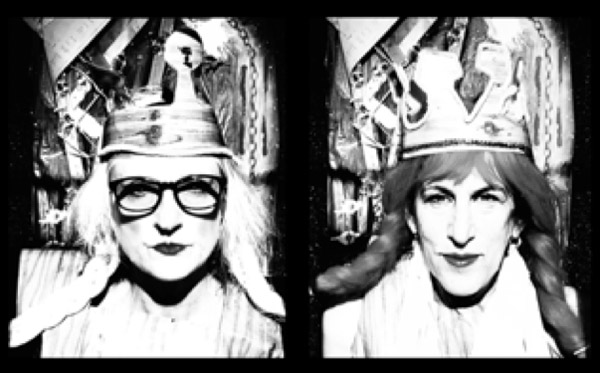
Aal Museum – Santiago, Chile
Project: Be Water
Artist: Antuan
Curator: Marisa Caichiolo
Booth 1361
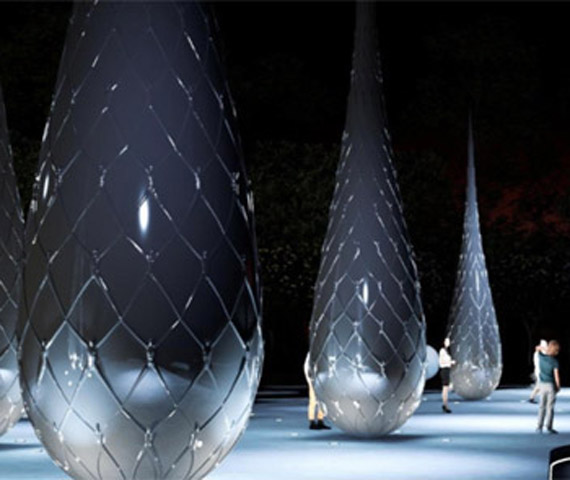
The immersive installation “Be Water” presents a visual narrative that delves into the multifaceted dimensions of water in nature and human life. Antuan’s creation of the Human Net, a human geometric structure visible in each sculptural piece, symbolizes the symmetry of the universe, elemental purity, and omnipresent wisdom. The characters within the installation represent the unity of humanity in the face of the urgent need to address the global water crisis, highlighting the essential collaboration between humanity and AI to create a new network of human consciousness. This interconnectedness is crucial in working collectively to tackle the challenges posed by the water crisis and establish a new order for the planet.
The installation places a particular emphasis on the intrinsic memory of water and explores how AI can effectively convey the significance of this vital element to humanity. This exploration seamlessly integrates art, science, space, metaphysics, energy, and the compassionate stewardship of our planet. By captivating audiences, “Be Water” aims to inspire a reconsideration of our relationship with water, shedding light on its potential to heal and sustain us through its memory. The “Be Water” installation represents a significant milestone in the ongoing art-science research led by the esteemed contemporary artist, Antuan. Building upon the success of the acclaimed project, “The Other Dimension,” which was showcased in an exhibition at the Museum of Contemporary Art in Miami, FL in 2017, “Be Water” continues to push the boundaries of artistic expression and scientific exploration.
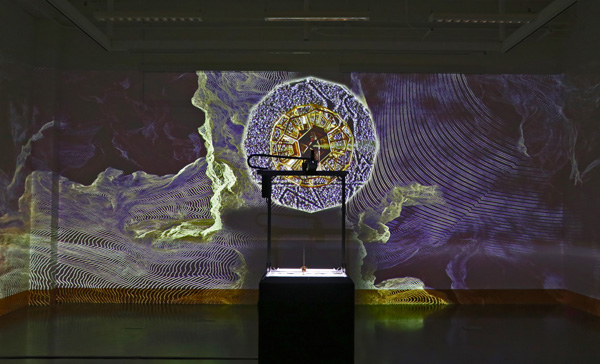
Red Line Contemporary Art Center – Denver, Colorado
Project: Entropic Systems
Artist: Laleh Mehran
Curator: Louise Martorano
Booth 1363
Laleh Mehran’s Entropic Systems is an immersive installation that considers the politicization of ideologies, dictating responses to activities outside and within its borders. Analogous to doctrines imposed by governments or systems on people, the “drawing” machine seeks to instill pattern and order, operating hypnotically and rhythmically. In this work, the machine inscribes a sort of memory into the mineral bed, much like a rudimentary hard drive. Each day the past is erased, but at the same time, the grains will never sit the same again, containing remains of history much in the way that AI is trained with billions of words and yet “remembers” none of them.
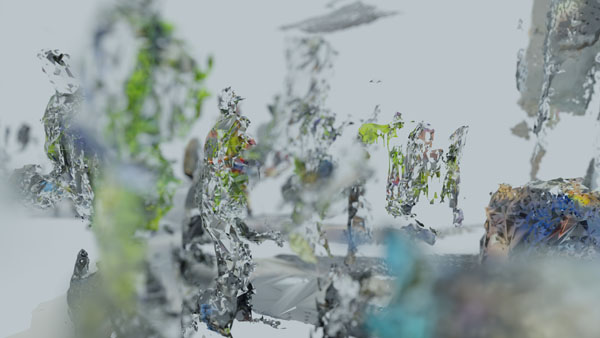
Project: Threaded Tracing
Artist: Chris Coleman
Curator: Louise Martorano
Booth 1363
Threaded Tracing uses current computer vision technology (LiDAR) to encode natural and human made spaces into digital memory. Made during visits to forests and airports across the US, it plays with the idea of how we remember time and space vs how computers try to represent and process it. As we feed more and more of our lives into AI systems, we must continue to ask what is lost in translation. Music by George Cicci.
Raubtier & Unicos Productions – Los Angeles
Project: Bridging emotional and digital landscapes
Artist: Raubtier & Unicos Production
Curator: Marisa Caichiolo
Booth 1365
This exhibition explores the intersection of human emotion and advanced digital technology to create a thought-provoking digital mural of individual and collective experiences. Through the utilization of AI-driven word-to-image conversion, tangible printing, and large-scale projections, the artists are seeking to reveal the evolving correlation between personal memories and moments and their emotional and physical manifestations.
Visitors are encouraged to engage with a touchscreen interface to input words or phrases that resonate with their emotions and memories. These contributions are then projected onto a wall, forming a dynamic word-cloud art display that evolves as new submissions are added. The collective impact of societal connections is visually represented as frequently repeated phrases gain prominence through boldness within the projection, reflecting the shared experiences of the community. Simultaneously, each visitor’s input undergoes processing by an AI program, resulting in the creation of a unique image corresponding to the submitted words or phrases. These personalized images are then printed and made available for visitors to take home, serving as tangible representations of their individual contributions to the evolving artwork.
This immersive exhibition invites audiences to contemplate the fluid transition from abstract emotional states to concrete visual representations, while also highlighting the interconnected nature of individual and collective human experiences. As the exhibition progresses, it builds upon itself, capturing a collective snapshot in time and weaving a historical narrative that embodies the convergence of emotional and rational realm.
DIVERSEartLA 2023
Curated by Marisa Caichiolo
DIVERSEartLA returns in 2023 with a rotating group of museums, art institutions and non-profits that will engage local and global communities by bringing together leading art experts and thought provoking scientific figures to generate innovative ideas and drive social change through art.
For the second year in a row, DIVERSEartLA explores and raises awareness of climate change, its effect in all areas of our lives and innovative ways to support climate action.
This year’s program focuses on water and the record-breaking drought in California. The country’s most populous state has been facing decades of water shortages due to rising temperatures, groundwater depletion and a shrinking Colorado River, and it is being forced to quickly adapt to new, urgent challenges.
“DIVERSEartLA’s immersive experiences, installations and dialogs provide visitors with a rare opportunity to reflect on the looming impact mankind will face as the planet continues to warm and sea levels continues to rise,” says DIVERSEartLA Curatorial Director Marisa Caichiolo. “Men-driven climate change and drought are here to stay unless humans re-imagine our interactions with nature and work together on potential solutions.”
Additionally, DIVERSEartLA is devoting a specific area at the fair for community engagement. Led by LA-based Skid Row Cooling Resources and supported by Homeless Health Care Los Angeles (HHCLA), this space will allow visitors to participate in dialogs to explore the importance of water, cooling resources in downtown LA and potential responses to various environmental challenges. In essence, this community-oriented project will reinforce the value of translating environmental advocacy into a space for constructive conversations.
DIVERSEartLA 2023’s participating art institutions, museums and non-profits:
– Italian Cultural Institute (Los Angeles)
– AMA Art Museum of the Americas of the Organization of American States (Washington D.C.)
– La Neomudejar Museum (Madrid, Spain)
– Museum of Latin American Art (MOLAA) (Long Beach) – Skid Row Cooling Resources / Homeless Health Care Los Angeles (HHCLA) (Los Angeles)
– Kunstiniciative Wurzeln und Flügel e.V Art Museum (Germany)
– ReflectSpace Gallery, City of Glendale Library Arts and Culture Department (Los Angeles) & Culture Nomad Arts Center (Seoul)
– OPC OFFICE CULTURAL PROJECTS (Mexico)
– Raubtier & Unicus Productions
DIVERSEartLA Museum Acquisition Award
DIVERSEartLA 2023 is proud to announce the inaugural edition of the Museum Acquisition Award for Emerging Artists.
Inspired by Spain’s La Neomudéjar Museum to mark its 10th anniversary, the initiative seeks to support the art scene by promoting the acquisition of art works by leading national and international museums. The winner of the 5000-euro award will be chosen by Néstor Prieto and Francisco Brieves, Co-Directors of La Neomudéjar Museum, as well as Marisa Caichiolo, Curator of DIVERSEartLA. The award will be presented by Prieto, Brieves, Caichiolo and LA Art Show Director Kassandra Voyagis in a closing ceremony on Sunday, February 19th, at the Los Angeles Convention Center.
The Museum Acquisition Award has been created by Spain’s La Neomudéjar Museum with the support of the LA Art Show.
AMA / Art Museum of the Americas of the Organization of American States / WASHINGTON D.C.
Project: Bridging emotional and digital landscapes
Artist: Alfredo De Stefano
Curator: Fabian Goncalvez Borrega
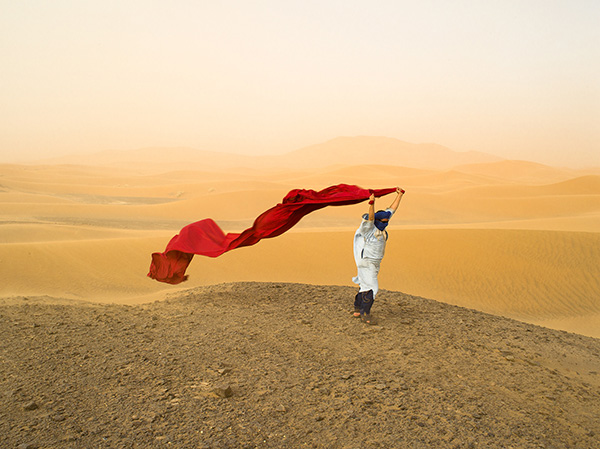
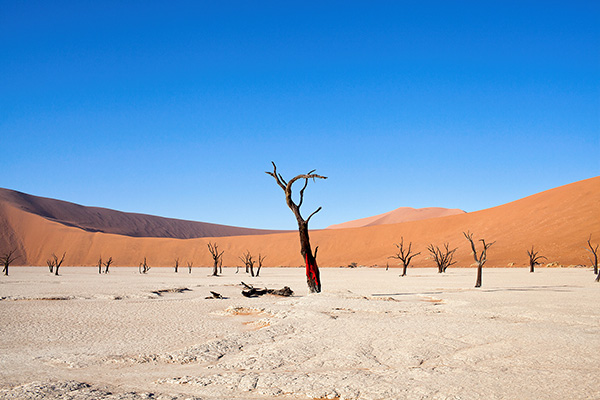
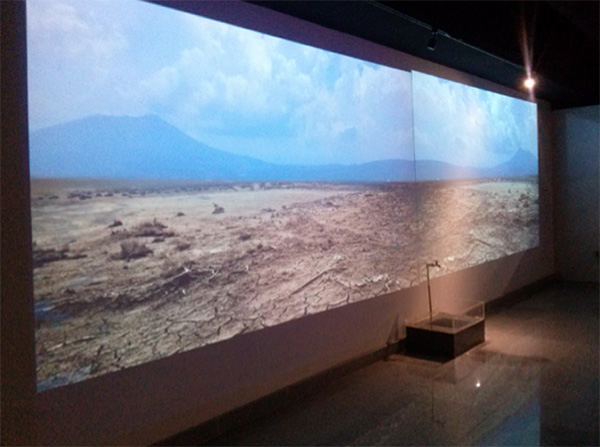
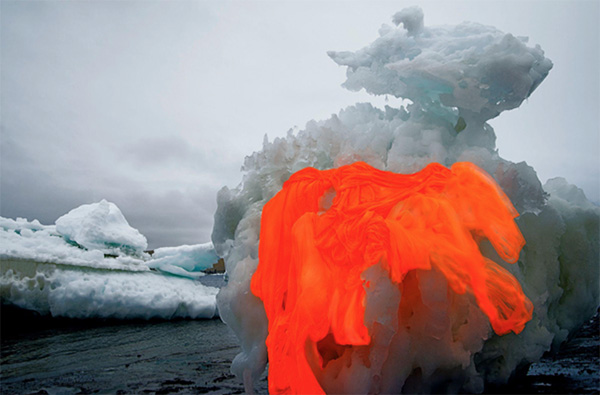
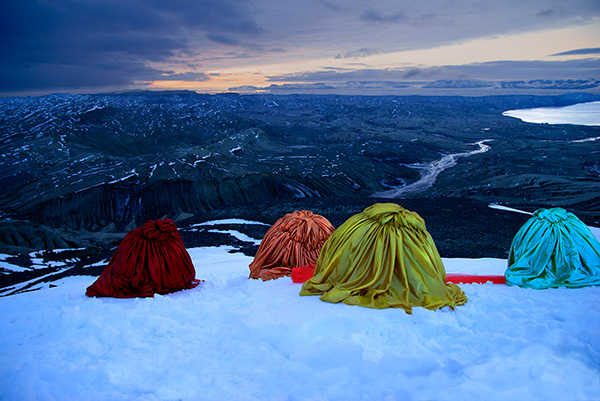
Using desert images from Chile’s Atacama, Egypt’s Sahara, Iceland’s Black, India’s Thar, Peru’s Nazca, Marrueco’s Sahara, Mexico’s Sonora-Arizona and Chihuahuense, Mongolia’s Gobi, Namibia’s Namibia as well as USA’s White Sands, the artist seeks to create an immersive experience by unifying the vastness and silence present across these lands.
Silence feels like a pulse, but it’s a different pulse in each desert. Sometimes it’s a very loud pulse, Alfredo De Stefano explains.
De Stefano is one of Mexico’s most prominent contemporary conceptual photographers. His body of work includes images of desert landscapes that address the natural environment’s elemental significance and our relationship to the land. Often employing ice, fire, and light, De Stefano creates enigmatic installations with both natural and man-made objects in ethereal desert settings.
De Stefano was born in the city of Monclova (Coahuila), located in the desert in Northeastern Mexico. His work has been exhibited internationally, including solo exhibitions at The Recoleta Cultural Center in Buenos Aires, Argentina, 2012; Fourth International Biennial of Photography, Amsterdam, Netherlands, 2010; International Biennial of Guangzhou, Museum of Art, Guangzhou, China, 2009 and the Museum of Art Carrillo Gil, Mexico City, Mexico, 2008. De Stefano’s monographs include In This Place, 2008, Brief Chronicles of Light, 2007 and Replenishing Emptiness, 2002. Among the institutions that have collected De Stefano’s work are The Museum of Fine Arts, Houston, Texas; Centro de la Imagen, Mexico City, Mexico; Museo del Barrio, New York, NY; and the FEMSA Collection, Monterrey, Mexico.
SKID ROW Cooling Resources/ Homeless Health Care Los Angeles (HHCLA) /
LOS ANGELES
Project: Community Engagement
Curator: Tom Grode
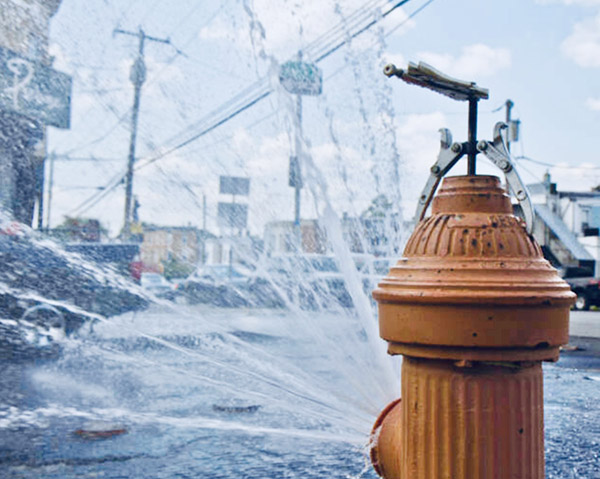
We Are Water. We are mostly water, and so climate change and water cannot be separated from us; they’re part of us. Downtown Los Angeles is an urban heat island and the residents of Skid Row are particularly vulnerable. Skid Row Cooling Resources was created in 2021 to address this reality.
Il Giardino Planetario
Project: IL GIARDINO PLANETARIO
(The Planetary Garden)
Artist: Pietro Ruffo in collaboration with Noruwei
3’30 min
2023
Video produced with the support of the Italian Cultural Institute in Los Angeles
The title is inspired by French philosopher Gilles Clement. This video installation is an allegory of the planet as a garden.
Ecological finiteness makes the limits of the biosphere appear as a closed space embracing all life.
In line with the title of DIVERSEartLA, diversity in this work refers to the number of distinct living species among animals, plants and simple beings (bacteria, viruses, etc.) that currently exist in only one species: humans. Contained in this one specie’s DNA is the diverse history of other species that have inhabited this planet before us and have left their traces not only in our DNA, but also in our cultural environment and the landscape that surrounds us.
The work is presented as an analysis of the landscape that brings to light the changing character of what seems “naturally” present: from the expanse of water in a tropical forest emerges a memory of the mountainous reliefs that previously covered this place, the sparse trees of the savannah, the grass of the bovine pastures in the Alps… An organized whole, according to the possibilities offered by the survey, the exposures, the accesses and what our gaze can embrace from a peak.
The alternation of different climates has turned the environment into a carpet woven with dark and rough shapes: the forests; alternating with light surfaces, the grass that furrows the landscape animates it with curved perspectives re-launched by a gentle and deep relief. The balance of shadows and lights is driven by a dynamic whose evolutionary process one can only guess, one in which we appeared last minute, one that made us extremely complex.
Presented in collaboration with the Italian Cultural Institute (IIC) in Los Angeles The Italian Cultural Institute of Los Angeles is an overseas office of the Ministry of Foreign Affairs and International Cooperation dedicated to the promotion of Italian culture in the United States. The main activities of the IIC include the organization and support of events, exhibitions and festivals, the development of academic exchange programs, and the promotion of the Italian language. For more information visit http://iiclosangeles.esteri.it
Kunstiniciative Wurzeln und Flügel e.V Art Museum /
GERMANY
Project: Sense of Space Project
Artist: Petra Eiko
Curator: Beate Düsterberg-Eissing
Supported by the Consulate General of the Federal Republic of Germany in Los Angeles
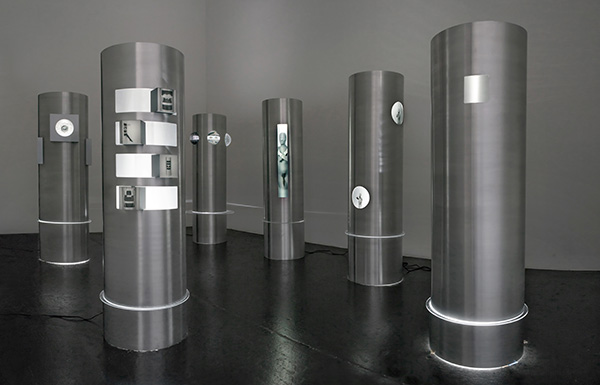
Petra Eiko’s installation immerses the viewer in a sensorial experience through six 3D sculptures and a video installation. Her work fosters a conversation on the significance of water –for both individuals and humans collectively–, as well as its impact on the future of our planet. Her work raises awareness of climate change by highlighting the fragile state of water on Earth. She explores the changes and challenges we face today, which come as the result of our endless exploitation of water supplies and natural resources, and the continued impact the industrial world has had on humans and the environment.
The organization, located at Schloss Reuschenberg in Neuss (Germany), was founded in 2004, inspired by a quote of German poet Goethe: “There are only two lasting bequests we can hope to give our children. One of these is roots, the other, wings”. Undoubtedly, we all need deep roots to develop a firm foundation and strength. Wings we need to let our dreams and creativity fly.
La Neomudejar Museum /
SPAIN
Project: Uninhabited
Artist: Carmen Isasi
Curator: Néstor Prieto
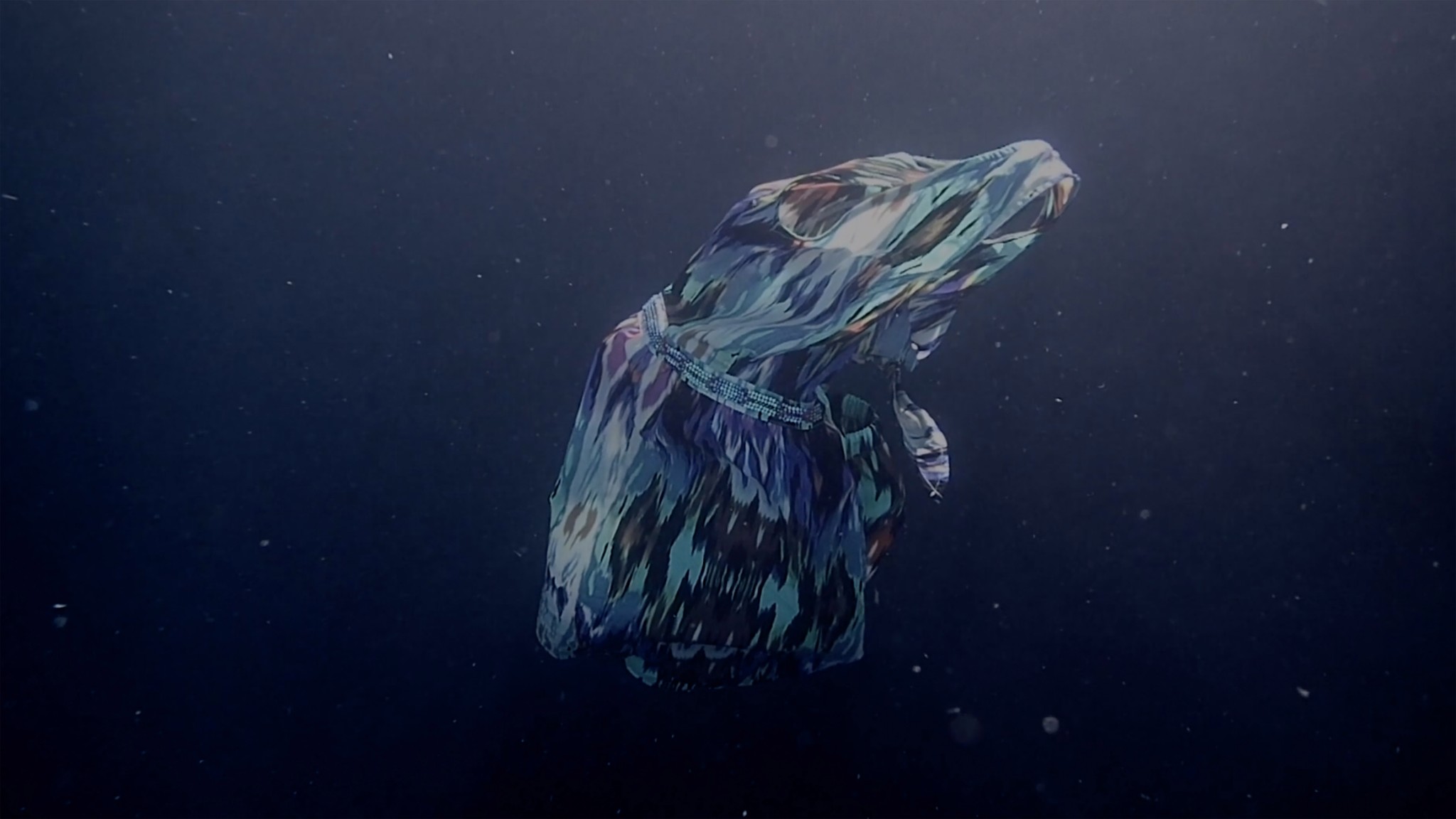
Carmen Isasi has worked on the UNINHABITED project since 2019. During this time, not only has the immigration crisis worsened, but developed countries have also tightened their policies to stop the immigration flow into their territories.
With new, tougher immigration policies in place, immigrants have lost all hope to find a place they can call home as they embark on a dangerous, life-threatening sea journey to reach European shores.
Isasi’s project features the clothes worn by immigrants on their way to Europe. Their clothes symbolize the many struggles they have faced before and during their journey: They are a testament to their lives, personal stories and country of origin.
From a critical standpoint, this proposal acts as a bridge connecting human drama to the rest of us.
MOLAA Museum of Latin American Art/
LONG BEACH
Project: When God Was A Woman, 1980-2021
Artist: Judith F. Baca (USA, 1946)
Curator: Gabriela Urtiaga
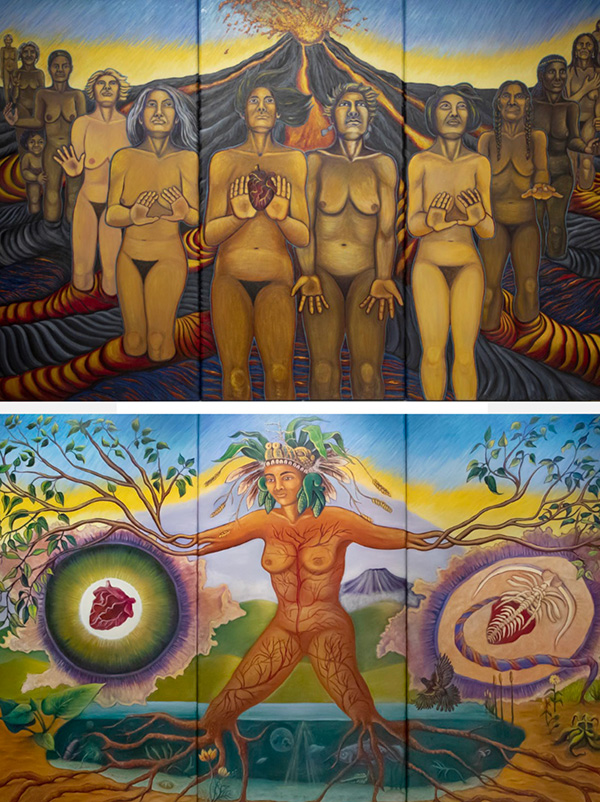
Judith F Baca, in contemplation of Merlin Stone’s When God Was A Woman –an exploration of ancient worship of the female Goddess and the subsequent suppression of women’s rites–, developed a workshop process to source ideas, record dreams, and construct imagery and content emblematic of females. As a double-sided triptych, Thirteen Women in the Volcanic Eruption and The Birth of the Vision of the Heart was brought to completion in 2021, as Baca advanced these paradigms.
Thirteen Women in the Volcanic Eruption incorporates the young women who participated in the workshop into the painting, who simultaneously represent Latina and Chicana women –and all women. Their naked bodies are shown standing in the fiery lava of the volcano, displaying the palms of their hands, and in the center –the heart–, synonymous with life. All the figures emerge from the fertility of the volcano’s ashes in a fertile paradise, like a phoenix that rises from its ashes ready for a grand ceremony.
The Birth of the Vision of the Heart is a continuation of this story: the great ceremony of a ritual, a goddess possessing vital energy, Mother Earth. She stands with her hands extending into large flowering branches, her rhizomatic feet extend into deep roots, and throughout her body, blood spreads in venous threads that connect her corporeal mass with an earthly paradise and the originating source of life; a fertile pond with the most ancient forms of life.
Ecofeminist: JUDY BACA
“On the Matriarchal Mural and Its Symbols”
OPC Office Cultural Projects /
MEXICO
Project: Rendezvous: Esta tierra es Mi Tierra
Artist: Davis Birks
Curator: Laura Ayala
The moment of our appointment arrived. We are where we had feared and predicted. Through a video installation, Davis Birks offers us the possibility to activate a conversation in which we can review the past, the present and the future. It is a reflection on the environment and our impact on it. That would be a first reading.
It is observed how an organic arrangement (that of a river) is replaced by one of geometric and artificial order. This happens as the audience comes into contact with the piece. The curves and the apparent disorder in which the small stones of a river are placed and the capricious shapes with which the water flows will be replaced by a Tartan pattern. The artist chose to use this particular pattern as a reference and homage to his Scottish ancestry. The crisscrossing lines could be the axes of a GPS grid, or the interwoven linear trace of the urbanizations in which we live and that is “natural” to us. This could be a second reading.
Birks confronts us with Nature observed through a surveillance camera lens. That is why he chose black and white for the video. Nature distant and supervised, we are supervised. We = Nature. We have almost forgotten the latter. The conquest of natural territory has caused not only an impact on the environment; it has also had consequences on its original inhabitants and has led among other things, to their displacement. This could be a third reading.
These sensitive themes, or others, emerge from a narrative, apparently simple, that unfolds many layers of interpretation. What would your reading be?
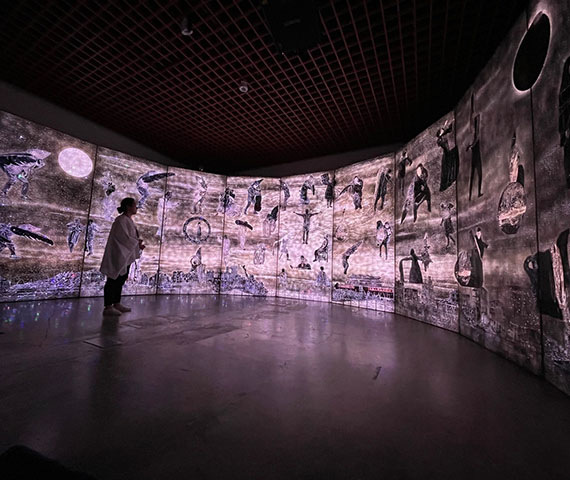
ReflectSpace Gallery, Glendale Library, Arts & Culture (Glendale)
& Culture Nomad (Seoul)
Project: “Eternal light – 21c The Last Judgment”
Artist: HanHo
Curators: Monica Hye Yeon Jun, Ara & Anahid Oshagan
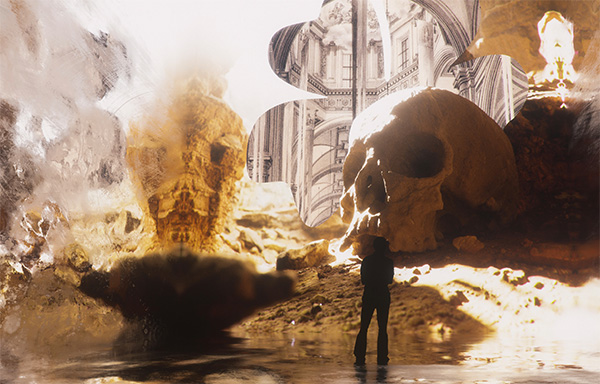
Inspired by Michelangelo’s masterpiece, The Last Judgment, artist HanHo’s Eternal light – 21c
Using traditional art techniques combined with technology, HanHo creates multi-colored light-infused immersive worlds that shift and ebb in front of your eyes. Nearly all the figures depicted in the work are the artist himself—performance, history, war, future, fantasy all meld in this massive panorama of humanity. “Eternal Light,” as the artist calls it, bathes his canvases and elevates his worlds to near mystical proportions. Will this eternal light uplift humanity from the on- rushing climate crisis? Will we have the ability, as species, to avoid our own destruction? Who will judge us, finally? These questions undergird HanHo’s “Last Judgment” and create a space for us to contemplate them and our future.
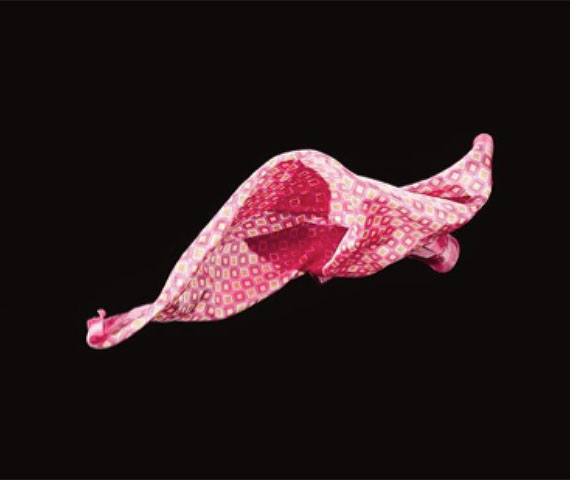
Raubtier & Unicus Productions
LOS ANGELES
Project: Reactive Elements
Artist: Alejandro Ordoñez and Raubtier & Unicus
Curator: Marisa Caichiolo
Reactive Elements is an art installation dealing with the fragility our natural resources and the chain-like reactions human activities have set off on planet Earth. Through the use of a voile, –a suspended piece of fabric– and by projecting images onto it, the artist unveils an ugly reality, while providing visitors with the opportunity to come face-to-face with our own individual footprint and the cumulative impact of anthropogenic activities on our environment.
The projected images are divided into four sets to represent the different elements we, as humans, actively affect: air, water, earth and fire. The universal nature of the images appeals to viewers’ sense of belonging, pushing them towards the realization we have all collectively played role in this tragic destruction and deterioration of the planet, while the volatility of the fabric dancing in the wind serves as a poignant metaphor to the fact that, due to no one else’s doing but our own, life on Earth hangs by a thread.
DIVERSEartLA 2022
DIVERSEartLA is back with a new ecological lens. Curated by Marisa Caichiolo, this year’s edition will examine not just how the environment is represented in art, but how humanity’s place in the world is depicted. This exhibition will open up an important dialogue about the Earth’s past, present, and future, uniting the community around discussions of the global climate crisis and potential solutions.
“One of the most powerful things about art is that it brings people together, and transforms the way we communicate. The goal of DIVERSEartLA 2022 is to view this sector of art within the show through ecological glasses.
This topic is at the heart of a growing number of art narratives, including exhibitions built with high-tech innovations, designed to inspire artistic appreciation and the desire to respond to environmental challenges – reinforcing the value of translating environmental advocacy into art.
The installations, immersive experiences, and performances represent our present day and the looming impact we will all face if the planet continues to warm. DIVERSEartLA 2022 will encourage visitors to confront the complex challenges of our global climate crisis and imagine potential solutions.” – Marisa Caichiolo
Our engagement with museums and institutions this year includes projects with Dox Contemporary in Prague/Czech Center New York and The General Consulate of The Czech Republic in Los Angeles; MUSA Museum of the Arts of the University of Guadalajara and MCA Museum of Environmental Science; MUMBAT Museum of Fine Arts of Tandil & Museum of Nature and Science Antonio Serrano of Entre Rios, Argentina; Museum of Nature of Cantabria, Spain; Skid Row communities; Torrance Art Museum; Raubtier Productions & Unicus.
2022 DIVERSEartLA Highlights
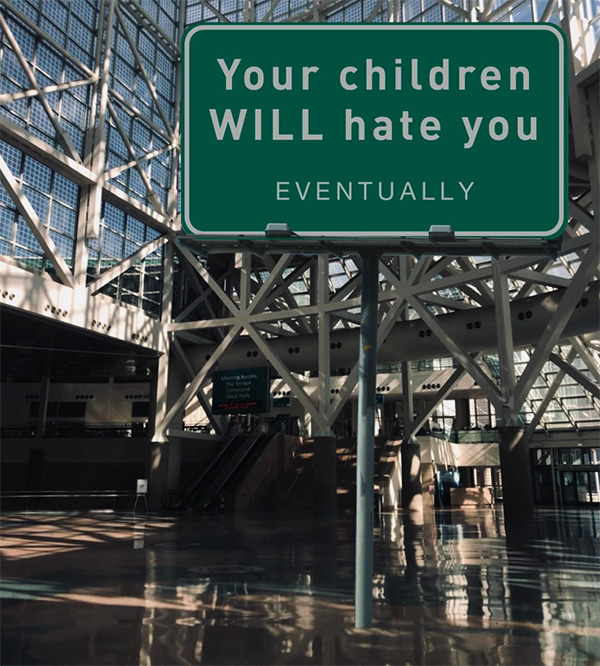
THE SIGN (part of the Real News series)
Site-specific installation by: Swen Leer
Dox Contemporary, Prague / Czech Center New York &
The General Consulate of The Czech Republic in Los Angeles
Highway signs are always right. Not in a political way but by way of conveying a fact. In our time of social-media-fed competing narratives, “alternative facts” and fake news, the road sign seems to be one of the last anchors of truth that everyone can agree on, left and right. It is a true icon of Los Angeles, a city of freeways and cars, of people commuting to and fro, many hours a day, each day.
Arguably, road signs are the most read and trusted literature of Los Angeles, if we can call them that. On the one hand, they are a powerful symbol of progress of the last century, and of mobility. On the other hand, however, they represent the evidence of our technological rampage that has led us into a real climate crisis.
The installation, The Sign, plugs into this a-priori factuality by mimicking the iconic freeway signage, while communicating an unexpected message: “Your children WILL hate you – eventually”. The text is speculation about the future of our society as well as a deeply disturbing existential thought that has probably crossed the mind of most parents. Their kids are the ones who will pick up the tab of our celebrated economical progress – a religion of economical growth at all costs. Placing the iconographic freeway sign into the interior of the LA Convention Center creates an absurd situation for the viewer, conveying a disturbing message in the matter-of-fact form they have recently seen getting off the freeway to get to the LA Art Show. And the message stands, after all – highway signs are always right. Right?
The Other Waterfall & Chapala Drops…Drop By Drop
By: Claudia Rodriguez
MUSA Museum of the Arts of the University of Guadalajara
and MCA Museum of Environmental Science
Through the University of Guadalajara Foundation | USA, the Universidad de Guadalajara presents their most relevant museum projects: MUSA Museum of the Arts of the University of Guadalajara and MCA Museum of Environmental Science.
MUSA is a museum with 27 years of history. Their exhibition program includes activities in which the arts become an impulse to motivate social transformation. Their compromise with the environment was consolidated with a state certification that recognizes the process and actions of the institution to protect the natural environment. The MUSA Museum of the Arts was one of the first university properties that implemented sustainable actions related to the management and recycling of waste, as well as, the rational use of water and energy.
The MCA Museum of Environmental Science is an upcoming project of the university. Envisioned as a space engaging with the community in order to foster a sense of belonging through empathy and closeness, that will lead the community to initiate actions of ecology preservation. There are three main visions that constitute the vocation of this museum: to understand the urban dynamics and their impact in nature, the equal disclosure of science, and the generation of emotions that lead to learning.
This time, the MCA presents two installations from the artist, Claudia Rodríguez: La otra cascada — The Other Waterfall — and Chapala también se-a-gota — Chapala drops…drop by drop —, both reflecting the contamination and lack of water that has affected the state of Jalisco, Mexico in the last decades.
The Earth’s Fruits
By: Guillermo Anselmo Vezzosi
Curator: Indiana Gnocchini
MUMBAT Museum of Fine Arts of Tandil & Museum of Nature and
Science Antonio Serrano of Entre Rios, Argentina
The artist, Guillermo Anselmo Vezzosi, expresses a reflection on his long-standing concern about how our primacies and human values have increasingly distanced us from our true essence, and rethinking our priorities as a society. Our social habits within the last few decades – which have been based around consumption – have had an impact on climate change, on the conservation of the environment, and the necessary care of the environment – individually and collectively.
Artists have explored new perspectives on approaching “creative doing” by using environmental art, by creating awareness through ecological activism. In this sense, Guillermo shows us the huge colossal amounts of waste that we add every day and it is from his own work, in line with the community, that he dedicates his hours collecting from the same environment he inhabits, which he calls Fruits of Progress. He aims to heal the footprint of contemporary man, which at present it seems irreversible.
The Earth’s Fruits is constituted as a scientific research project whose ideology culminates with an installation work of a specific ephemeral site, where the waste that takes on a second life is dignified. The immersive installation invites us to reconsider that we are part of a whole with nature – a complex whole in constant mutation and adaptation. It challenges us to examine our most recondite thoughts, questioning who we are and the links that unite us to our habitat. In this way, it propositions the visitor to act on new imaginaries, creating an illusion of time and place, where he is the protagonist.
Our Turn To Change
By: Andrea Juan and Gabriel Penedo Diego
Museum of Nature of Cantabria, Spain
Presented by Museum of Nature of Cantabria, Spain, the video installation appeals to the viewer, through images, to awaken to an increasingly worrying reality. Our Turn To Change deals with climate change and the consequences that these changes produce in our habitat. Nature speaks to us, screams at us…
One small drop fell and then another and another and another. Thus, drop by drop, large amounts of ice are lost every second. The poles are melting. Meanwhile, we continue on with our lives, with our dreams, as if this could never affect us. The dripping continues and vast frozen expanses have already been lost. The Arctic is at minimum levels, Antarctica has lost ice shelves, glaciers have retracted and the ocean levels continue to rise.
Forest fires, droughts, tidal waves, floods. It is our turn to change. We can still do it.
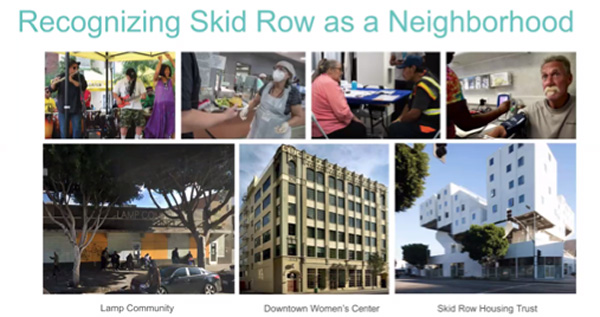
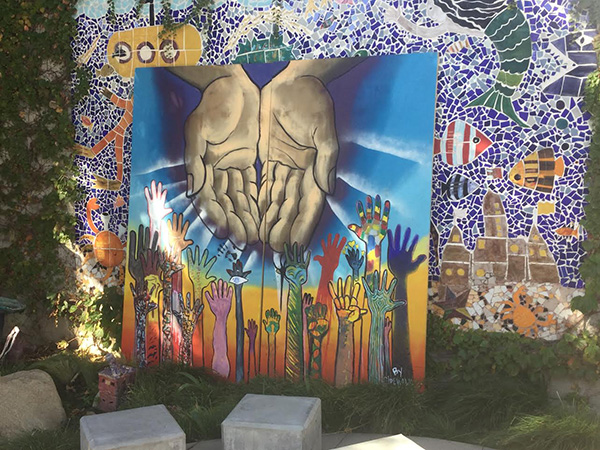
Recognizing Skid Row As A Neighborhood: Skid Row Cooling Resources
Curator: Tom Grode
Recognizing Skid Row As A Neighborhood is how DTLA 2040 (Department of City Planning) formally presented Skid Row this year to City Hall as part of updating the Downtown Community Plan. Skid Row is a dynamic, primarily African American, residential neighborhood – not a problem to be fixed. The brutal heat waves of September 2020 created Skid Row Cooling Resources, a collaborative planning effort and think tank to ensure the summer of 2021 and beyond was better for Skid Row residents. Skid Row is a unique Urban Heat Island in the larger Heat Island of Downtown Los Angeles.
Tom Grode
Tom moved from Santa Monica to 5th and Main in May 2012, not realizing he was a block from Skid Row. Since then, he’s focused on advocacy around Skid Row as a Community. Tom is an original member of the Skid Row Cooling Resources coalition, the Skid Row Now and 2040 coalition, the Skid Row Community Improvement Coalition, and the Skid Row Arts Alliance. He is heavily engaged with Skid Row as a powerful arts community, in particular a part of the Los Angeles Poverty Department (LAPD) and Urban Voices Project.
Memorial To The Future
Sculpture by: Daniela Soberman
Video installations curated by: Kisito Assangni
Wilfried Agricola de Cologne
Photographic elements: open source via TAM staff
Curated by: Max Presneill
Torrance Art Museum (TAM)
The utopianism of modernity that led to scientific and technological developments also led us towards forms of capitalism that have endangered the planet. Exploitation, excess, and greed have driven this while an ostrich-head-in-the-sand posture has characterized our approach to engaging with climate change, and the problems and potential solutions that await us in the present as much as the near future.
The formalist structure, created by Daniela Soberman, acts as the historical link to the project of Modernity and its aspirations while simultaneously reminding us of its perils and failures. Using Brutalist architecture as a reference point that encapsulates both the idealism and abject failure of this model, the collaborations, via photograph and video, highlight the need for immediate action. This project brings together 6-8 artists, in conjunction with Soberman, to explore the situation within the historical context that led us to this point of environmental catastrophe but with contemporary takes on our current position.They do this not by way of propaganda, but rather via a diversity of photographic concerns that by physical proximity in their installation on a single structure, bring together various viewpoints and interpretations of warning, of caution, of danger in respect of our environment, nature and climate.
ECOPOETICS OF GENERIC WORLD
International video program on climate change
Curated by Kisito Assangni
Climate change is arguably the most pressing socio-political issue of our time, with famine, poverty, loss of biodiversity, and mass-relocation hanging in the balance. ECOPOETICS OF GENERIC WORLD offers a range of artistic positions and responses to the dichotomy of impending climate change. The project consists of a screening that presents works by international contemporary artists working at the intersection of arts, climate change, culture and technology.
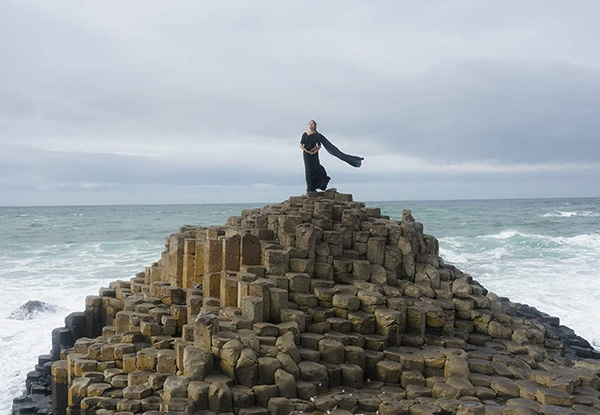
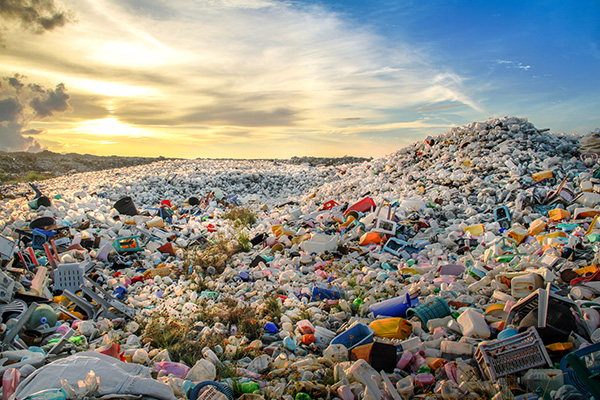
Environmental Digital Experience I A. Ordoñez
Curator: Marisa Caichiolo
Presented by: Raubtier Productions & Unicus
Climate change is a significant threat that has raised concerns all over the world. From shifting weather patterns to rising sea levels, the impact of climate change is global, and at an unprecedented scale.
Concerns about global warming have increased significantly since 2013. Climate activists across the world are now organizing protests and non-violent civil disobedience to raise awareness around the crisis.
Be that as it may, there are people who are not concerned about the effect of climate change and it is a divisive topic all over the world. We hope this installation can bridge the gap and instill a sense of urgency about the threats facing our planet so we can mend the issues that divide us and come together to heal the Earth.
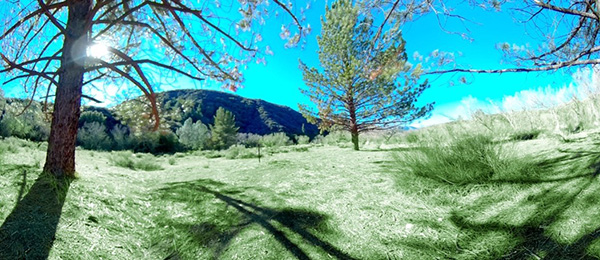
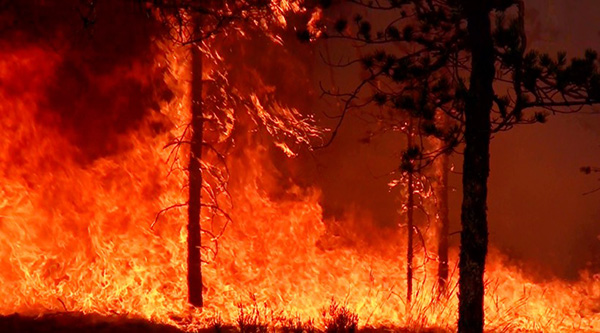
DIVERSEartLA 2021
The 2021 edition of DIVERSEartLA, curated by Marisa Caichiolo, will focus on the presence, contributions, research and documentation of women and non- binary artists at the forefront of work at the intersection of art, science and technology represented by guest Museums, Institutions and Not-for-Profit Organizations.
“Science, art and technology are human attempts to understand and describe the world around us. The subjects and methods have different traditions and the intended audiences are different, but I think the motivations and goals are fundamentally the same. I think one of the most primal and innate needs of humans is to understand the world around us, and then share that understanding,” said Caichiolo.
In the field of digital art in the last fifteen years, many artists have been working on materializing the digital information and new media practices by audio or visual means (such as installation works, audio-visual and performances which include technology) in order to grasp the imagination of it; while other artists are aiming to present the concept of ‘signals’ from the perspective of synesthesia: they try to visualize sound signals with the aid of machinery and therefore transform the abstract geometric images into sounds through computer operations.
This wave began in the 1920s, when many artists aimed to create time-based visual works. Although some of the works seemed to embody the technology and innovation, much of it actually originated from the most tangible form of reality, the artist’s surrounding natural environments.
DIVERSEartLA will be an examination and a compilation of material, as well as an exhibition featuring the work of women and non-binary artists who have played a central role in the development of new media practices within art institutions and throughout history. We are also diving into a new period where we’ve had to deal with the breakdown of traditional relationships between the material and the immaterial.
While the cryptographic tokens used to create NFTs, are similar to cryptocurrencies such as BitCoin, the tokens in NFTs aren’t fungible, or interchangeable. So, it’s impossible to exchange one NFT for another, as one could do with currency. It’s often equated to an autograph, but on a digital file. An NFT not only tracks the creator of the artwork, but also the ownership and market value. Because it is securely stored in the blockchain, an NFT is unique and non-interchangeable. Photographs, videos, gifs, audio, and any digital file can be represented as an NFT.
Also check out our DIVERSEartLA Talks series, an online platform where the Museums and Institutions have a space to dialog, and share with the general public their programs in 2021.
Dignidad, National Archive of Chile performance, series of Dignidad, 2018
By: María Verónica San Martín, Luis Cobelo and Yolanda Leal
Curator: Fabian Goncálves
AMA Art Museum of the Americas, Washington DC
Art Museum of the Americas (AMA) has joined with a special project curated by Fabian Goncálves, that will feature a compilation of material and the work of women artists who have played a central role in the development of new media practices throughout history, as well as by women and non binary people whose forward-thinking practices are currently reshaping the field.
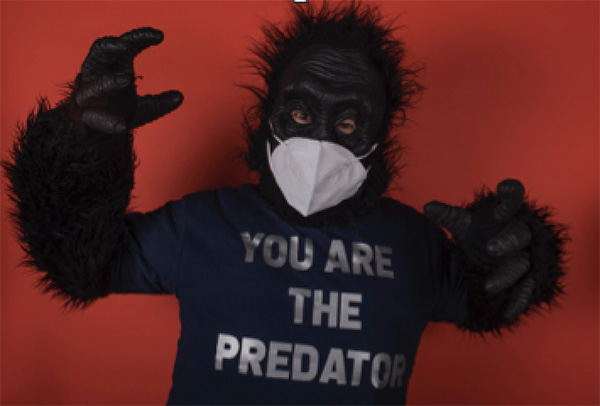
Venezuelan artist Luis Cobelo (PILAR) will be part of AMA with a performance, Yolanda Leal from Mexico will present the performance Gorilla Nature and a special performance will also be presented by María Veroónica San Martin.
Dignidad is an art installation at The National Archive of Chile based on secret telephone documents about Colonia Dignidad. Found in 2012 by the ex-settler and activist, Winfried Hempel, the audios reveal for the first time to the public conversations between Paul Schäfer and other Nazi agents in 1978. Through sculpture, sound, performance, text, and a selection of historical archives, the installation reveals a complex system of codes and transcontinental actions that culminated in crimes against minors and opponents of the Chilean civic-military dictatorship (1973-1990).
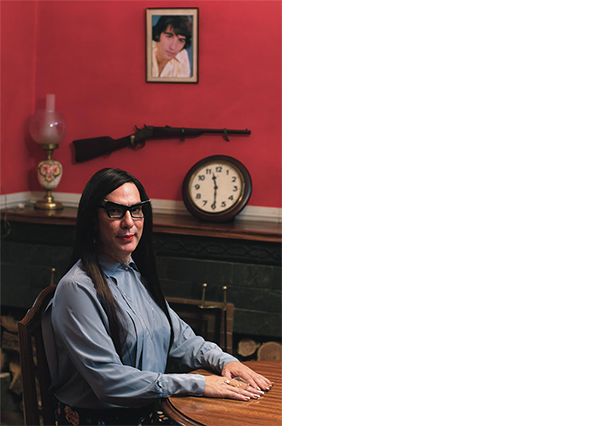
DATA | ergo sum | RELOADED Installation
By: Ana Marcos
Museum La Neomudejar/ Madrid, Spain
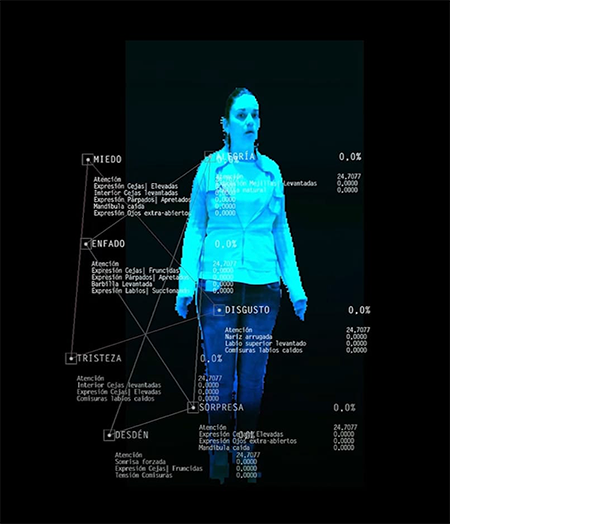
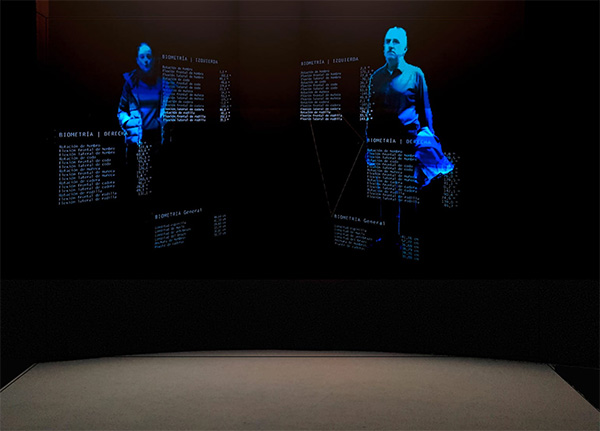
DATA | ergo sum | RELOADED is an interactive Art installation that visualizes the capability of viewing machines using Artificial Intelligence to extract data by a simple observation of visitors, created by artist Ana Marcos.
Ana Marcos is a graduate in Fine Arts from Madrid University and Industrial Engineer from the Polytechnic University of Madrid. As a multidisciplinary artist, she combines different art forms like interactive installations, video, and photography, working on new ways of experimentation in the field of arts.
She is the leader and co-founder of 3Dinteractive, a group of engineers and artists that seeks, through research, a deeper understanding of the relationship among art- science-technology and the public. All technology produces a change in our way of living and understanding reality. Today, we have at our disposal complex, innovative technological environments, works based on experimentation and studies of Universities from all over the world and all that knowledge is available on the network to be shared not only by technologists, but also by artists.
It is clear the momentum and relevance of that technology in general, and Artificial Intelligence in particular, is gaining in our society and, as an artist, she believes that artistic work has the obligation to explore and experiment in the field of AI. Art always makes its way into thought and therefore also into technology, and can provide other perspectives to the most innovative developments. Whether AI it is a tool or a discipline, it is – and will be – a topic of work for artists. Hopefully, art will also be able to influence the developments in AI.
The Symphony of Now
By: Angie Bonino
San Marcos Museum of Art (MASM), Lima, Perú
The San Marcos Museum of Art (MASM) from Lima, Perú will bring a new media project of augmented reality by Peruvian artist Angie Bonino, titled “THE SYMPHONY OF NOW, which consists of a video installation, and interactive sound installation focusing on the Andean techno de-colonial shamanism.
The artist, Angie Bonino, was born in Lima (Peru), in 1974, and she has continuously travelled all over the world – she even lived and worked in Barcelona, Spain for eleven years. It should come as no surprise then that the main medium of her artistic proposals is precisely the motion pictures, specifically video and video installations. However, this does not mean that they are her only forms of expression. Angie Bonino is an artist of our time in all senses, a multimedia artist focusing on the crossover of art and technology. After all, in addition to video, her works are also expressed in animation, digital techniques, graphic prints, drawings, paintings and sculptures. Yet, through all of this plurality of media, there remains at all times the same predominant aesthetic intention: to question the image.
In Angie Bonino’s work, this questioning of the image through artworks always has a moral and political intent. Her goal is to reveal, in all the hyper-mediatic image production and transmission networks, the dissemination of the invisible, occult, power spheres and systems which determine the configuration of what she calls the image world:
“This world in which we live today, which has become an engulfing universal screen that traps and subjects our eyes, but that does not let us see. Because of their extreme, extraordinarily intense visibility – repetitive, hypnotizing, alienating – the power networks and their objectives of domination become invisible. And thus, unnoticed, their domination becomes inscrutable and fully irreversible.”
This is what Angie Bonino tries to get us to see in her works.
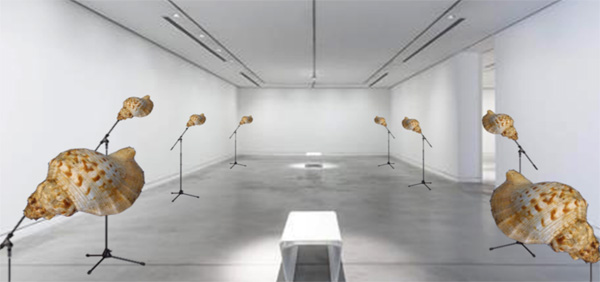
Immersive Distancing
By: Carmen Argote and Zeynep Abes
Curator: Chon Noriega
UCLA Chicano Studies Research Center
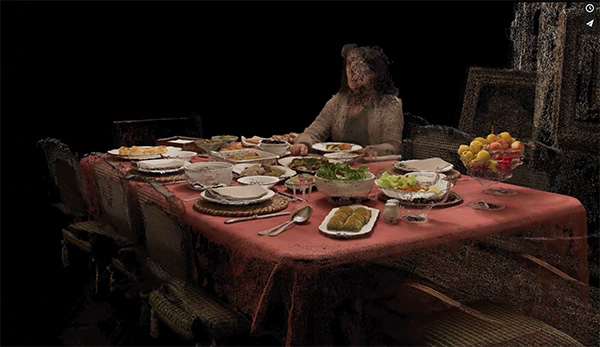
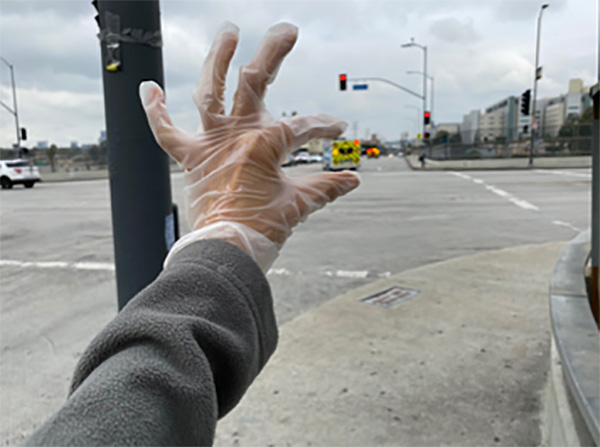
Curated by Chon Noriega, UCLA Chicano Studies Research Center will present a special project titled Immersive Distancing by artists Carmen Argote and Zeynep Abes. This exhibition will examine recent media art produced during the Covid-19 pandemic by L.A.-based artists Carmen Argote (Mexico, b. 1981) and Zeynep Abes (Turkey, b. 1993). Zeynep Abes now lives and works in Los Angeles.
These artists address our ongoing cultural and political moment in relation to the body, memory, archival traces, and the urban landscape. Immigration – as both personal experience and socio-political reality – informs their larger body of work. These artists have previously worked in installation and sculpture, drawing heavily on family artifacts and archives as well as explorations of architectural space. Here, they approach media as a visualizing technology that brings their site-based works into an immersive narrative, while they also engage, adapt, and challenge the abstraction inherent in science – but especially digital science.
The production, formal characteristic, and content of these media works were directly impacted by Covid-19 restrictions, moving each artist to develop remote modes of working that blurred the line between production and post-production. Both artists drew upon multiple digital sources: video, photography, and audio recordings.
In Last Light, Argote uses the sights and sounds of her walks across L.A. during the pandemic as the basis for a meditation on dis-ease and destruction. She turns to the foundation for all science – measurement – proposing to measure her body in relation to the scale of the city and the world, but uses the foundation for all art – the hand – as the basis for establishing scale.
In Memory Place, Abes explores three moments in her “fraying certainty” about Istanbul as it becomes an idea more than a place, visualizing this process through point cloud data and photogrammetry that transform video and photographs into 3D environments that recede from the viewer. These environments are impressionistic and partial – with gaps here and there in the scenes depicted, and with portions of imagery coming into sharper focus as they move toward the vanishing point. In both works, the fragmentary nature of the imagery is made immersive by the sound design.
Agua
By: Luciana Abait
Now Art LA and Building Bridges Art Exchange
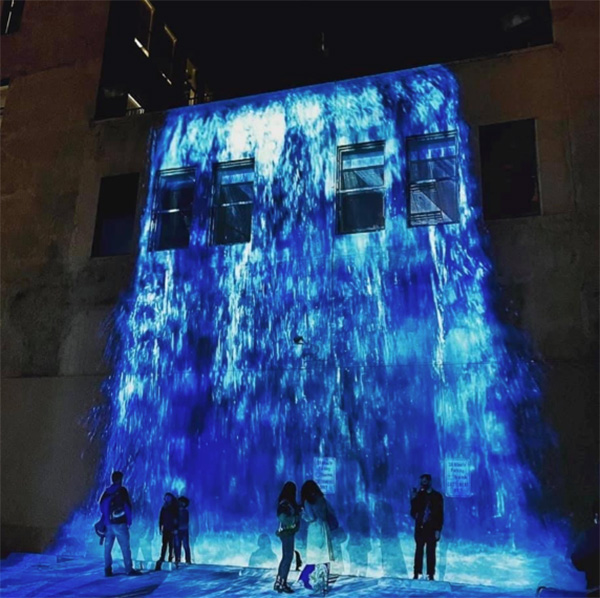
Now Art LA and Building Bridges Art Exchange have joined together as local non profit organizations to present the work Agua by artist Luciana Abait, a video projection inspired by the flood-myth motif that occurs in many cultures in which water acts a healing and re-birth tool, often referencing ideas of creation, purification and sustaining life.
Agua offers the public a space, an oasis, for healing and understanding. The work is site specific and architecturally integrated to foster a poetic awareness of water as a sacred resource for humanity while creating a moment of reflection for those who attend. Agua is a multichannel artwork combining videos of water gathered through years from nature exploration around the globe. The shifting color hues seen throughout express various states of mind and emotion, harmonizing the interactive experience physically with an internal one.
Agua as exhibited in downtown Los Angeles supports a call to action and underlines the importance of water as a key component to our future survival. I intend for this work to participate in opening awareness and actions surrounding environmental initiatives with depth, beauty, grace and wonder.
Girls’ Voices Now
Women’s Voices Now
Women’s Voices Now (WVN) is a Los Angeles-based 501(c)3 non-profit organization that uses the power of film to drive positive social change that advances the rights of women and girls globally. We seek to challenge the mis- and under-representation of women by promoting films made by women, about women, for all.
Girls’ Voices Now has served 70 girls from under-resourced communities and overseen the production of their 12 short films, which have been selected and awarded in 48 film festivals, and watched by over 522,000+ online viewers thanks to our partnerships with Here Media, Kanopy, UN Women, and the UN #HeforShe Campaign. This program empowers girls and femme-identifying youth from under- resourced communities to find, develop, and use their voices for positive social change through filmmaking.
PERFORMANCE: Un/Seen
Artist: Tiffany Trenda
Curator: Marisa Caichiolo
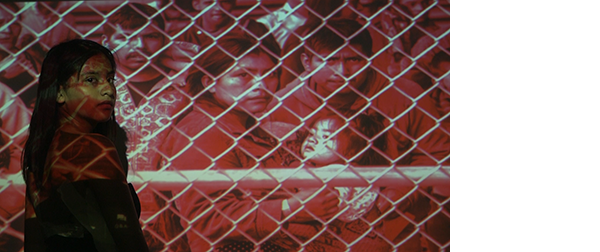
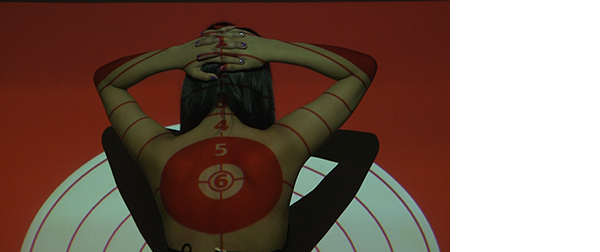
Artist Tiffany Trenda presents Un/Seen, a live performance within an immersive experience using volumetric capture. It transforms in real-time depending upon the actions of the public.
With new immersive experiences, we become disembodied. That is, we are physically in one space while our eyes and thoughts are experiencing another world simultaneously. Our bodies become dissociated as we shift between the simulated and the real. Furthermore, we are not immediately within the presence of another. Our presence is mediated and transported into another space that doesn’t actually exist. We are in essence, seen and unseen.
These new applications also blur the role of the user and creator by allowing both parties to change the experience. That is, the spectator is no longer a witness but a collaborator. Also, all parties are represented as avatars and this opens a narrative of, “who is this?” and “what will happen?” Our roles as players in these games are ambiguous, a perfect reflection of our time with the uncertainty of our future.
IMAGRAPHY (Documentary)
Directed by: Alejandro Ordoñez
Produced by: Yesenia Higuera, Alejandro Ordoñez & Benjamin Price
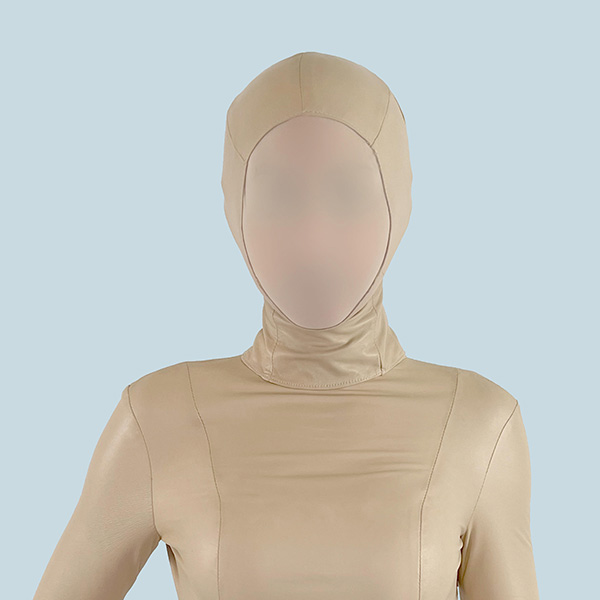
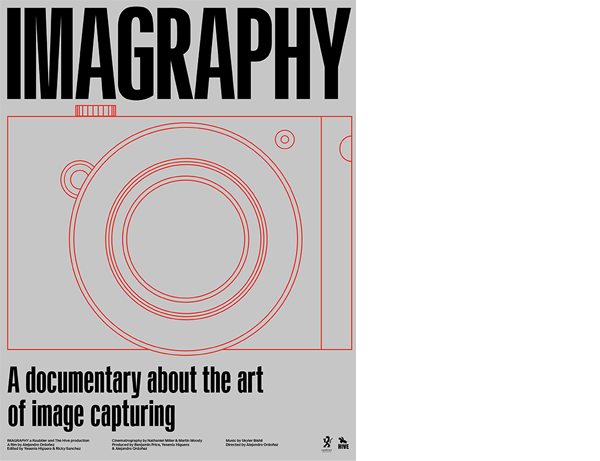
Imagraphy is a documentary where a variety of international photographers share their stories about the craft, the industry, techniques and their overall impressions of the world as seen through their lenses. Featuring: Roger Ballen, James Balog, John Batho, Peter Bialobrzeski, Michel Comte, Ralph Gibson, Greg Gorman, Henry Horenstein, Graciela Iturbide, Hiroji Kubota, Sir Derry Moore, Howard Schatz, Andres Serrano, Sandy Skoglund, Paul Watson, and Stephen Wilkes.
Rose River Memorial
By: Marcos Lutyens
Curated by: Marisa Caichiolo
The Rose River Memorial is a community art collaboration that honors and grieves the many lives lost during the COVID-19 pandemic in the United States.
We aspire to create a felt rose as a symbol of grief for every life lost. The installation will be a sacred space for healing, where people can connect with their own feelings and senses to experience their own grieving, individually or in a collective, as well as celebrating life and inviting humanity to celebrate new beginnings.
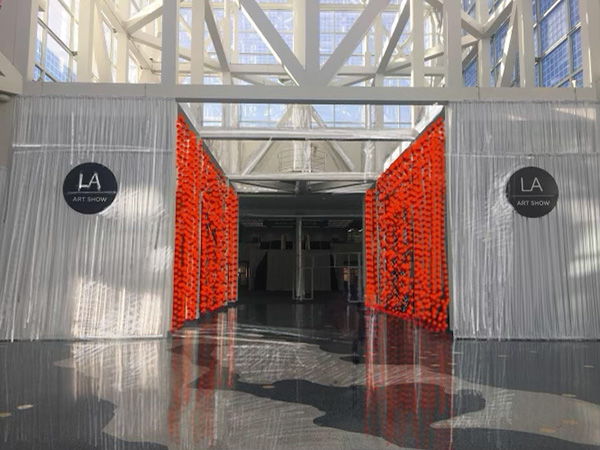
DIVERSEartLA 2020
For 2020, Marisa Caichiolo’s curatorial focus for DIVERSEartLA will be expanded to embrace and celebrate those art institutions and art collectors who support LA’s blossoming art community.
DIVERSEartLA is dedicated to bringing together some of the most important local and international art institutions, museums and non-profit organizations for an elevated and thoughtful dialogue.
The communities of Los Angeles reflect an impressive variety of ethnic backgrounds, and it’s iconic natural environs are equally varied and vast. To honor this unique biodiversity we are focusing on the representation of contemporary artists from around the world as a part of each institution.
As we approach the 2020 US presidential election, I believe the importance of this year’s curatorial focus should remain committed to fostering and learning about the organizations supporting inclusion and diversity.
DIVERSEartLA will be expanded to embrace and celebrate those art institutions and art collectors who support LA’s newest and largest iteration of art community, as well as to create a strong conversation around a variety of events and programs. Thus serving as a platform and resource for diversity best practices and leadership, including ALL of Los Angeles’s communities.
This year, we are thrilled to celebrate the 25th anniversary of the LA Art Show with a magnificent event that will reflect LA’s expansive natural habitats and cultural diversity, as well as DIVERSEartLA as an essential part of making museums and cultural institutions models for pluralistic communities. There is nothing more important than inclusion in a moment where U.S. political and social culture is defined by division.
Pyramids
Curated by: Chon Noriega
Presented by: LACMA & UCLA Chicano Studies Research Center
For his new work called “Pyramids,” L.A. artist Gronk will be re-imaging the opera stage he originally designed and painted in 2013 for Peter Sellar’s adaptation of Purcell’s semi-opera “The Indian Queen (1695). That work connected Purcell’s fanciful notions of the Conquest with current issues of immigration and authoritarianism. During the run of the LA Art Show, Gronk will be painting on a full-size mock-up of a theatrical stage, providing visitors with a behind-the-curtain view of his artistic practice as well as of the set making involved in performance and media culture. Unlike a theatrical performance, the set design will be completed only after the exhibition closes and the audience is gone. Rather than see a finished work, visitors will be able to interact with the artist, participating in the process of making a “political theater” for our contemporary moment. Programs will include a dialogue between Gronk and Peter Sellars, and an impromptu performance, both using the theatrical space created by “Pyramids.”
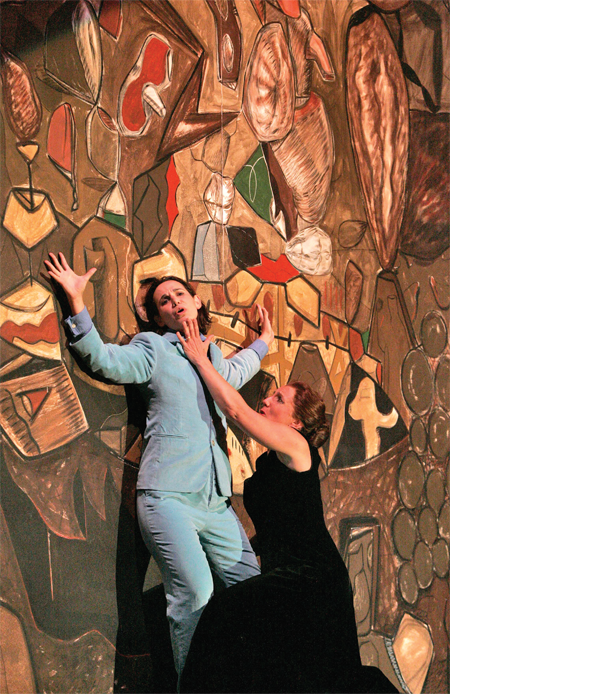
I See You, I Am Seen: On the Impact of the Diversity
Curated by: George Luna Peña
Presented by: The Broad
For his new work called “Pyramids,” L.A. artist Gronk will be re-imaging the opera stage he originally designed and painted in 2013 for Peter Sellar’s adaptation of Purcell’s semi-opera “The Indian Queen (1695). That work connected Purcell’s fanciful notions of the Conquest with current issues of immigration and authoritarianism. During the run of the LA Art Show, Gronk will be painting on a full-size mock-up of a theatrical stage, providing visitors with a behind-the-curtain view of his artistic practice as well as of the set making involved in performance and media culture. Unlike a theatrical performance, the set design will be completed only after the exhibition closes and the audience is gone. Rather than see a finished work, visitors will be able to interact with the artist, participating in the process of making a “political theater” for our contemporary moment. Programs will include a dialogue between Gronk and Peter Sellars, and an impromptu performance, both using the theatrical space created by “Pyramids.”
In recent years, initiatives to diversify art museum staff have accrued considerable currency. Although more work is still needed, the calls for greater diversity have rippled through the art world. In Los Angeles, The Broad has been a leading institution in this work through its innovative Diversity Apprenticeship Program (DAP). A full time, paid apprenticeship in art handling and preparations for those underrepresented on museum staffs, the DAP is shifting demographics and changing the landscape of equity in the museum field.
Taking its title from a speech by educator and former Black Panther party member Ericka Huggins to the American Alliance of Museums, this space features immersive photography and video which highlight the first-hand experiences of DAP participants as they build museum careers.
The Birth of the Niemand
By: Viktor Freso
Curated by: Marisa Caichiolo
Presented by: Danubiana Museum | Bratislava
The Birth of the Niemand consists of monumental large sculptures. They represent a whole range of negative emotions that people try to hide in their lives, such as maliciousness, inferiority complex, and unhealthy self-confidence. The artist studied in Bratislava at the Academy of Fine Arts and Design in Bratislava and in Prague at the Academy of Fine Arts. Frešo belongs to the most remarkable figures of the contemporary art in the region of the former Czechoslovakia, Europe. His work and overall approach to art is rather untypical but at the same time they reflect the situation in the society and culture.
The artist creates sophisticated concepts and projects presenting them as seemingly simple closed “Pieces of Art”. He is often critical in his works and aggressively expresses his contempt of the art scene itself and its processes but with a light, humorous and playful undertone. One of the most fascinating elements of his creation is the seeming counterpoint of emphasis on huge, grandiose EGO connected with a Gesture in combination with disarming self-ironic humility. His ability to reveal dark sides of his soul, or stumbles and throws them to the world regardless of consequences, shifts the author ́s concepts to broader possibilities of perception of the reasons of his work. Viktor Frešo is interested in direct, efficient, visual tools. He creates a certain space between action- reaction and the conditions of quick recognition of relations between the expressing of me and the indication of others.
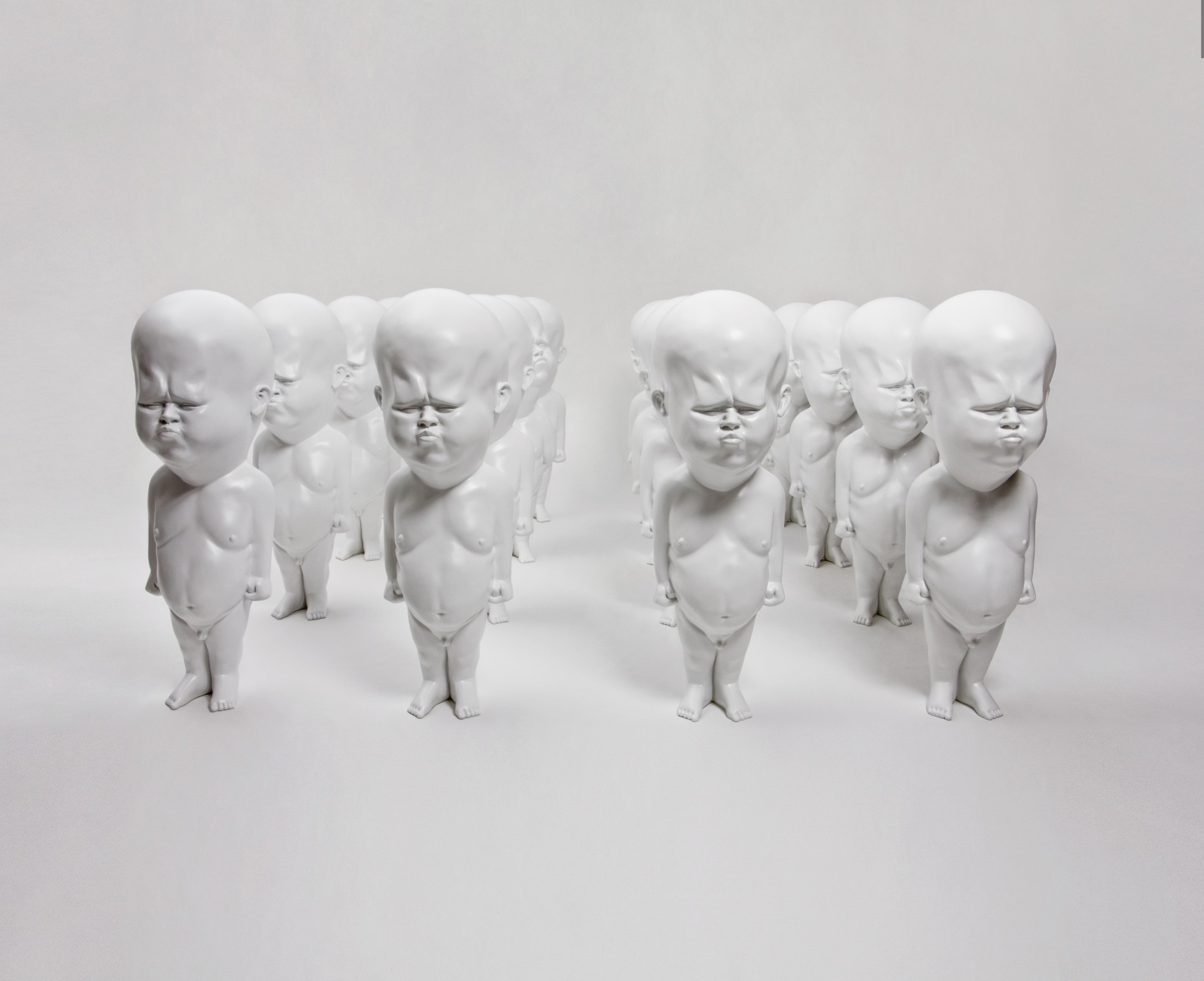
From The South
Portraits: Punta Arenas and Valparaíso
By: Vicente González Mimica
Curated by: Fabian Goncalvez
Presented by: AMA | Art Museum of the Americas
The artist presents black-and-white portraits from two cities in the south of Chile. Like in the Charles Dickens novel A Tale of Two Cities, one city (London) is described as law-abiding and orderly— analogous to how the artist presents Punta Arenas—and is contrasted with a largely politically agitated city (Paris), which is how González sees Valparaíso. As the artist describes: “The city is violent to me at first sight, perhaps with the character of who has made himself. It grows every day like the jungle that penetrates its streams in all the hills that make it up to reach the sea. It is not planned, it only occupies the spaces left by nature, like plants in an abandoned garden.”
In González’s Liceo series, he celebrates the individual achievements of each student, while seeing the fruits of hard work of families, teachers, and friends. They have been suspended in a time defining adolescence and hope. These students’ portraits in school uniforms, in long Liceo hallways and in workshops wearing trade uniforms, is reminiscent of a hopeful past. It is as if González were evoking the ancestors who arrived to these shores to fulfill dreams and prosper. As Alfred Doblin wrote on August Sanders’ portraits of German people: they are a maximized expression of the combined efforts of a social class, where the greatest achievement is the taming of individuality. He adds that it was their desire to succeed that brought them to this point, and that belonging to this place ultimately held them back as people.
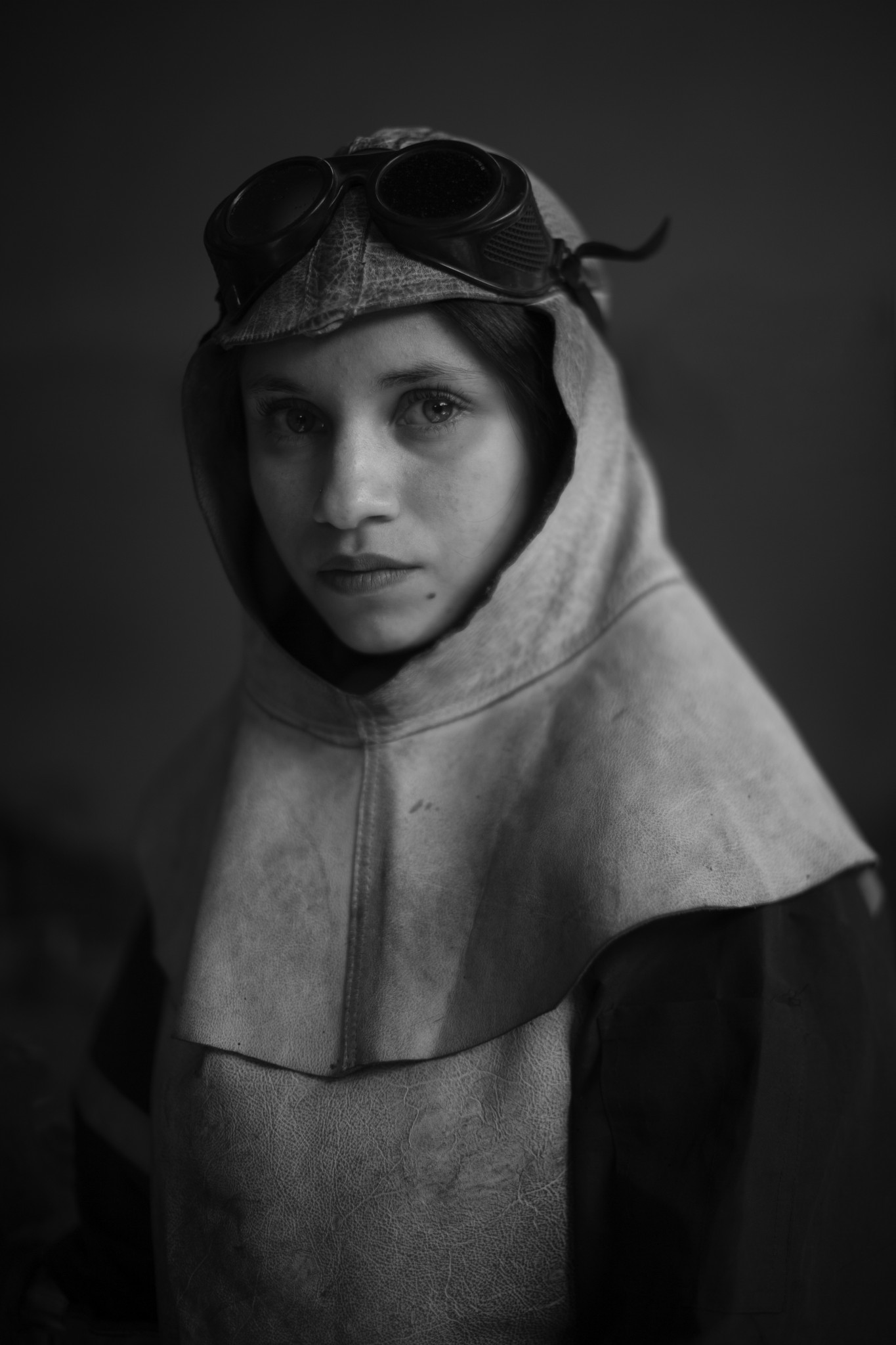
Dactiloscopia Rosa: Video Art and QUEER Constructions
Curated by: Nestor Prieto
Presented by: Museo La Neomudejar (Madrid, Spain)
The exhibition will be from the archive materials, documentations and teachings from the transfeminist/Queer archive of the Museum, didactic materials from the constructions of social movements that managed to pass the social perspective that existed on the LGTBQ community in the 70s, 80s and 90s in Spain under Franco Dictatorship, the audiovisual material is a compilation of demonstrations, celebrations and activisms, vintage posters. The first version of this installation outside of the Museum La Neomudejar was in 2018 at the Matadero Space in Madrid, parallel to the world pride celebration in the city.
It will be a chronology of the movement of sexual liberation / LGTBQ in Spain (1970-2016)
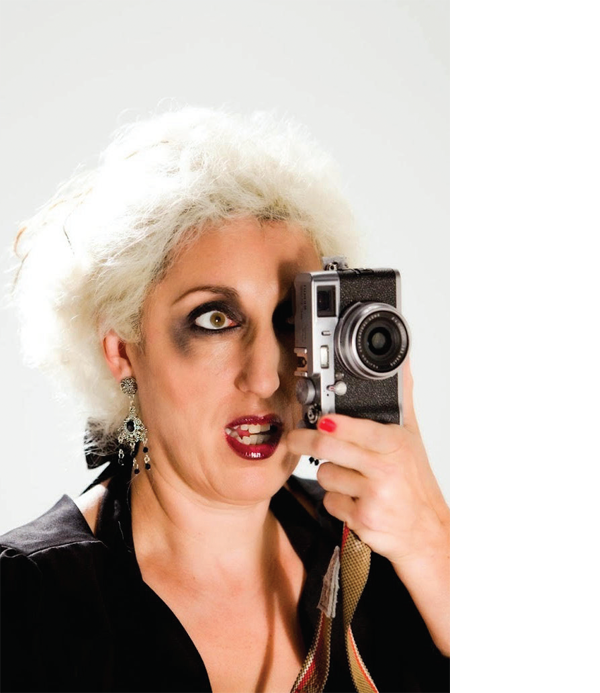
Celebrating Diversity
By: Chiachio & Giannone
Curated by: Gabriela Urtiaga, Chief Curator at MOLAA
Presented by: MOLAA | Museum of Latin American Art
In order to commemorate local and international LGBTQ+ communities around the world, the Museum of Latin American Art (MOLAA) is presenting a special installation about diversity and pride in collaboration with world-known Argentinian artistic duo, Leo Chiachio & Daniel Giannone. The presentation includes the 120 ft. long textile flag, MOLAA’s new acquisition “Californian Family in Six Colors 1” and a recorded interview about their creative process. These artworks were created by the artists at MOLAA where more than 3,000 members of the Long Beach and Los Angeles community collaborated in the creation of the flag. The creation of this work of art took place during the artists’ MOLAA residency between March and June, 2019. Visitors and community members were invited to contribute with the construction of the work of art by adding their own messages about the meaning of diversity and acceptance. The banner was carried by over 100 volunteers at the Long Beach Pride Parade and exhibited at the event Pride at The Port in San Pedro, CA. The Museum highlights underrepresented voices of Latin Americans and Latinos in the US and around the world. This installation represents the commitment of MOLAA towards the values of diversity and inclusion for all through the arts.
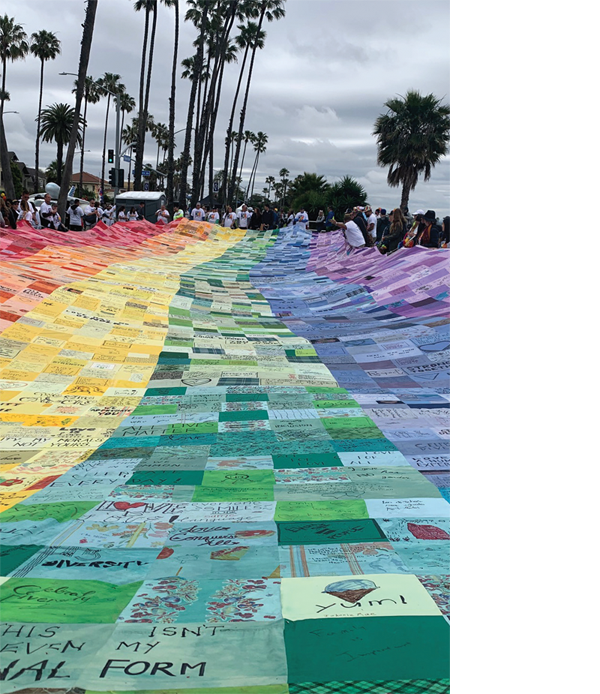
The True Love of Collecting
How Collectors Reshape the International Art Scene
Curated by: Marisa Caichiolo & Elisa Massardo
Presented by: Arte Al Límite (Chile)
It’s no mystery that many of our museum experiences are led by visionary collectors who have either made significant donations or opened new museums to exhibit their extensive art collections.
Art Collectors shape the international contemporary art scene because of the unique decisions and thoughtful connections with other art enthusiasts and art market players.
AAL Magazine from Chile will bring an exhibition that explores the Subjectivity of Collecting in the contemporary art world today.
It will reveal the mystery behind the passion of collecting, and focusing on the question about what exactly makes them fall in love with an art piece. Collectors recognize the value that artists bring to communities, and bring them to the light of other art professionals and art institutions.
COLLECTORS & ARTISTS
Collection AAL, Chile – Bernardo Oyarzún
Collection Ca.Sa., Chile – Mono Lira
Collection AMA Foundation, Chile – Enrique Ramirez
Kim Martindale, USA – Raphael Montañez Ortiz
Lidia Rubinstein, Argentina/USA – Mariana Telleria
Kai Loebach, Germany/USA – Ricardo Alcaide
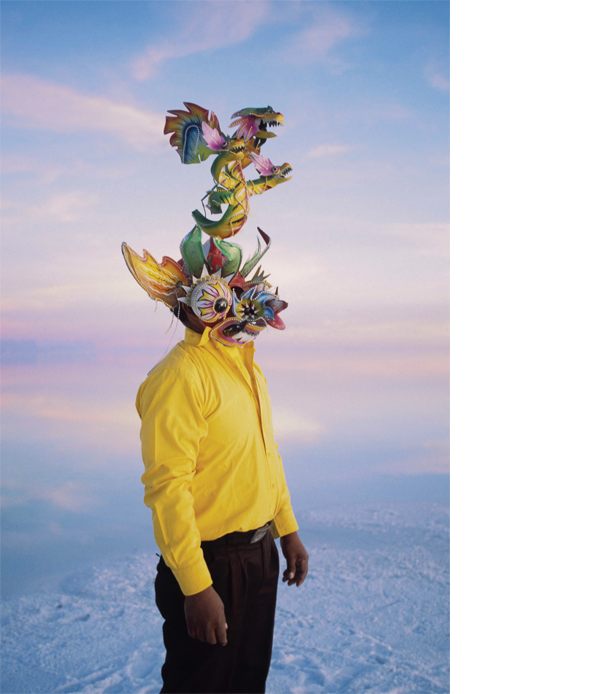
Art Collector: Homeira Goldstein
Artwork by: Tim Tompkins
Curated by: Marisa Caichiolo
A descendent of the Qajar Royal Dynasty in Middle East, a multitalented force dedicated to creativity and arts, and an avid contemporary art collector, Homeira Goldstein has built an unrivaled reputation championing national and international artists promoting art and culture in Greater Los Angeles. As the Chairman of the Board of TIME4ART, she has been instrumental in creating opportunities for artists to reach public audiences using traditional and innovative venues, such as art centers, pop-up venues, open spaces, and private homes.
The inspiration for Timothy Tompkins’s work is the reflection of both physically and metaphorically a relational narrative which dissolves into form and color. This effect endeavors to mimic the layers of codes and semiotics of an image while simultaneously asking the viewer to participate in an expanded dialogue of contemplation and connotation of content. Additionally, the paintings attempt to reflect the influences of contemporary society, such as consumerism, mass media, and digital culture. Tompkins’s interest in both the language of painting and contemporary theories of visual culture attract him to the images produced by various media, as a loose visual connection to painting’s history and the medium’s influence as a visual communicator.
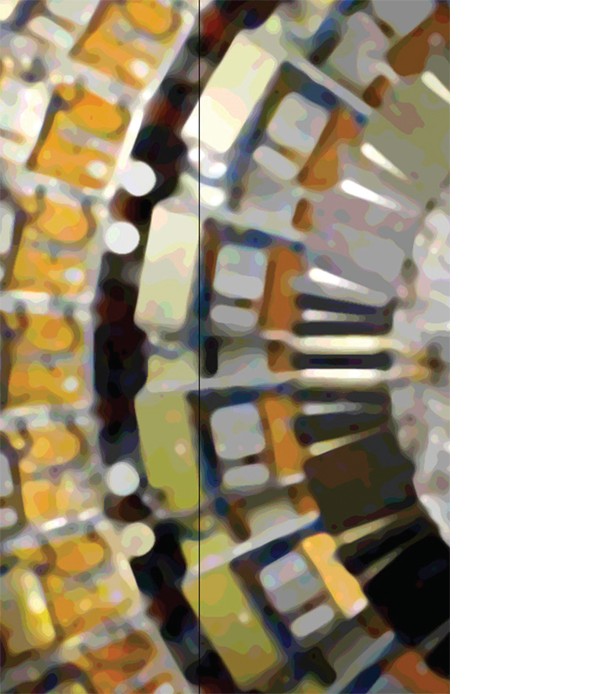
I GOING TO…
(An interactive space intervention)
By: Adriana Ramirez
Curated by: Marisa Caichiolo
Adriana Ramirez is a conceptual artist from Colombia. Her work was part of biennials, exhibitions in different parts of the world inviting the collective to participate in most of her installations. This platform has an axis: Everyone’s capacity to decide and become the creator of his or her own destiny, and therefore the responsibility of the community’s future. It is based on two premises: the first, is that we do not come to this world only to know ourselves, but also we come to it with the possibility of creating ourselves; and the second, is that every individual is surrounded by a social group and coexists thanks to language.
In order of that, this platform invites people to experience the language`s power to built future realities by declaring: when one AFFIRMS something, language is used to describe reality; it means that words depend on the world which already exists; for instance “Today is raining”. On the other hand, when one DECLARES something, language is used to define reality, therefore our world will depend on the words pronounced; for example, “Today, I am going to listen before speaking”.
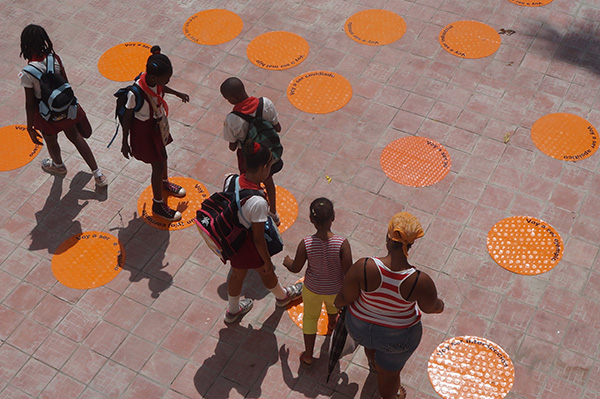
There Could Be A Monster Inside You
By: PSJM Collective (Canary Islands)
Curated by: Marisa Caichiolo
PSJM is a team of creation, theory and management formed by Cynthia Viera (Las Palmas G.C., 1973) and Pablo San José (Mieres, 1969). PSJM present themselves as an «art brand», thus appropriating the procedures and strategies of advanced capitalism to subvert their symbolic structures. PSJM acts as an trademark of happening art addressing issues of the artwork in the market, communication with consumers, or function as an artistic quality, using communication resources borrowed from capitalism of the spectacle to underscore the paradoxes produced by its unbridled development.
PSJM will present at the LA ART SHOW 2020 the same performance they created for the 58th Venice Biennale context, one of its corporate performances in which uniformed hostesses interact with the public in order to cause startle and reflection. Combining marketing and totalitarianism, using the strategy of “overidentification” theorized by Zizek, the collective presents itself aesthetically appropriating the strategies and modes of seduction of the capitalist system in an authoritarian way.
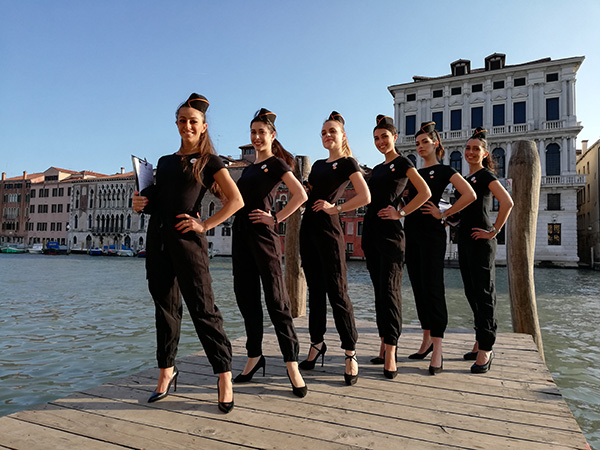
Diversity Walks and Talks
By: Miss Art World
Curated by: Peter Mays
Presented by: Los Angeles Arts Association / Gallery 825
The “Diversity Walks and Talks” performance invites individual proclaimers of LA’s culture to strut the runway in celebration of their uniqueness, showcasing LA’s diversity. A variety of participants will be pre-selected and interviewed about what diversity represents to them. Their interviews will play during the runway either in video or audio format. Spectators will also be recruited live to walk the runway. A photographer at the end of the runway will document all individuals and their photos will be instantly displayed on a runway wall. This performance, like LA’s fashion and celebrity culture, is high energy, fast paced, and confident.
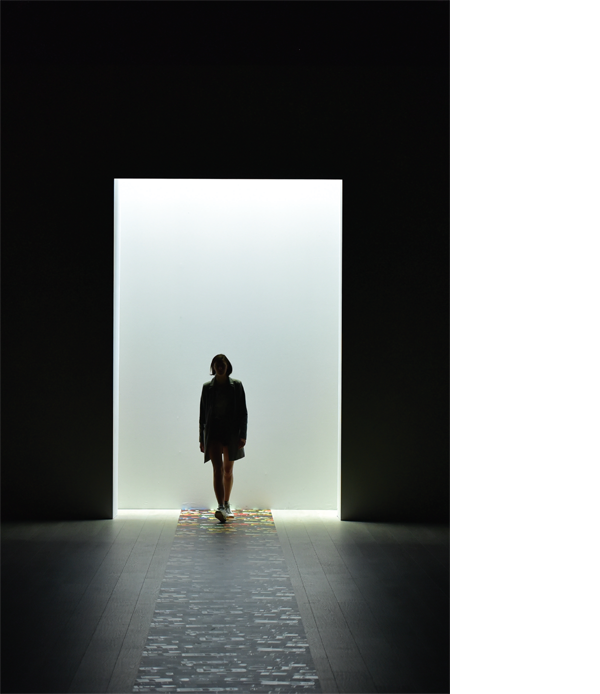
DIVERSEartLA 2019
Transcendients:
Heroes At Borders, a Contemporary Art Exhibition
By: Taiji Terasaki in Collaboration with
the Japanese American National Museum
Curated by: Emily Anderson, PhD
Presented by: Japanese American National Museum
TRANSCENDIENTS is a unique collaboration between artist Taiji Terasaki and JANM that honors HEROES AT BORDERS: individuals that advocate and fight for those who face discrimination, prejudice and inequity at borders both physical and conceptual. These heroes, whether known or unsung, inspire their fellow Americans, their neighborhoods and communities, government policy, and social change. By illuminating their stories, we hope to educate museumgoers about their work and inspire a spirit of unity and action in support of democracy and justice for all.
This exhibition spotlights important figures working to overcome and transcend borders that reinforce discrimination, inequity, and intolerance. Whether it be those fighting to rectify human rights injustices and to counter anti-immigrant sentiments and actions, members of the LGBTQ+ community seeking equal rights, women pressing for equal pay, or religious adherents who want to worship in safety, these heroes use their personal experiences to build bridges of understanding that connect us at the core of our collective humanity. It is imperative that those who believe in freedom, fairness, and social justice are emboldened to unite and support the forces of democracy and human decency. These concerns–their echoes in history and their far-reaching future impact–are the impetus for this unique collaboration between artist Taiji Terasaki and JANM.
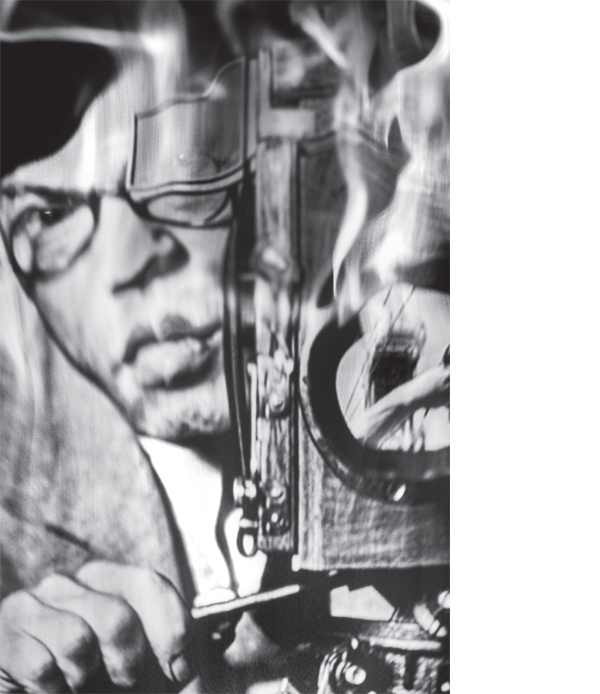
The Parthenon of Books & Rayuelarte
By: Marta Minujín
Curated by: Gabriela Urtiaga
Presented by: CCK, Buenos Aires, Argentina
CCK, Buenos Aires, Argentina is pleased to present renowned Argentinian artist Marta Minujín, who arrives with two of her most emblematic art works: The Parthenon of Books and Rayuelarte.
The Parthenon of Books: The return of democracy to Argentina in December 1983 was the inspiration that led Marta Minujín to create a replica of the Greek Parthenon on the “9 de Julio Avenue,” a street located in Buenos Aires, Argentina. Mujín’s Parthenon has a metal structure covered with more than 20,000 books, many of which had been banned during the military dictatorship. The Parthenon of Books honors the world’s first democracy and the values of that era, which have served as the basis for today’s Western democratic societies. This work also stands as a symbol of the country’s prolonged need and renewed hope to transition back to democracy.
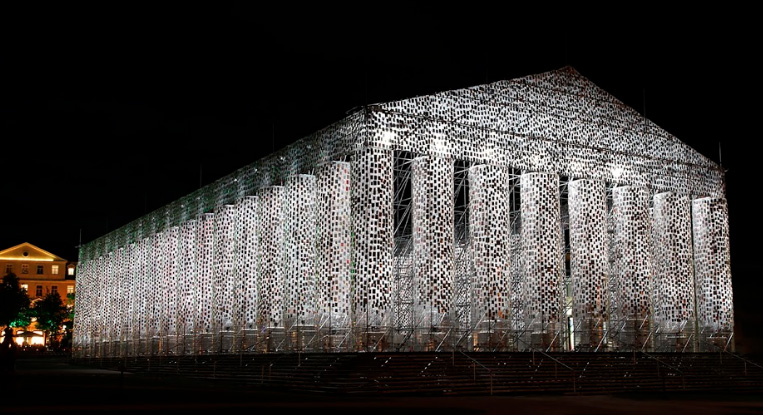
“Memorable Mud” – Installation, 2017
By: Andrés Paredes
Curated by: Gabriela Urtiaga
Presented by: CCK, Buenos Aires, Argentina
“Memorable Mud” is a participative installation that draws viewers into a multi-sensorial experience featuring scents, music – exclusively composed for this art work – and a carefully designed system reflecting light through translucent stones. The piece is the end result of an exploratory process that generates two experiences for attendees. The first experience begins as the viewer enters the room and comes across giant clay structures, clay domes with pinnacles and other elements, which hang from the ceiling from a height of 1.4 meters. This landscape acts as a bubble of clay, which is retrieved from the production place. The domes have their own inner world – one which can be accessed by the public through holes located in the lower part. This all acts as a place where the artist’s life and personal memories are stored and materialize in clay.
Andrés Paredes’s work ranges from drawings and two-dimensional cutting paper to immersive installations, and make up private collections in Argentina and in several countries abroad. He lives and works in both Misiones and Buenos Aires, Argentina.
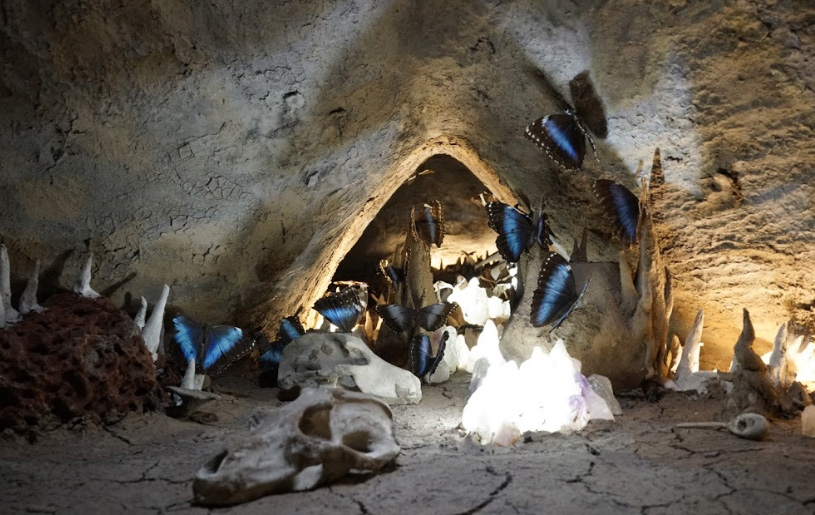
Virtual Futures: XR Showcase
Curated by: Britt Salvesen and Jesse Damiani
Presented by: Los Angeles County Museum of Art, LACMA
Virtual Reality is one of the most eagerly discussed topics in contemporary culture, yet many in the art world are only starting to consider its impact – aesthetic, technological, psychological, therapeutic, economic, and so forth. This year, DIVERSEartLA offers four VR experiences that demonstrate the range of practices and possibilities that are defining VR in 2019.
Visitors can get a glimpse of the future as seen by four different creative innovators: Wesley Allsbrook, Nancy Baker Cahill, Jorge R. Gutiérrez, and Drue Kataoka.
The tools for VR and AR creation and display – once the purview of engineers, available mainly in academia and the military – are now much more accessible to anyone with a story to tell: game designers, painters, screenwriters, documentarians, journalists, architects, choreographers, and many more. Often working collaboratively across several disciplines, this diverse community of creators is discovering the technology’s potential, involving audiences in the very act of creation.
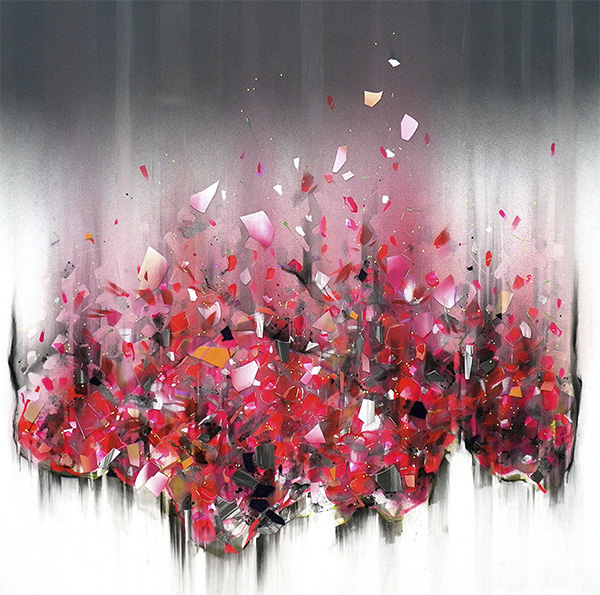
To Make Water
By: Guido Yannito
Curated by: Marisa Caichiolo
Presented by: Museum of Contemporary Art of Salta, Argentina,
MAC SALTA
This work is part of a project Hemisphere, created in Antarctica and generating a dialog on the geographical situation (hemispheres north & south) and of the mind (hemispheres right & left).
Antarctica is a radical environment and could be considered a geographic displacement. The hemisphere is presented as an undefined state where the body is situated as an idea of territory and landscape but also as a state of mind.
In the beginning this project consisted of researching the use of fresh water on the Antarctica bases, because Antarctica is the largest reservoir of fresh water on the planet, an ongoing interest of the artist. “To Make Water” is a phrase used by the people working on the base to describe the production of consumable water, because although it is the largest reserve of fresh water, it is very difficult to procure. “To Make Water” is a video filmed the day the members of the base attempted the extraction.
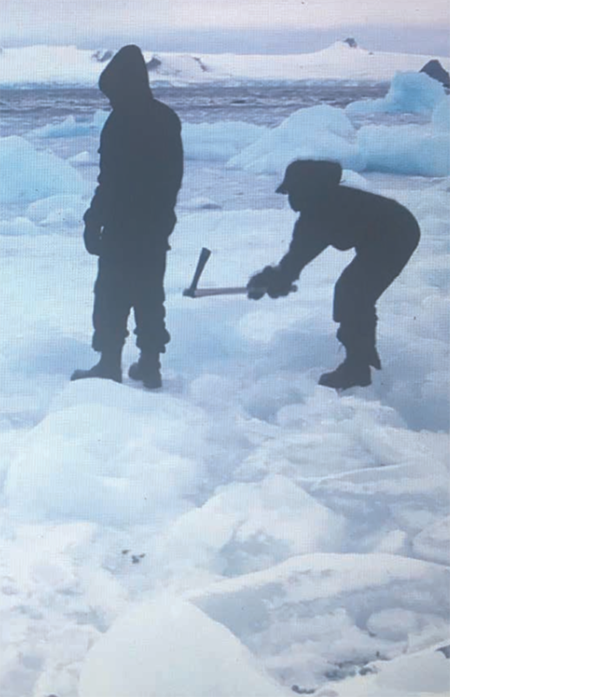
White Lies
By: Gaston Ugalde, Matilde Marin, Sandra Mann, Fernando Arias
Curated by: Elisa Massardo & Daniel Alfonso
Presented by: AAL (Arte Al Límite)
White Lies is an exhibition that emerges from the dialogue of visual arts and politics; the visual arts and the reality around the world, where the politic act looks like a manifestation of power that dominates and control the masses and minds, forgetting the initial idea of common benefit and the social welfare.
Arte Al Límite (AAL) promotes the work of contemporary artists from all over the globe, aiming to Foster art circulation, encouraging art collecting and bringing art closer to the community through worldwide activities.
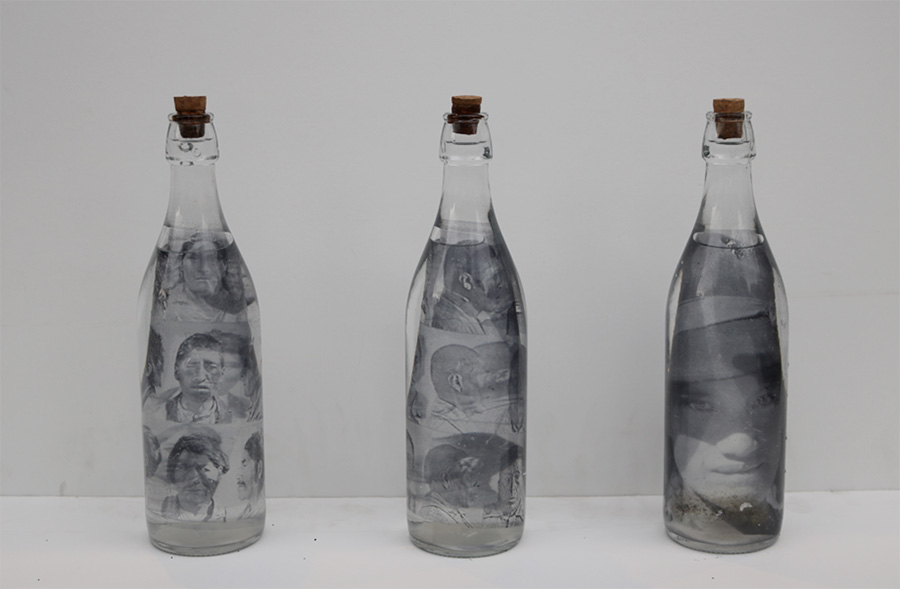
27 Peces/27 Fish, Installation, 2018
By: Cristian Castro
Curated by: Carlos Ortega, Curator of Collections, MOLAA
Presented by: Museum of Latin American Art, MOLAA
The Museum of Latin American Art (MOLAA) has selected Argentinian artist, Cristian Castro and his site-specific installation, 27 Peces / 27 Fish, 2018 to highlight the contemporary art of Latin America in the 2019 edition of the Los Angeles Art Show.
Cristian Castro, born in Buenos Aires, Argentina in 1971 and currently based in LA, expresses his artistic talent by repurposing discarded vintage household appliances and old mechanical tools with contemporary designs of his own. In the 27 Fish installation, the artist used 1950s Johnson brand outboard motors for the main body, stainless steel cat bowls, kitchen hinges, nails for the teeth, electrical conduits, fiber glass, custom laser cut aluminum parts molded with a hydraulic press for the fins, and automotive paint with chromed and polished parts to create these hybrid creatures that appear to come from a 19th century vision of the future.
Very much like the Argentinian collective Center for Art and Communication (CAyC) in the 70s and 80s, the artist conceives his installations as a multidisciplinary space in which to explore the relationship between art, science, environment and society. The deep-sea fish in 27 Fish were created in a retro-futuristic style, incorporating kinetic movement and light.
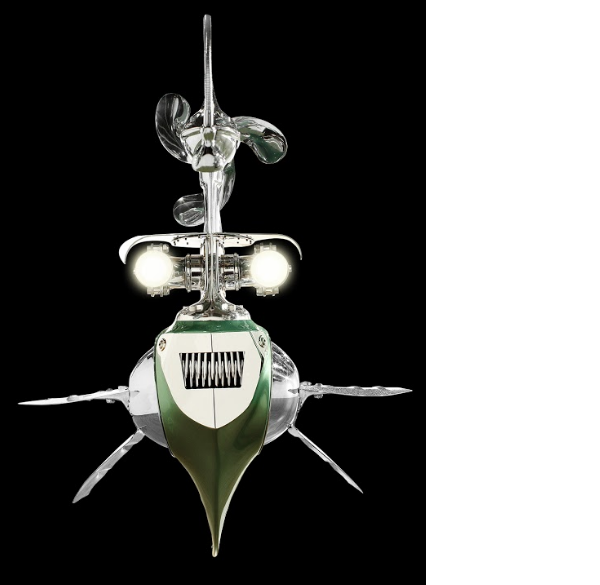
A Black Man in the World
Selections from: the Robert E. Holmes Collection
Curated by: Marisa Caichiolo
For Bob Holmes who calls himself “a citizen of the world,” his art collection is a reflection of his life and times. The history of both colonial oppression by Europeans in Africa, the Caribbean, and Central and South America, and the history of slavery in the United States have created a warped perception of Black people as they have moved, or been forced to move, throughout the world. That perception has often created a narrow impression of Black people’s and other peoples of colors’ interests, limitations, possibilities and futures.
Holmes says, “As one steps out of the manner in which he is perceived, challenges widely held perceptions about the Black body, travels throughout the world and accumulates broad interests, that accumulated knowledge and experience can lift one out of seeing and being seen in a purely racial context, while at the same time, standing firmly upon the foundation of one’s ethnic culture.” In Holmes’ particular case, those tenets have enriched his life beyond the prescribed boundaries of narrow perceptions and identity, and have led to a broad collection of art that reflects his appreciation and love of rich cultural identities of so-called ethnic categories.
In his wide collection we can find a diverse offering of cultures through artists such as Dan McCleary, Matsumi Kanemitsu, Derrick Maddox, Charles White, Romare Bearden, Gronk, Deni Ponty, Betty Parsons, Elizabeth Catlett, David Alfaro Siquieros and Aime Mpane, among many others.
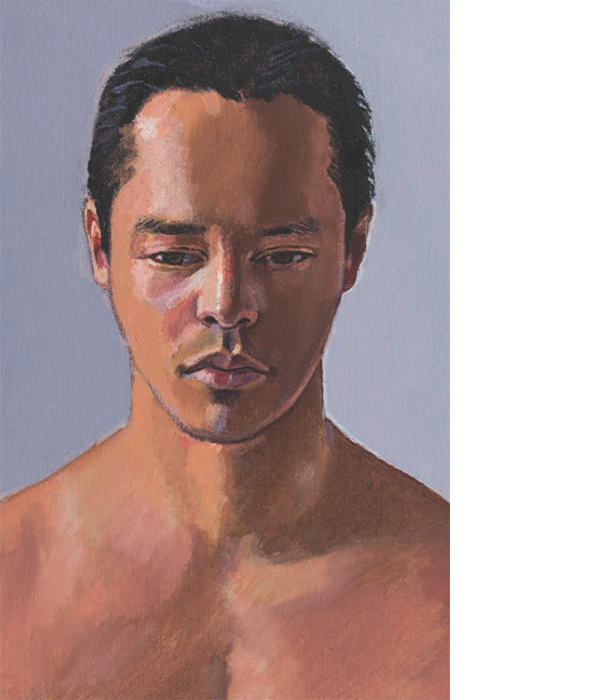
Nodrissx/Narcissx
By: Performance – Dorian Wood
Curated by: Marisa Caichiolo
Artist Dorian Wood seeks to glorify both the sanctity and irreverence of intimacy. Through the use of their corpulent body and booming voice, Wood revels in challenging the artist-audience separation, using subject matter informed by their own position in society as a non-binary person of color and an autodidact without a formal college education nor a strong alliance to any particular community.
For “Nodrissx/Narcissx,” the artist will be in a chair in the center of a darkened room, covered from head to toe in a cloth, with a slit that exposes their left breast. The artist will have a microphone propped in front of their face. Attendees are invited to kneel in front of the artist and suckle on artist’s breast. Attendees may suckle on the breast for as long as they want. During the performance installation, artist will vocalize to a 4-channel soundscape created solely by artist’s voice.
Wood’s work has been showcased in concert halls and performance spaces around the world, including at such institutions as The Broad (Los Angeles), LACMA (Los Angeles), The Stone (NYC), MASS Gallery (Austin), Kulturhuset (Stockholm), and Hebbel am Ufer (Berlin). As a musician, they have released over a dozen recordings, among them two back-to-back albums, Rattle Rattle and Down, The Dirty Roof, showcasing a series of doomsday-themed songs that incorporate over 60 musicians. Their most recent album, XALÁ, marks the first time that Wood has recorded a full-length work in their mother tongue of Spanish.
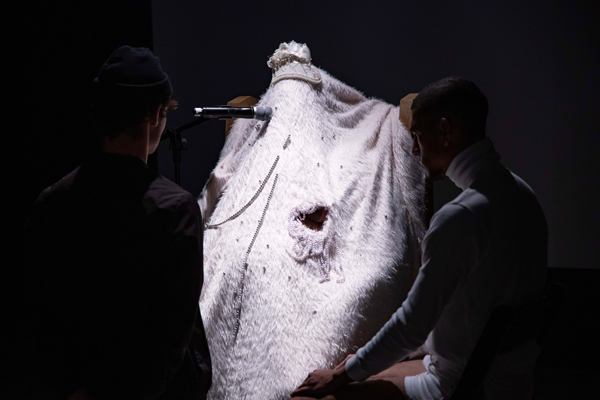
You should wear your revolution
By: Performance – Sarah Trouche
Curated by: Marisa Caichiolo
Sarah Trouche is a French visual artist who uses performance, photography, video and sculpture in her practice. She uses her body as a social and political tool. Trouche’s work is centered around cultural and political issues such as migration and displacement, and invites us to question the major challenges we face today.
For the “You should wear your revolution” project, Trouche is committed to research on women’s emancipation, inspired by the history of France during the French Revolution and the movement of the “Sans culottes.”
Sarah Trouche will perform using hundreds of underwear that she has collected, washed and dyed beforehand. Through this action, she imagines a manifesto around the notion of female emancipation, radical and collective.
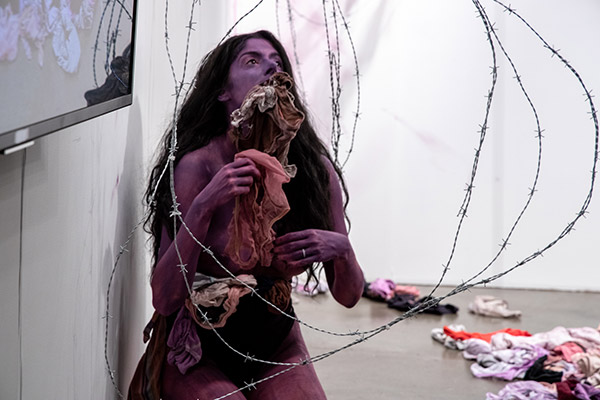
Boho Highs & Visual Drive-bys
By: Adah Glenn
Curated by: Mar Hollingsworth, Visual Arts Curator,
California African American Museum
and James Panozzo, LAUNCH LA
Presented by: LAUNCH LA
Adah Glenn, also known as “AfroPuff,” is a Los Angeles-based artist, designer, and entrepreneur. Graffiti, hip-hop, punk, and rock, as well as Japanese anime, inform her work. Her practice is multidisciplinary, extending broadly from murals, paintings on canvas and shaped board, prints, art quilts, and books, to digital art and animation. Glenn has also ventured into the applied arts, creating wearable art, such as hats and jewelry, and toys, including fabric dolls and resin collectable figurines. Most recently, Glenn has embarked in performance art, that provides her an opportunity to integrate her many creative impulses.
Glenn’s art is vibrant and colorful, multi-layered, and highly textural. As an African American woman, she often interweaves themes of race and gender politics in her work. Adah Glenn: Boho Highs & Visual Drive-bys presents a wide selection of her many talents in many mediums. The exhibit not only celebrates ethnic and cultural pride, music, and the female form, but also features a selection of Glenn’s poignant social commentary works.
PING PONG
Presented by: Los Angeles Art Association
Los Angeles Art Association is pleased to present Ping Pong, an independent exhibition project founded in 2007 to cultivate artistic interaction and exchange between selected cities Basel, Miami and Los Angeles.
This iteration of Ping Pong at the 2019 LA Art Show will feature artists Pam Doulas, Jerry Haenggli, Cathy Immordino, Sue Irion, Dan Künzler, Sungjae Lee and Elizabeth Tobias, and mirrors the commonalities and conflicts surging through our culture in 2019. Each artist’s singular vision is maintained while adapting to the aesthetic and cultural aesthetic imposed by their fellow artists. Sungjae Lee’s expansive piece Her Real Secret and Elizabeth Tobias’ performance Survivor! Share Your 98 Second Story are both timely reflections on the state of gender politics and identity. Pam Douglas and Cathy Immordino share a fascination with historical relevance but differ dramatically in execution and approach. Furthermore, Jerry Haenggli and Dan Künzler share a certain Swiss formality that approaches narrative with opposing emotive centers.
Ping Pong strives to show both the similarities and differences in the various cultural landscapes represented. While the artists represented in Ping Pong have shifted over the years and venues, the spirit of artist-centered collaboration and ambition remain intact.
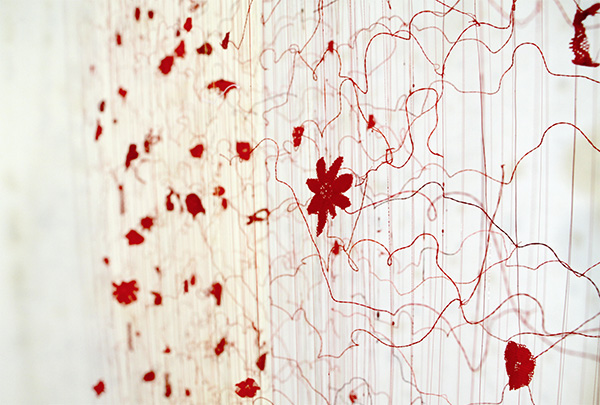
Survivor! Share Your 98 Second Story
By: Performance – Elizabeth Tobias
Presented by: Los Angeles Art Association
Elizabeth Tobias will amplify her fusion of social practice, performance and sound to debut Survivor! Share your 98 Second Story at 2019 The Los Angeles Art Show. This immersive project addresses the sexual assault epidemic, one of the most pervasive, yet most underreported crimes. Survivor! addresses the staggering statistic that every 98 seconds, there is a sexual assault in America.
Weaving together spoken word and improvised sound, Elizabeth Tobias will perform with an ensemble of artist survivors to collectively promote needed awareness and advocacy for sexual assault survivors in the art community and throughout the public sphere.
Those victimized by violence often lack the support and resources needed to come forward. For artists who have been impacted by the trauma of sexualized assault, rarely, if ever, are there adequate opportunities to create work that addresses their stories within and beyond the larger art community.
Dr Jennifer Freyd, expert in the field of interpersonal violence, has identified that the act of speaking out has a measurable impact on decreasing violence. Consequently, the performance has the potential to directly reduce the statistics. Survivor! Share Your 98 Second Story is a ground breaking new performance that addresses trauma, courage and continuance.

Art Lives Here
By: S. C. Mero
Presented by: Art Share L.A.
Art Share L.A. has partnered with skid-row based, emerging guerrilla artist S.C. Mero to bring a taste of the streets of Downtown Los Angeles to LA Art Show. Embodying the nature of downtown, the onsite installation pieces are just a teaser to the larger site map of her work – which guides attendees into downtown to explore our community under the guise of a pseudo street art scavenger hunt. Each of her site-specific, clever creations calls attention to issues surrounding homelessness, gentrification, drug use, global warming, and more. The goal of this project is to encourage further exploration of underground art, arts activism, and social justice in the Downtown community in a way that is inviting and accessible for everyone.
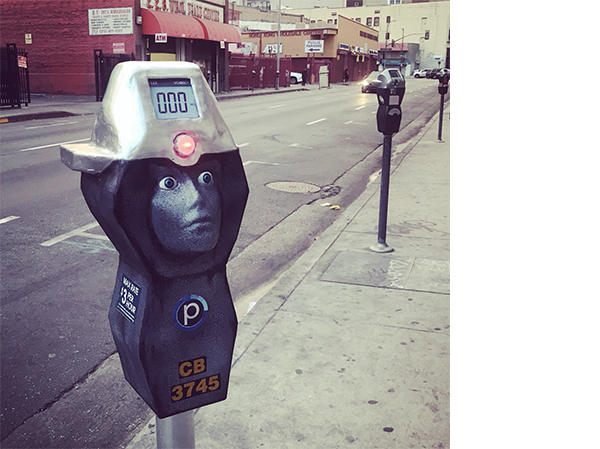
DIVERSEartLA 2018
Metaphysical Orozco
By: José Clemente Orozco
Curated by: Laura Ayala, MUSA
Co-Curated by: Marisa Caichiolo
The Museum of the Arts of the University of Guadalajara, Mexico (MUSA) presents Metaphysical Orozco, shown for the first time ever in the United States.
The images, projected by a multi-layer mapping, belong to the murals made by the artist between 1935 and 1937 at the auditorium known as Paraninfo, inside the building in which is located the Museum of the Arts.
The installation involves the public in an exploration of the fields of thought found within Orozco’s murals, as well as the history and themes that inspired them.
The projection of the master works will be accompanied by a musical soundtrack, giving visitors a comprehensive sensory experience that will be complemented by informative graphic material.
During the post-revolutionary years, muralism, based on the creation of monumental pictorial works, conveyed ideas regarding national identity while also highlighting the principles that define human dignity and the transcendence of social struggles throughout the world.
One of the main functions of the University of Guadalajara is the dissemination and promotion of culture. This mission has the museum to design and deliver a number of projects that today enjoy worldwide prestige, such as the Guadalajara International Book Fair(FIL) and the Guadalajara International Film Festival(FICG).
As an emblematic institution in the Guadalajara Metropolitan Area, MUSA is widely recognized for creating museum experiences designed to generate knowledge and inspire reflection, and thus help to transform the social environment.
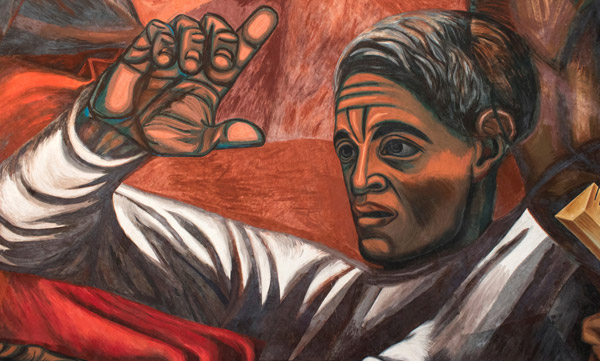
Especular (Threshold)
By: Leyla Cárdenas
Curated by: Chon Noriega
Presented by: LACMA and the UCLA Chicano Studies Research Center
The Colombian writer Manuel Hernández B. defines his nation’s capital, Bogotá, as a permanent threshold that announces the promise of a place that never arrives. Leyla Cárdenas’s Especular provides a real-world yet ghost-like image of this insight with her set of photographic prints of Bogota’s neoclassical train station façade.
First built in the late 1880s – concurrent with the formation of the Republic of Colombia – the station is a once-hopeful symbol of the nation that then became a long abandoned modern ruin. Cárdenas represents the façade with two printed scrims suspended back-to-back from the ceiling, over twenty feet up, and running a similar distance along the floor.
These discontinuous panels are cut to match the different track gauges used in Colombia that made a unified national transportation infrastructure impossible. Especular is part of a series in which the artist documents the architectural remnants of the urban fabric. Cárdenas reflects on these artworks as illustrating “History repeating itself: vicious circles and accumulation of thresholds that lead nowhere.”
About the artist:
Leyla Cárdenas was born in 1975 in Bogotá, Colombia where she still lives and works. She received her MFA in sculpture from the University of California, Los Angeles (UCLA). Cárdenas’s installation, sculpture, mixed-media work delves into urban ruins and cities landscapes as indications of social transformation, loss and historical memory. Remains, fragments, discarded structures, are used as material for her work, with a sculptural strategy that is as much destructive as constructive. In 2016-16, she was a resident fellow at the Jan Van Eyck Academie for the NEARCH project “The Materiality of the Invisible” establishing a critical dialogue between artists and archeologists.
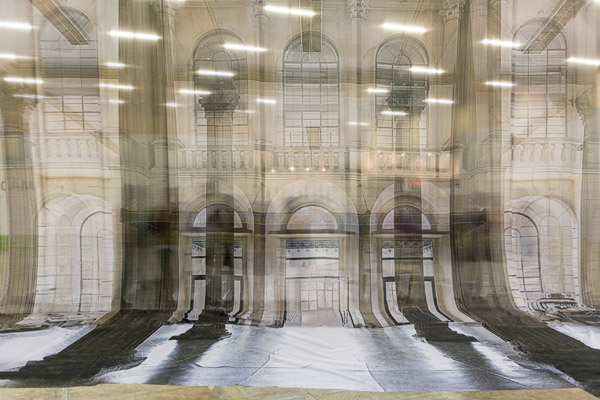
If You Drink Hemlock, I Shall Drink It With You Or A Beautiful Death; Player To Player, Pimp To Pimp.
(As Performed By The Inmates Of The Asylum Of Charenton Under The Direction Of The Marquis De Sade)
By: Daniel Joseph Martinez
Curated by: Chon Noriega
Presented by: LACMA and the UCLA Chicano Studies Research Center
Daniel Joseph Martinez’s immersive environment references Jacques-Louis David’s seminal portrait The Death of Marat (1793), painted and also reproduced shortly after Marat’s assassination during the French Revolution. Whereas David’s painting represents a single moment, both sanitized and accurate in its details, Martinez creates a mise en scène using three life-like sculptures modeled after the artist’s own body. These depict Marat in his bath as well as assassin Charlotte Corday and Martinez himself both standing behind Marat (each with a bloodied dagger in hand).
Martinez stages Marat’s assassination as a public spectacle surrounded by bleachers, although viewers can also immerse themselves within the scene, no doubt taking selfies. In this way, Martinez connects David’s painting with our present moment, giving a historical dimension for modern politics as a form of theater, sport, and business. But Martinez pushes even further. The Death of Marat quickly became iconic of the French Revolution, not because it depicted a public spectacle, but rather because it circulated a political image that focused attention on the personal and private. Once that happened, politics-as-spectacle was no longer dependent on public space – it was in our minds.
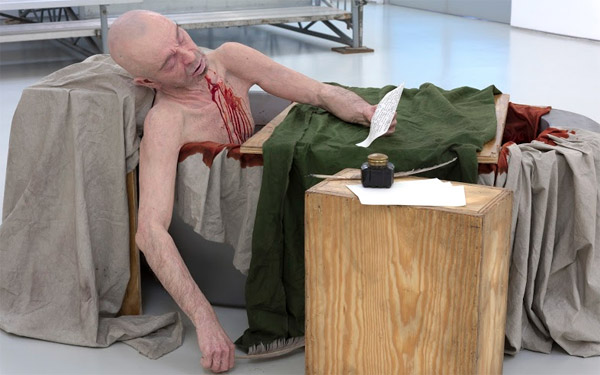
Aporías Moviles
By: Nuna Mangiante
Presented by: The Museum of Latin American Art,
MOLAA
Aporías Moviles, an installation by Argentinian artist Nuna Mangiante, is a multi-media installation featuring portraits with obscured faces on display with various construction and building materials. It speaks of urban transformation as an emerging social reality in Latin America.
“When I elaborate the photos of the objects and the urban landscapes, I subject them to what I want to express, I enclose the meaning with geometric forms in order to help decipher the riddles of my work, transforming them into drawings,” says Mangiante. “By isolating objects from their environment, they become symbols of themselves, and when I apply to them a flat graphite cover, a distortion occurs. A distortion always implies a comparison between what is and what is should be. The distortion creates the controversies in the resulting image.”
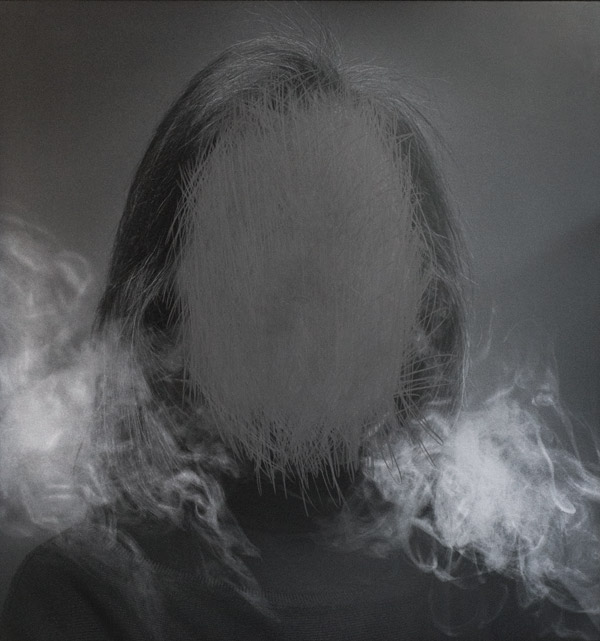
Live Mural
By: Mateo Romero
Presented by: The Autry Museum of the American West
The work of renown Pueblo/Cochiti artist Mateo Romero explores the intersection between post-modern figuration, Native imagery and art historical myths, and the role of self-representation in a post-colonial art world. In a performance that combines cultural commentary and a dynamic working method, Romero will create a live, immersive mural painting destined for the collection of the Autry Museum of the American West.
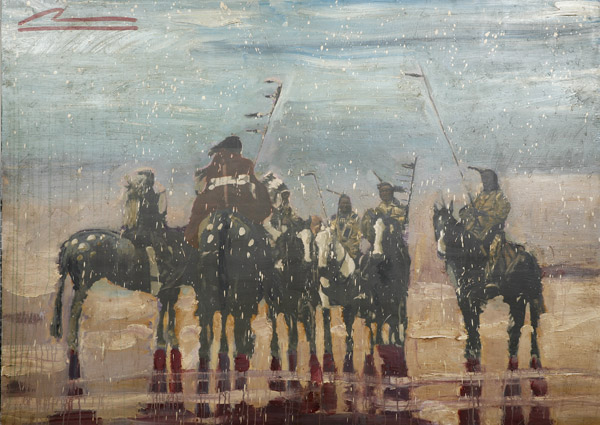
Brainstorming: Empathy
Curated by: Marisa Caichiolo
Presented by: UCLA Art I Sci Center
Octopus Brainstorming:Synesthesia is a performance/experience work created by Victoria Vesna in close collaboration with neuroscientist Mark Cohen. The work utilizes real-time EEG, brain waves, video, color, sound. They are exploring the possibilities of brain to brain communication. “These are part of the larger area of research into the physical associates of mental processes such as emotions and feeling,” says Caichiolo. “It has evolved since to include the idea of embodied intelligence in the form of an octopus crown worn by participants.”
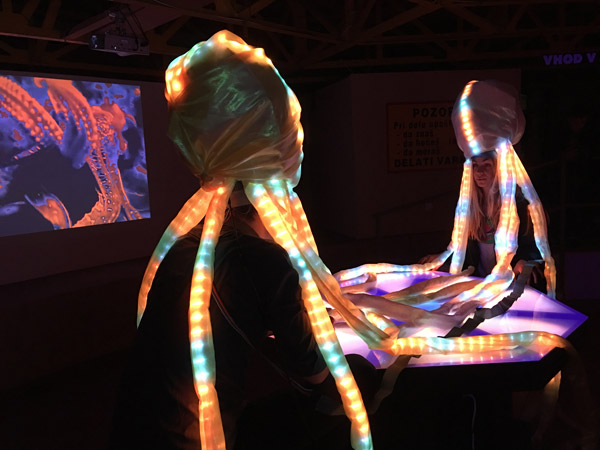
Synaesthesia: What is the taste of color Blue?
Plantigrade
Space Palette
By: Marcos Lutyens & Tim Thompson/Paul Sable
Curated by: Marisa Caichiolo
Presented by: Building Bridges Art Exchange in collaboration with
the International Association of Synaesthetes, Artists, and Scientists (IASAS)
and UCLA I Sci Center
Synaesthesia is an inherited trait, like red hair or brown eyes, and is found in less than 3.75 percent of the world’s population. It is defined as a cross-firing of any one of the five senses in which one sensory experience triggers additional sensory experiences in one or more of the other four senses.
Synaesthesia does not replace one sensory mode with another; it adds perceptions from another sensory modality to the initial “normal” perceptions. There are at least 60 forms of synaesthesia.
Plantigrade, an experiential installation by Marcos Lutyens, presents patrons with a psycho-synthetic terrain they are invited to walk across barefoot, paying special attention to the sensations of color and texture coming through their feet. This is a sensibility developed by Surrealist writer René Daumal, called paroptic vision, and by extension para-tactile sensing. The project has been enhanced with the collaboration of celebrated author and neurologist, Richard E. Cytowic.
Space Palette by Tim Thompson and Paul Sable is a musical and graphical instrument invented by Tim Thompson that lets you music and paint visuals simultaneously by waving your hands in the holes of a wood frame. No pre-recorded media, sequences or loops are used – everything is generated in real time by your hands.
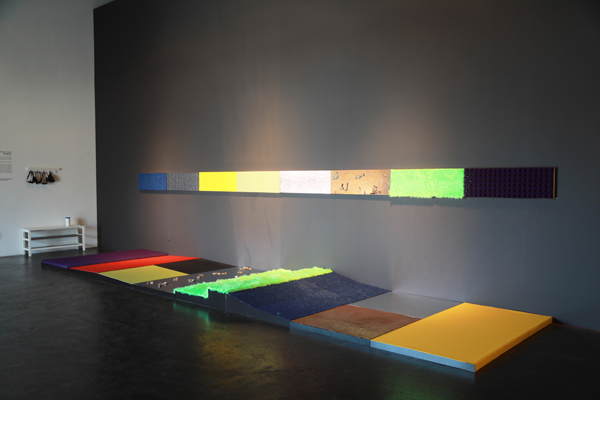
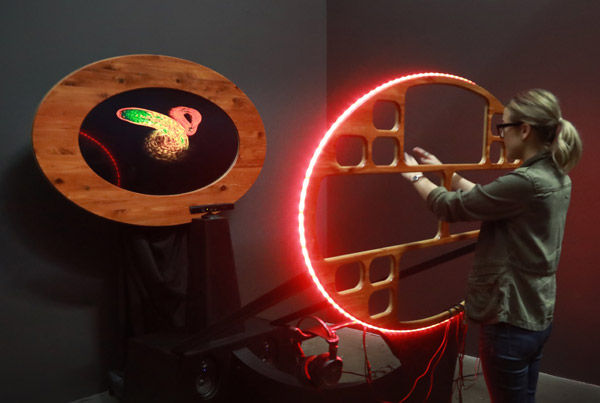
“Left” or “Right”/Punching Bags
By: Antuan Rodriguez
Curated by: Marisa Caichiolo
Left or Right is a healing project curated by Marisa Caichiolo. The interactive installation depicts different world leaders and tyrants, and will allow the spectator, through the punching of the bags, to release anger, hatred and resentment. This release of negative emotions will transform these objects into tools of detoxification and mental healing.
Current global politics has created an environment of disrespect for humanity and our planet. Lack of harmony, senseless war, violence, racism, ignorance, loss of values and principles, lack of consciousness, super egos and demagoguery, corruption, disrespect of women, false promises, and outright lies.
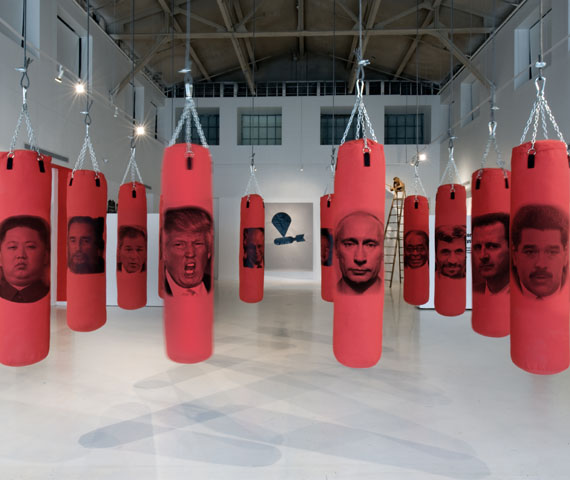
Eyes Forward
Curated by: James Panozzo, Founder and Executive Director of Launch LA,
in collaboration with
Mar Hollingsworth, Program Manager and Visual Arts Curator,
California African American Museum, CAAM
Launch LA and the California African American Museum (CAAM) are proud to present a multicultural survey of selected works by ten contemporary artists of color living and working in Los Angeles: April Bey, Chukes, June Edmonds, Loren Holland, Duane Paul, Miles Regis, Ana Rodrigues, Nano Rubio, Holly Tempo, and Tim Washington. Despite their diverse backgrounds, interests, and life experiences, all these artists share an urgency to be heard when addressing contemporary issues of race, class, and gender while expressing disenchantment with the current political and social establishment.
James Panozzo, Founder and Executive Director of Launch LA, in collaboration with Mar Hollingsworth, Program Manager and Visual Arts Curator, CAAM, Los Angeles, selected the artists in this group. The artwork on display includes both two and three-dimensional works, and ranges from figurative depictions to highly abstracted forms, from acrylic on canvas paintings to mixed-media collage, and clay sculptures to assemblage with found objects.
April Bey’s complex, layered works on panel are created using oil paint, wax fabric, and epoxy resin. She employs a visually charged graphic-design style complemented by text, rooted in popular culture and mass media communication, to raise issues of Black empowerment and feminism.
Chukes creates clay sculptures of subtle anatomical distortions and unusual colors while achieving a magisterial balance that defies the laws of gravity. Devoted to the human form, his life-size sculptures are as poetic as they are political. Chuke’s male and female forms celebrate Blackness while their materiality, poses and attitude raise awareness of the urgency for militancy.
June Edmond’s vibrant, textural paintings are a visual feast, demonstrating both technical skill and knowledge of color theory. The artist’s concentric shapes and repeated impastoed brushstrokes become the ultimate invitation to transcend the harshness of daily life in search of deeper meaning.
Loren Holland paints idyllic, detailed landscapes filled with strong women of color that possess a surreal quality. Upon closer inspection, these outdoor vistas often reflect a crude dystopia, and the women, while assertive, display traces of vulnerability and despair.
Duane Paul builds complex, sensuous sculptures that mix organic forms with geometric, architectural elements. The artist brings together fragments he casts in his own studio, and found/industrial objects, to create dynamic sculptures that reflect the lusciousness and vibrancy of urban life.
Miles Regis works contain a mix of figurative and abstract elements created through a combination of paint dripping and fabric and paper collage. The artist mixes these disparate elements to create vibrant and colorful canvases in which he explores a variety of issues, from racism to identity politics as well as concepts of beauty and ethnic pride.
Ana Rodriguez’s organic and patterned home interiors explore a social construct of objects and decorations based on her own childhood imagery. Through her work, the artist explores how flooring, wallpaper, house plants, and other furnishings, contribute to a larger social framing and individual identity.
Nano Rubio’s creative process combines meticulous drawing with action painting, producing deeply prophetic and rebellious works that explore the uncertainty of our times and the likeliness of a dystopian future.
Holly Tempo reflects on her Inglewood neighborhood to depict abstract landscapes and maps coded with personal symbols and charged with socio-political commentary. Her mixed media paintings capture the colors and textures of the artist’s urban surroundings, including spray paint and rugged surfaces.
Tim Washington builds detailed sculptures by applying cotton dipped in glue to a wire armature, and then embedding the surface with small toys and found objects. These works tell stories about his dreams of a Utopian, conciliatory future in which humanity has finally overcome prejudice.
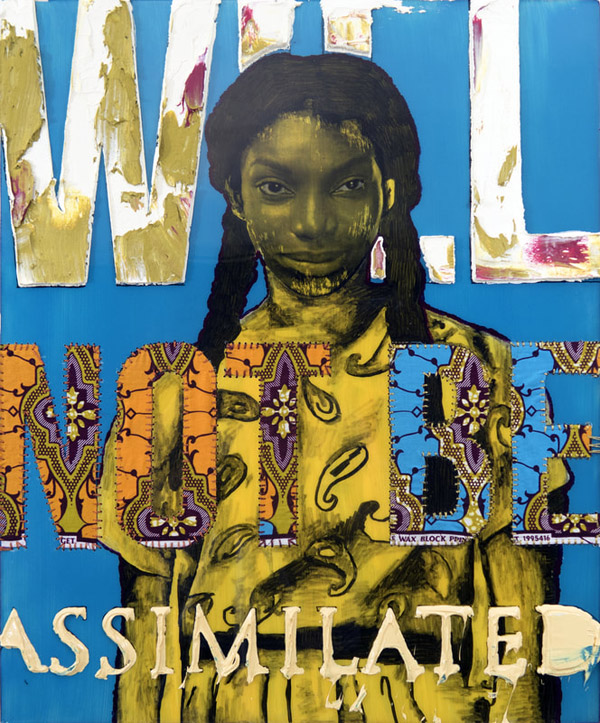
PING PONG
Presented by: Los Angeles Art Association
Los Angeles Art Association is proud to present PING PONG, a multi-destination, cross-cultural collaboration featuring artists from Los Angeles, Miami and Basel. PING PONG is an independent exhibition project for contemporary art founded in 2007 to cultivate artistic exchange between Basel, Miami and Los Angeles. This allows collaboration between the Artists, as well as the realization of site specific works in the actual location.
The project documents, explores and stimulates the artistic endeavors of the cities. PING PONG will showcase artists Chung-Ping Cheng, Sharon Hardy, Sue Irion, Gershon Kreimer, Samuelle Richardson, Mette Tommerup and more. This iteration of PING PONG will launch at the LA Art Show and travel to Basel during Art Basel in June and later to Miami during Art Basel Miami Beach.
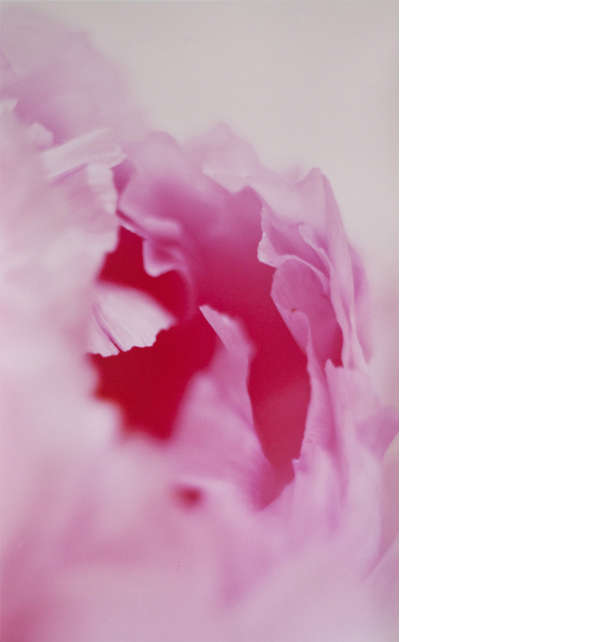
Connection Is The Solution: The Art Of Dan Eldon
Curated by: James Trotta-Bono
Presented by: Creative Visions
In a time of immense separation and isolation, artists have a crucial role – to connect. Dan Eldon was a great connector. Artist, adventurer, journalist and activist – Eldon used his remarkable creativity as a power for good, a glue to bind a disjointed world. Through the transcendent nature of Eldon’s work, titled “Connection Is The Solution: The Art of Dan Eldon,” we will explore the need to join together from one of our time’s great creative activists.
Eldon’s art has inspired countless and is in many prestigious private collections, including those of Diana Rockefeller, Bruce Weber, Madonna, Julia Roberts, Christiane Amanpour, Rodie O’Donnell, among many others.
Eldon’s personal story as a photojournalist and activist, working to tell stories of war and famine, has ignited countless people to action since his death in Somalia in 1993. This tragedy made headlines around the world – Eldon was 22 years old. During his short life, Eldon created 17 journals filled with vibrant collages of his adventures and thoughts. Originally inspired by his friendship with Peter Beard, and later his love for Basquiat and Rauschenberg, Eldon’s journals are filled with the musings of a creative genius.
In the pages that fill the bulging journals, Eldon reveals imagistic insight into his extraordinary perspective on the world. They include snapshots of his life growing up in Kenya, explosive images taken in war-torn Somalia, and detailed drawings of the world around him. They are a blend of photographic reality with transient ephemera of the everyday – vivid blueprints of Eldon’s imagination.
In 1998 Dan’s mother Kathy Eldon and sister Amy Eldon Turteltaub founded Creative Visions, a publicly supported 501(c) 3 organization aimed at helping others like Dan use media and the arts to create meaningful change in the world. Over the years, Creative Visions has moved from Kathy’s kitchen table to its headquarters at the Dan Eldon Center for Creative Activism in Malibu, CA. The organization has incubated more than 360 creative activist projects in over 35 countries.
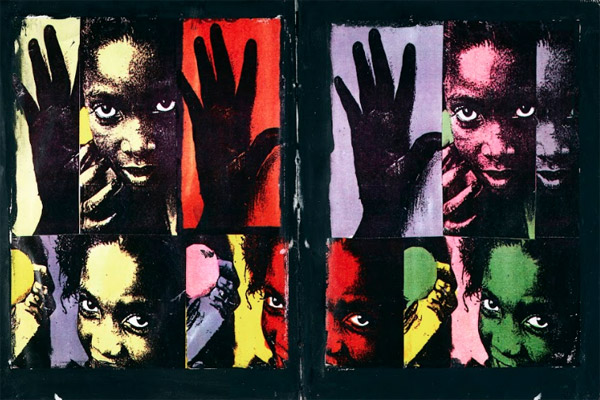
Aiseborn: Purity
Curated by: Nat George
Presented by: the Downtown Los Angeles Art Walk
The Downtown Los Angeles Art Walk is pleased to present Aiseborn: Purity, an immersive mural sponsored in part by ArtsBrookfield which will be completed in a live painting performance by the artist during the Opening Night Premiere of the LA Art Show. The oversized piece honors the remarkable, resilient, diverse, and eclectic culture present in the City of Los Angeles. Combining figurative elements, crystalline structures, and mandala-inspired patterns, Los Angeles artist Aiseborn will explore mathematical constructs, energetic mysteries, as well as the potential for purification and, ultimately, transformation.
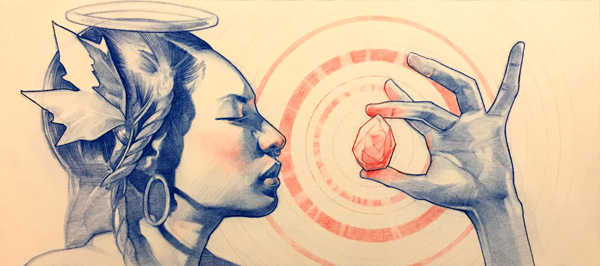
Nomad Sculpture
By: Angel Ricardo Ricardo Rios
Curated by: Marisa Caichiolo
The Nomad Sculpture’s project is the excuse to insist in the thesis of the Object as a thought modeling. The scale of the objects is used as a necessary seduction to catch the attention of the urban and busy viewer, to turn his attention to the arts and nature surrounding him.
Each object is around 26 ft. high, their inflatable nature gives them an ease in transportation – for that reason it is possible to change locations and play with their presence in different public spaces. The sculptures become desired objects to the viewers, full of life and sexual forms.
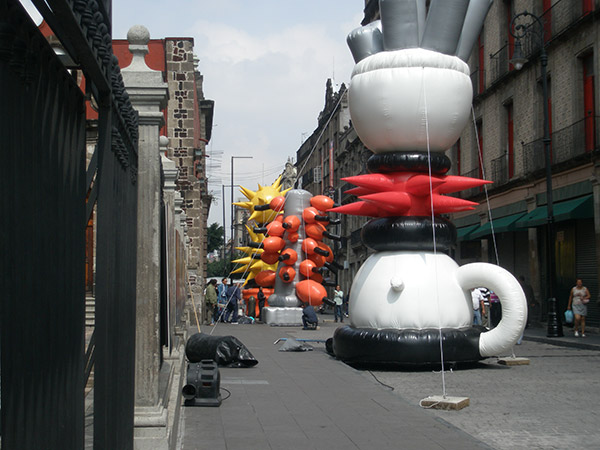
Unsound
Curated by: Los Angeles Center of Photography
The Los Angeles Center of Photography is proud to present Unsound, a multi artist exhibition featuring photographers from Los Angeles and around the country. Unsound speaks to the splendor and fragility of our planet, our human psyche and to the current treatment of women and minorities around the world. The project features the work of multiple artists, some of whom have traversed the globe and some who have captured their neighborhoods. All are using their lenses to depict the delicate nature of their environment and the tenuous nature of human existence.
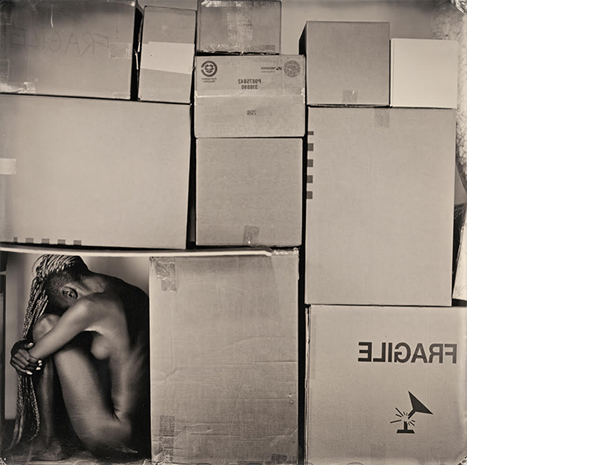
DIVERSEartLA 2017
Piano Destruction Ritual: Cowboy And Indian, Part Two
Couch Destruction: Angel Release (Pennies From Heaven)
Shred Your Worries Part Of Fragments From Home
By: Raphael Montañez Ortiz
Curated by: Chon Noriega
Presented by: the Los Angeles County Museum of Art (LACMA)
Part of Fragments From Home, a preview of Home So Different, So Appealing
Opening on June 7, 2017 as part of the Getty’s Pacific Standard Time: LA/LA
There is Passive ART and Active ART. Active ART requires you to participate.PIANO DESTRUCTION RITUAL: COWBOY AND INDIAN, PART TWO
Participatory Performance. Background Sound Thunder and Lighting. The Piano is a powerful instrument of sound to convey the message of Sacrifice I wish to convey to the Universe. The Sounds of its Destruction gives full voice to Sacrifice: To the Destruction Creation in it cycle of Creation is giving us time to understand the preciousness of Mortal Life that it never be given up to or for Sacrifice of any kind… If we must have WAR send our PIANOS to WAR. If we must have VIOLENCE send our PIANOS to VIOLENCE, I dare YOU to HATE your PIANO to fill it with your HATE and BIGOTRY and Let Creation Know your PIANO’S Life does not compare to the Miracle of Life WE MORTALS are and that OUR PIANO is the SACRIFICE TO THAT FACT…As for the Egg and the Feathers they are the subtle aspect the preparation for the SPIRITUL BONDING with the PIANO: The Egg when it is held gently in one’s cupped hands and You imagine the worst aspects of Your Character and then crush the Egg on the PIANO you have committed Yourself to the surrender of those worst aspects to the Sacrifice the PIANO is… The Feathers placed on top of the crushed Egg are the signal to the Angels to carry the Sacrifice to a place of Spiritual Redemption.
COUCH DESTRUCTION: ANGEL RELEASE (PENNIES FROM HEAVEN)” AS DESCRIBED BY THE ARTIST
An Upholstered Couch sits with a digital projection of a Guardian Angel onto the Couch, held there by the Auric Energy of the family that relaxed in the Couch for many years. Trapped by the Guardian Angel’s devotion to the family’s Auric Energy absorbed in the stuffing of the furniture, the Guardian Angel can only be released from the Couch by a Destruction. The performance begins by the creation of a Salt Circle around the Circular Arena within which the Couch will be destroyed to release the Angel. Persons in the Audience participate in the Freeing of the Guardian Angel Couch.
SHRED YOUR WORRIES PART OF FRAGMENTS FROM HOME
course you can look at the SHREDDER like it’s an appropriated or found object. You can listen to it SHRED as if it were a John Cage Concert. Or you can participatefeeling insecure and vulnerable. These are times that make one weary, even afraid… But staying afraid, staying weary is not the Answer… Start by taking a sheet of paper and writing: I WILL STOP BEING AFRAID / I WILL STOP BEING WEARY / I WILL SHRED MY FEAR / The Shredder serves us, it protects us. When we shred something it releases us from I WILL SHRED MY WEARINESS… INSERT the sheet in the SHREDDER. LISTEN TO THE FEAR AND WEARINESS SHRED AWAY.
ABOUT THE ARTIST
Active as an artist since the mid-1950s, Raphael Montañez Ortiz has produced a body of work that spans seven decades and a similar number of distinct modes and forms: painting, recycled films, sculpture, music, installation, guerrilla theater, performance, and computer art. His work resides in major permanent collections, including New York’s Museum of Modern Art and Whitney Museum of American Art, London’s Tate, and the Smithsonian American Art Museum in Washington, DC. It was collected early on by arts patron Dominique de Menil and Dada cofounder Richard Huelsenbeck; and Ortiz’s performance inspired Arthur Janov’s primal therapy, known for its use of the “primal scream” in therapy sessions and for John Lennon and Yoko Ono as early adopters. In 1969 he founded the first Latino art museum, El Museo del Barrio.
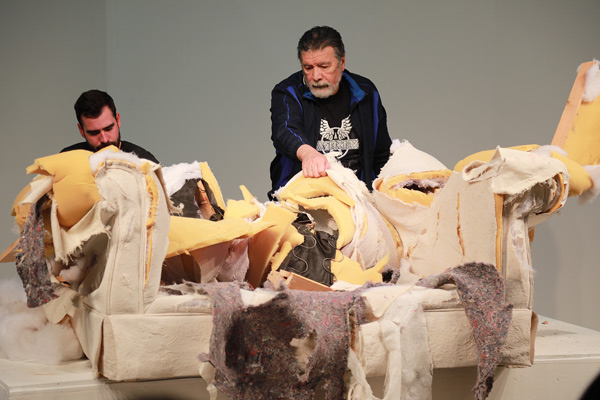
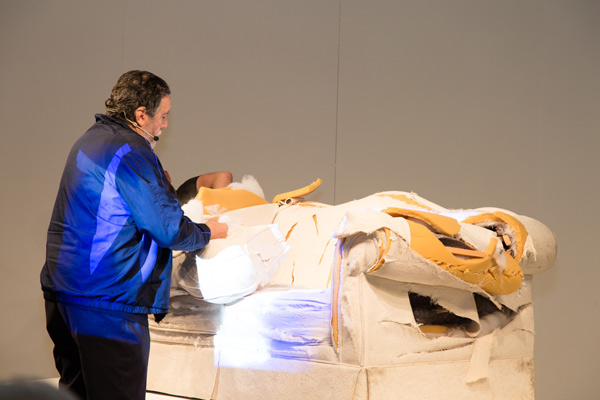
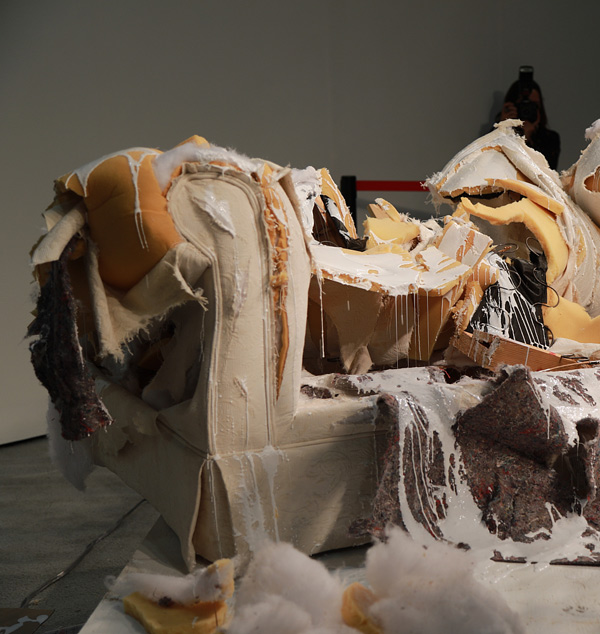
MOCA
A DIALOG
MOCA Director Philippe Vergne joins LA Art Show Producer Kim Martindale in a Dialogs LA discussion about the making of the coveted Jeff Koons’ limited edition Balloon Dog by famed French porcelain company Bernardaud. On site at the fair, the MOCA Store will offer collectors for the first time, the newlyreleased Balloon Dog (Orange) and other available color editions, as well as a curated selection of artist books.
MOCA STORE
The MOCA store will offer Jeff Koons’ limited edition Ballon Dog by famed French porcelain company Bernardaud in ORANGE, newly released for sale.
SHUTTLE BETWEEN LA ART SHOW & MOCA
LA Art Show Red Card, Vanguard and Patron Ticket holders will be granted complimentary admission to MOCA Grand Avenue and The Geffen Contemporary at MOCA on presentation of their LA Art Show tickets and passes at the museum box office. LA Art Show General Admission ticket holders will receive a 50% discount on museum admission on presentation of their ticket at the museum box office. Visitors who have purchased tickets to MOCA Grand Avenue or The Geffen Contemporary at MOCA will be granted free admission the LA Art Show on presentation of their museum entrance ticket for same-day.
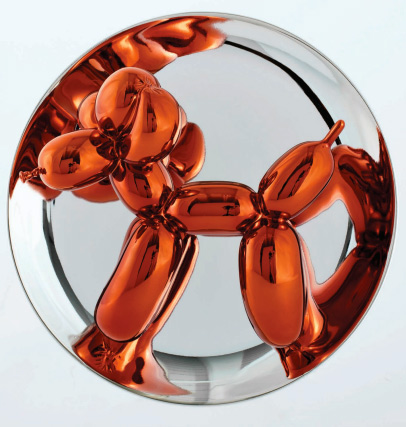
The Broad
The Broad will provide visitors to the Show, on a limited, first come first serve basis, with guided tours of its current exhibition Creature, an installation with more than 50 works presenting approaches to figuration and representations of the self in The Broad collection by over 25 artists including Georg Baselitz, Joseph Beuys, Jean-Michel Basquiat, Ellen Gallagher, Leon Golub, Jenny Holzer, Damien Hirst, Takashi Murakami, and Andy Warhol plus Thomas Houseago’s Giant Figure (Cyclops), 2011, which is making its U.S. debut. Tours for LA Art Show visitors will take place Thursday, January 12th and Friday the 13th at 2:30pm and will last approximately one hour. Please note tour groups are limited to 20 people and will be confirmed on a first-come, first-served basis – please RSVP and reference Creature at The Broad to reserve your place. Your participation will be confirmed by email. Guests may take the complimentary LA Art Show shuttle from the LA Convention Center and depart no later than 1:45pm to arrive 15 minutes prior to the start of the Tour. Guest are required to present their LA Art Show tickets as well as email confirmation (printed or on a mobile device) of their participation in the tour.
Cauce/Riverbed
By: Carlos Martiel
Curated By: Marisa Caichiolo
THE WORK
In his work “Cauce/Riverbed,” the artist exposes the significant challenges faced by immigrants in California and the larger United States. Martiel digs deep into the nature of undocumented immigration and shows how it impacts the lives of some eleven million individuals and their families in the world’s most powerful nation.
His performance is a window to the human tragedy that grossly affects immigrants with low-education levels and limited English language skills, who come to the United States risking their lives as they venture into the dangerous desert in an attempt to cross the Mexico-US border. As Martiel shows, despite the highly-publicized “American Dream,” for these poor and uneducated immigrants, making it alive into US territory does not necessarily guarantee access to better opportunities or to a higher quality of life.
The artist’s performance also establishes parallelisms between the immigration struggle faced by millions of undocumented individuals and the continued drought that has triggered severe economic and environmental damage in California. Drought may be due solely to weather conditions or due to a combination of political and economic factors as well as population size and farming.
ABOUT THE ARTIST
Carlos Martiel is a Cuban performance artist whose work provides heavy criticism on the ethics of the world, its history and its behavior through provocative and raw performances that explore the nature of existence, social barriers and cultural traditions.
At the heart of Martiel’s work are powerful performances that raise questions about the way different societies have treated ethnic minorities and outsiders throughout history.
But these works also defy established values and draw attention to other pressing issues, such as the political and culturally motivated censorship and persecution present in many countries across the globe, particularly in his native Cuba. To this end, he uses physical expressions that evoke rituals and ceremonial procedures.
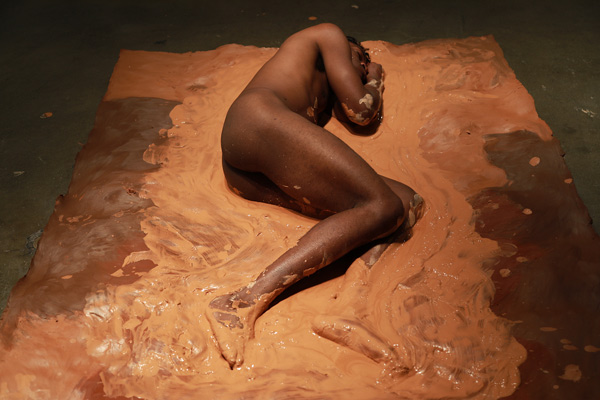
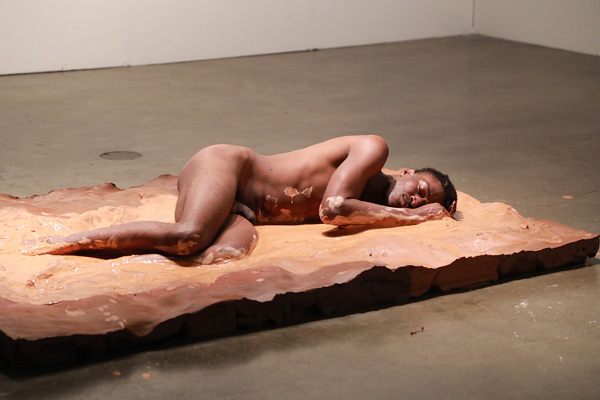
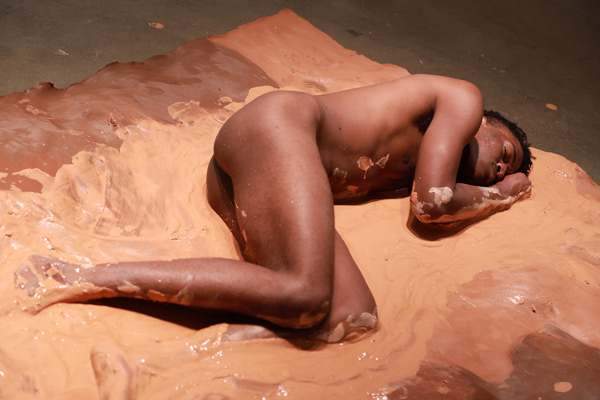
Norton Maza | Deep Impact: an installation
By: Norton Maza
Curated By: Marisa Caichiolo
THE WORK
With this installation, Maza aims to expand his original artistic proposal and reflect the latest political developments in the US as well as the world’s most urgent immigration concerns. To get his message through to the viewers, the installation will be closely guarded as if it were a treasure.
ABOUT THE ARTIST
Norton Maza was born in the city of Lautaro, located in Southern Chile, but he and his family were exiled to France. He later moved to Cuba to study Fine Arts at the National Art School of Havana (Escuelas Nacionales de Arte). Maza’s work highlights the social states of society, and it seeks a reflection from the viewer rather than a reaction. To accomplish this, the artist places the viewer in an inconvenient position that forces him or her to become part of Norton’s scenes and creates a dialog with the artist’s imagery and ideas. In recent years, thousands of dramatic images of refugees and immigrants rescued from sinking boats attempting to cross from Africa to Europe have made headlines all over the international press. According to the International Organization of Migration, nearly 300,000 people fleeing persecution have reached European shores this year aloneIn order to reflect the current political climate and raise awareness of the struggles faced by millions of immigrants and refugees throughout the globe, Maza will unveil a world map highlighting the planet’s immigration borders that are currently subject to the toughest surveillance controls and regulations.
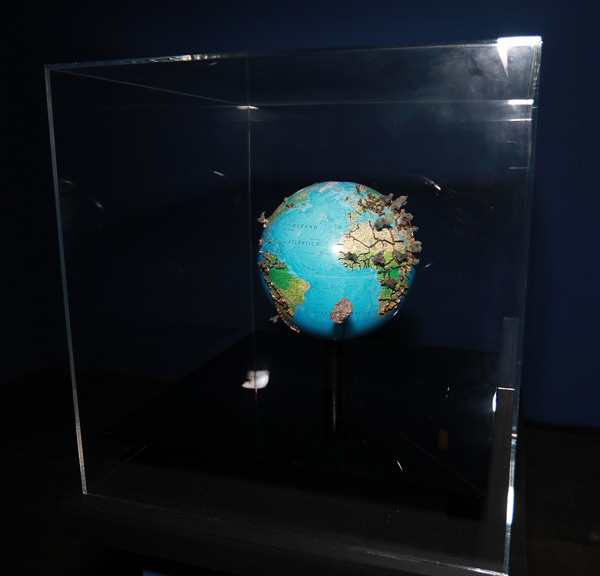
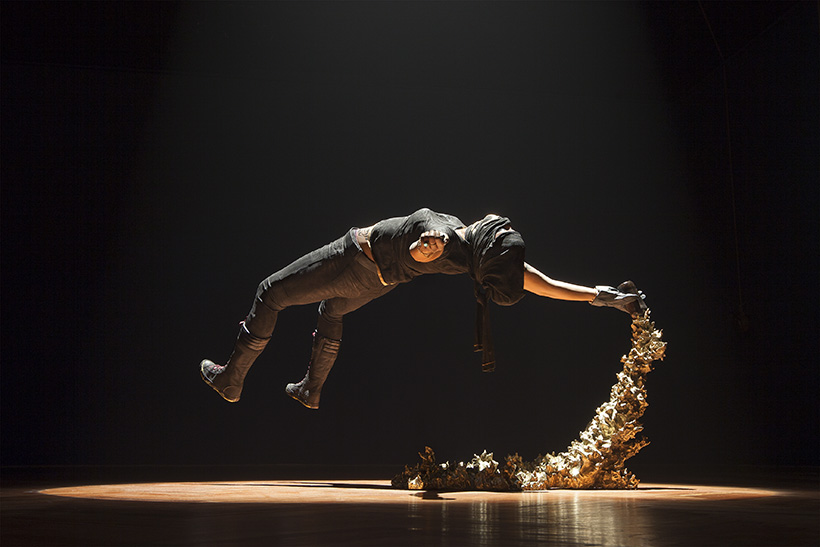
Violent Times
By: Melanie Pullen
Curated By: Marisa Caichiolo
Presented By: Esthella Provas & Associates, Beverly Hills
THE WORK
The performance Violent Times, by artist Melanie Pullen, is an abstract interpretation that explores both the ceremonial and crude facets of violence, inherent in both nature and the human condition. Pullen, to create a tempo for the extreme nature of the piece, will create a theatrical setting, using the sounds of base bodily functions, including a human heartbeat, and breathing, made in real-time. As the physical sound evolves the performers also fluctuate between the concept of inflicted humantorture to barbaric untamed aggression.
The stark contrast of a minimal setting will be offset by an abundance of human parts and blood that envelope the scene as the performers are slowly over taken by the insanity which surrounds them.
In essence, Pullen’s work questions the effects that violence and mutilation, both real and simulated, have on the viewer in contemporary culture.
ABOUT THE ARTIST
Melanie Pullen was born in 1975 in the West Village of NY. She is self-taught.
Her career began as a child when she occasionally performed with local artists in NYC, such as the tightrope walker Philip Pettit, and she would spend weekends with Shel Silverstein building cardboard houses. It was around this time Pullen also got her first camera and video camera and began exploring and learning the mediums. She often cast her local friends and family to be performers in her pieces.
Her most widely acclaimed bodies of work have been High Fashion Crime Scenes 2003-2016 and Violent Times (a Five Part War Project) 2008-2016: Both Violent Times and High Fashion Crime Scenes, were series that took more than 15 years to complete-with a crew of over four-hundred cumulatively, including hundreds of models. Pullen’s photography has been featured in numerous publications and broadcast including Esquire, New York Times Magazine, LA Times, Vogue, ELLE, Rolling Stone, Nylon, to name a few. Pullen’s work has been exhibited widely in the United States, Asia and Europe in both galleries and museums and is in many public permanent collections. Her awards include the prestigious D&AD Yellow Pencil Award.
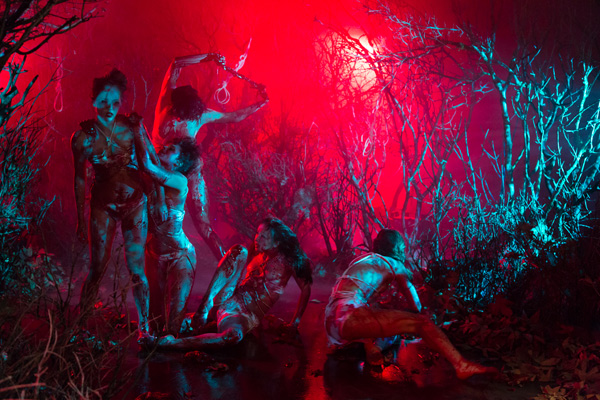
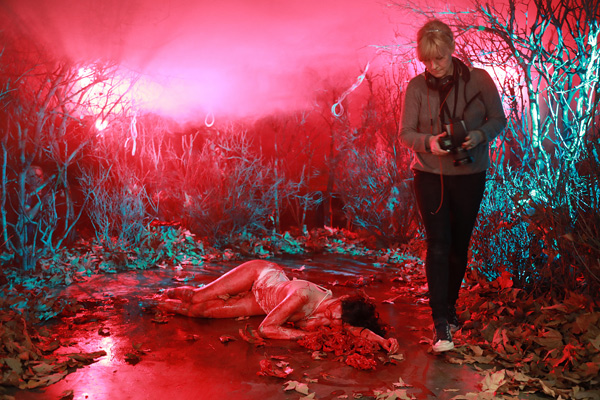
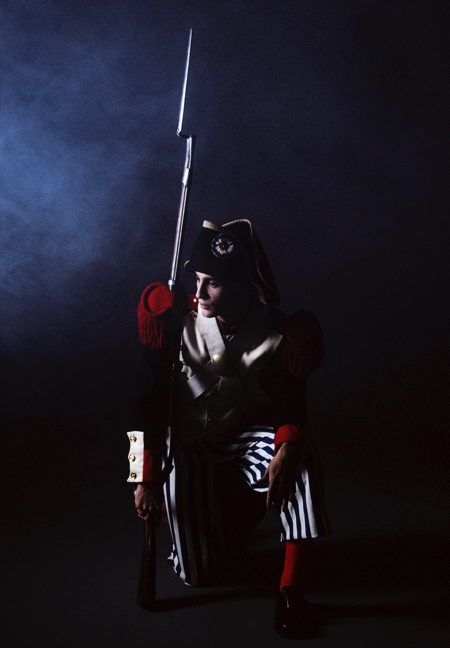
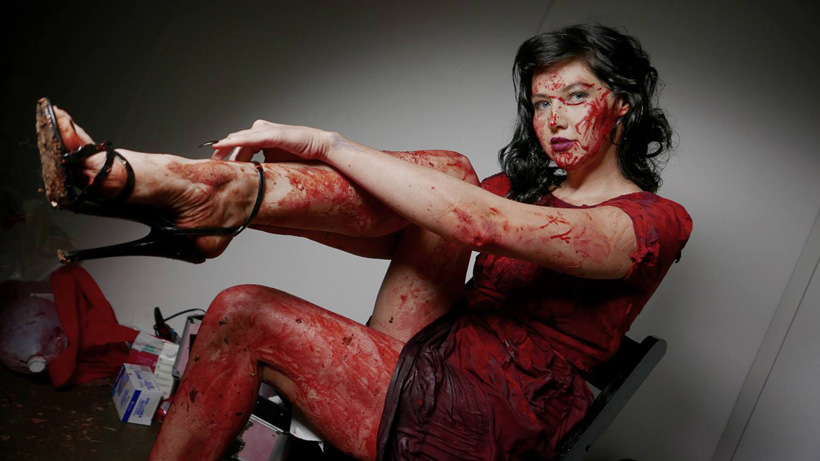
CUT-OUTS part of FRAGMENTS FROM HOME
By: Ramiro Gomez
Curated By: Chon Noriega
Presented By: the Los Angeles County Museum of Art (LACMA)
Part of Fragments From Home, a preview of Home So Different, So Appealing
Opening on June 7, 2017 as part of the Getty’s Pacific Standard Time: LA/LA
The Cut-Outs installation piece, an 8 x 73 foot acrylic on cardboard mural, deals with scenes from Gomez’s West Hollywood neighborhood. Gardeners and pool cleaners tend to the outside, then the mural proceeds inside, depicting housekeepers cleaning the living room, dining room, the bathroom and finally, the bedroom. Playing with negative space and with perspective, Gomez has life-sized cardboard figures emerge from the body of the mural, standing alone in the space, confronting the viewer. The piece functions as a still-life of affluent Los Angeles.ABOUT THE ARTIST
Artist Ramiro Gomez’s (b.1986 San Bernardino, CA) life-sized cardboard figures make visible the “invisible,” the predominantly Latino workforce serving the affluent areas of Los Angeles. His subjects are the nannies, gardeners, housekeepers: the people behind our images of luxury.
Gomez is himself the son of working-class Mexican immigrants. He grew up in San Bernardino County, east of Los Angeles. He left the California Institute of the Arts before finishing and went to work as a live-in nanny in Beverly Hills, where he keenly observed the relationships between heads of households and their staff. Gomez found the dynamic between family and staff to be paradoxical – at once intimate, trusting and close, but also prone to abrupt dissolution for various reasons. His experiences as a nanny and as a son of immigrants provide the impetus for his work.
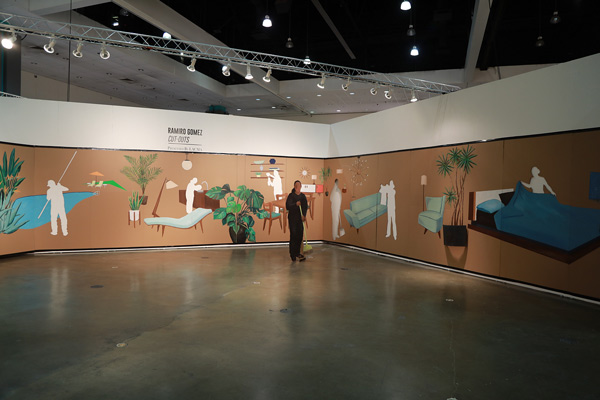
Talking Head Transmitters
By: Eugenia Vargas Pereira
Curated By: Marisa Caichiolo
Presented By:Muzeo Anaheim
THE WORK
Deconstructing Liberty: a Destiny Manifested. Explores the configuration of communities and forms of collective identity. This project will act as a dynamic laboratory for each artist to experiment, and examine different aspects as patriotism, community, citizenship, the pursuit of happiness, freedom, equal rights, and activism, using performances, installations, videos, paintings, and photography. The exhibition reflects a great diversity of the American people and society. Coming from many lands, races, ethnicities, and perspectives, Americans have as many dreams and aspirations as people live in this nation.
ABOUT THE ARTIST
In the late 1970s, Eugenia Vargas-Pereira came to the United States to study at the Montana Institute of the Arts, where she presented her first solo exhibition at the University Center Gallery in 1983. In September 1985, she arrived in Mexico, where she would live for over a decade, and quickly became part of the local art scene. Living in Mexico, Vargas-Pereira participated in several important national and international exhibitions, such as A Marginal Body, The Photographic Image in Latin-America (The Australian Center for Photography, 1987), and The Bleeding Heart, an exhibition that traveled throughout the United States and Latin-America during 1991-1993. In the late 1990s, she moved to Miami, where she participated in many local exhibitions. In 2003, Vargas-Pereira represented her native Chile at the Venice Biennale. In 2008, she moved back to Chile.
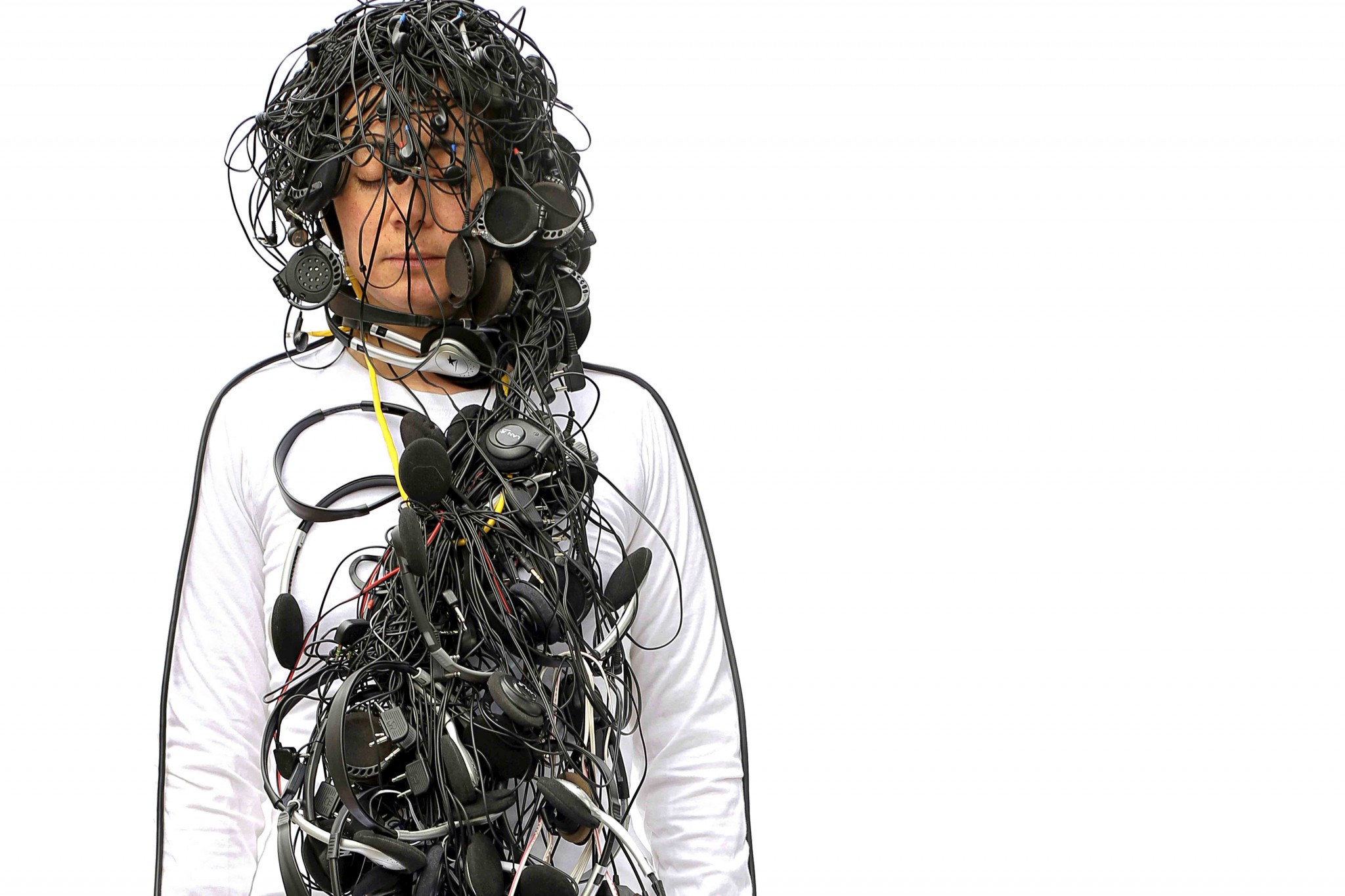
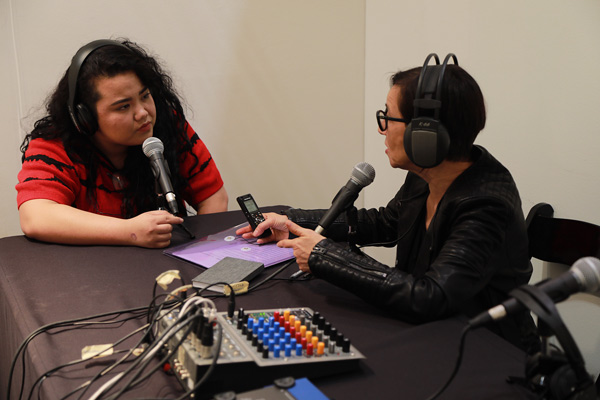
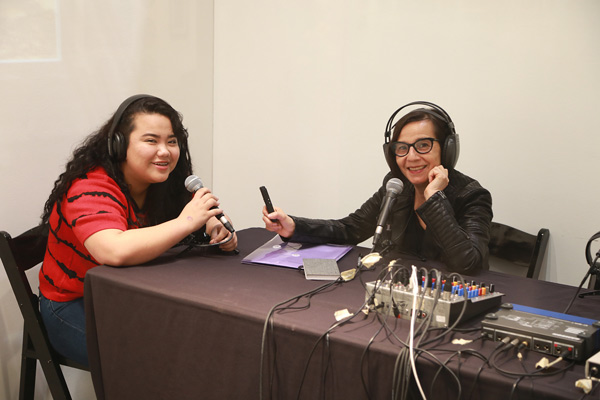
a wall
By: Louis Hock
Curated By: Chon Noriega
Presented By: UCLA Chicano Studies Research Center
THE WORK
Made from recycled paper pulp bricks, Louis Hock’s temporary installation, “a wall”, will extend 90 feet through the venue interrupting the visual experience and disorienting the circulation of visitors within the space. This installation urges visitors to consider current political discourse around borders and immigration as they experience a familiar space that is visually and physically divided.
ABOUT THE ARTIST
Louis Hock, a multi-media artist who grew up in American border towns and now lives near San Diego, California. spent much of his career tearing walls down in one way or another.
From the late 1970s and on, he has made videos documenting the daily struggles of the Mexican immigrants who were his neighbors. In 1993, he teamed up with Elizabeth Sisco and David Avalos to offer a “tax rebate”, handing out $10 bills to Mexican day laborers in California for their unrecognized contributions to the American economy. And in 1997, he cut a hole in the steel fence bordering the Mexican city Tijuana “so that people could kiss, or hold their babies from one side to another, or exchange tacos,” he said.
Louis Hock’s artwork – films, video tapes, and media installations – have been exhibited in solo shows at numerous national and international art institutions including the Museum of Modern Art in New York, the Whitney Museum of American Art, the Museum of Contemporary Art, Los Angeles, and the San Francisco Museum of Modern Art.
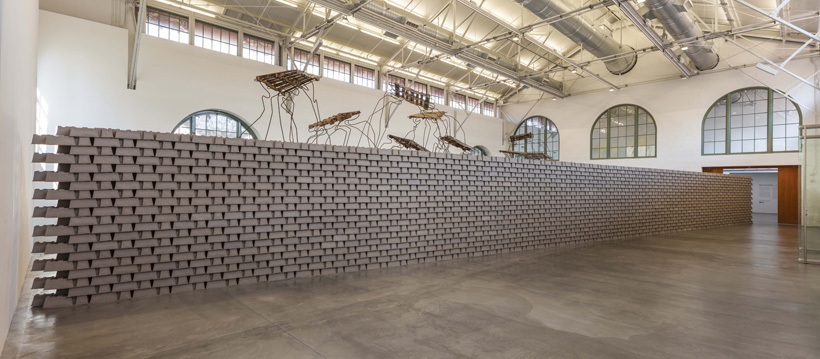
Chicano Male Unbonded
By: Harry Gamboa Jr.
Presented By: Autry Museum of the American West
THE ARTIST AND THE WORK
Photographer, essayist, and performance artist Harry Gamboa Jr. calls into question the relationship between the stereotypes of the Chicano male and the far more diverse community of artists, writers, academics, performers, and other creative thinkers who identify as Chicano in his Chicano Male Unbonded series. Photographed at night and situated within various aspects of Los Angeles’s distinctive urban geography, his subjects together comprise the Chicano avant-garde.
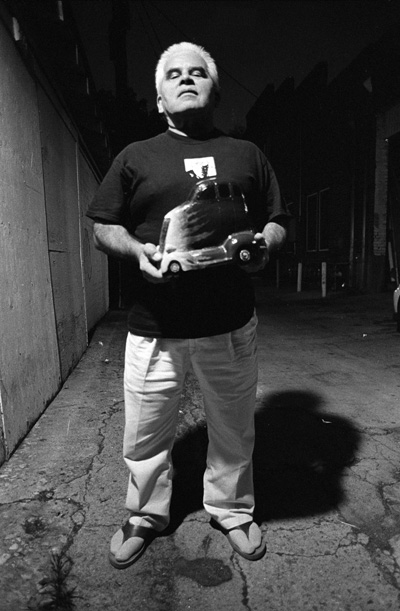
Marcella Ernest in Collaboration with Kelli Mashburn
Reduction 2016
Three Channel Video Production
Presented By: Autry Museum of the American West
THE WORK
Using a combination of moving and still imagery, color film and black and white photography, narration and music, Reduction explores the combined environmental, visual, and metaphorical significance of fire as both a living process and a cultural tool from the perspective of two Native American artists, and was designed in conversation with the nearby Human Nature exhibition.
THE ARTISTS
Marcella Ernest and Keli Mashburn have over twenty years of experience working with Native communities and landscapes. Concerned with the impact of residential and commercial development on Native lands, their work speaks to the ability of Native people to thrive in complex and contemporary settings through ceremony, tradition, and cultural connections, and by creating a dialogue between state, federal, and tribal institutions.
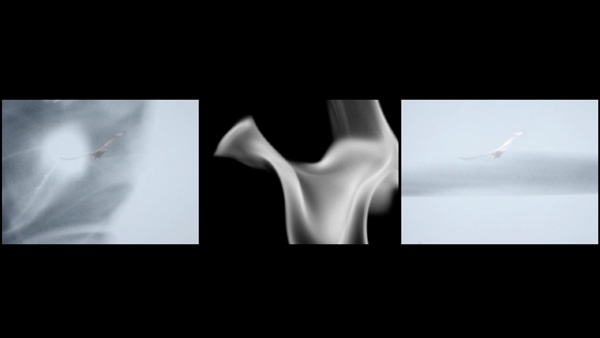
PING PONG 2017
By: Rob Grad, Carlos Grasso, Gina M, Daena Title, Sue Irion, Mette Tommerup,
Robert Chambers and, Marleine van der Werf, and Frederik Duerinck.
Presented By: Los Angeles Art Association
THE WORK
Los Angeles Art Association is proud to present Ping Pong 2017, a multi-destination, cross-cultural collaboration featuring artists from Los Angeles, Miami and Basel at the 2017 LA Art Show. PING PONG is an independent exhibition project for contemporary art founded in 2007 to cultivate artistic exchange between Basel, Miami and Los Angeles. This allows collaboration between the Artists, as well as the realization of site specific works in the actual location. The project documents, explores and stimulates the artistic endeavors of the cities. After exhibiting during Art Basel in June 2016 and Art Basel Miami Beach in December 2016, Ping Pong makes its West Coast stop at the LA Art Show.
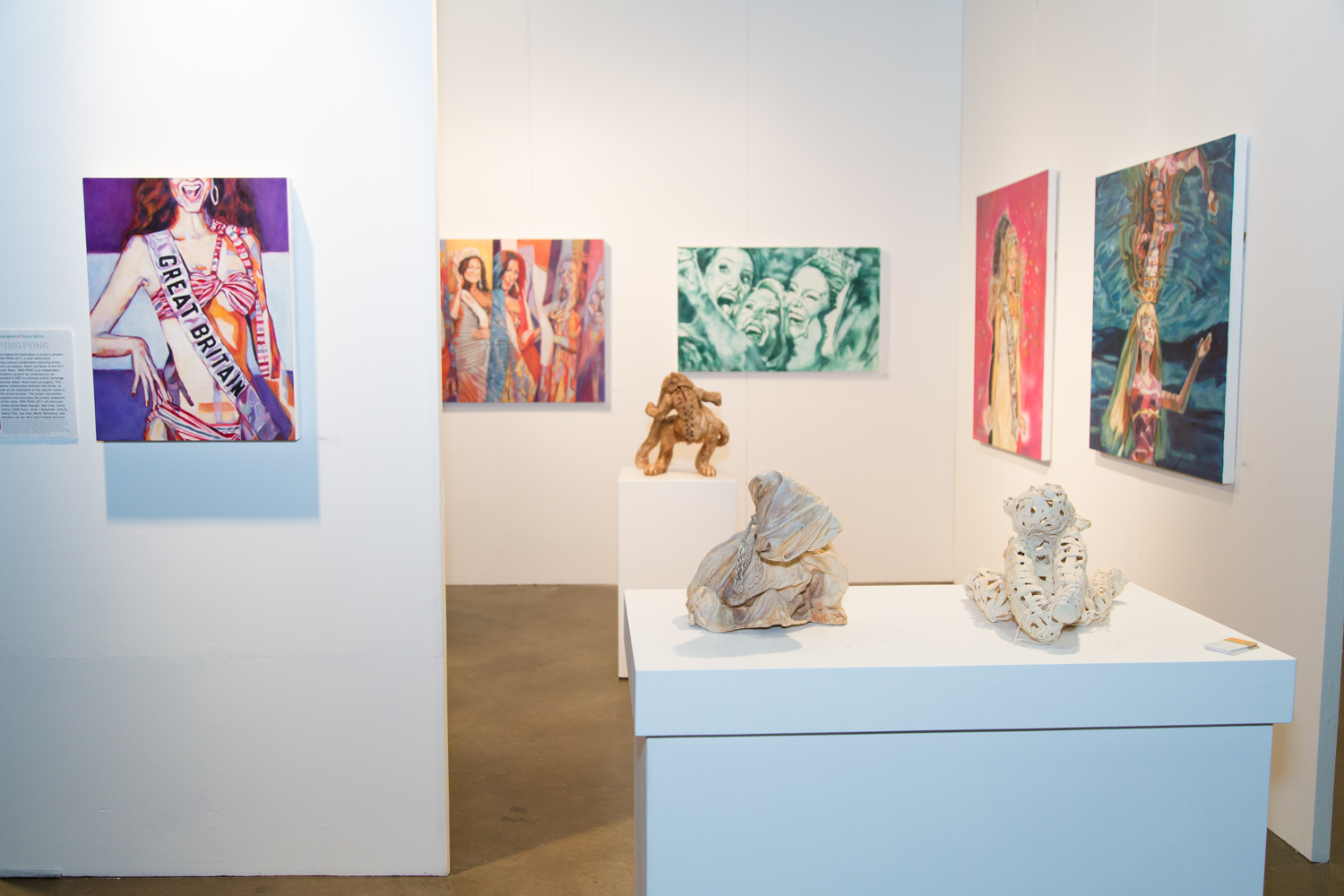
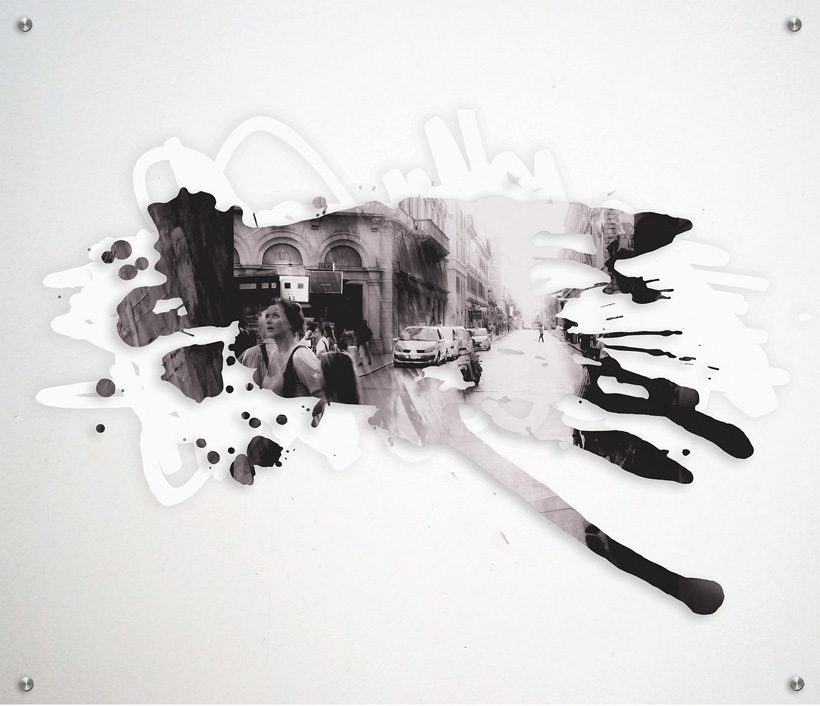
In My Floating World
By: Scherezade Garcia
Presented by: MOLAA
THE WORK
“In my Floating World, Landscape of Paradise”, a soft sculpture, Garcia collected inner tubes in different sizes and in a variety of shades of blue. She also bandaged the surface of some of the inner tubes with photographic images of the sea on which she has drawn a variety of symbols from her visual repertoire that refer to the memory of the sea. She composed a floating landscape with these inner tubes, creating a randomly organic form connected by electrical ties, sometimes tied very tightly, a suggestion of the struggles hidden within the deep blue beauty. Also each of the inner tubes carries an airport baggage tag that identifies the intended destination of the waves, which is New York, alluding to the contemporary promised land of the free.
ABOUT THE ARTIST
Garcia’s work is multi-layered, vibrantly colorful, richly textured, and, as she stresses, always interdisciplinary, usually combining sculpture, painting or drawing, and written text. In it, she carefully joins everyday objects such as life jackets, inner tubes, suitcases, mattresses, tents, umbrellas, religious icons, and newspaper clippings together with her luminous paintings and drawings into a coherent whole. By turns lyrical, shocking, disarming, subtle, playful, confrontational and intellectual challenging, and often all of these things at once, the art is as versatile and multifaceted as the woman herself. Scherezade Garcia was born in Santo Domingo. As a child she became involved in the arts by participating in projects that involved mural painting with visual artists Elias Delgado and Nidia Serra. She studied at Altos de Chavon/The School of Design, an affiliate of Parsons School of Design.
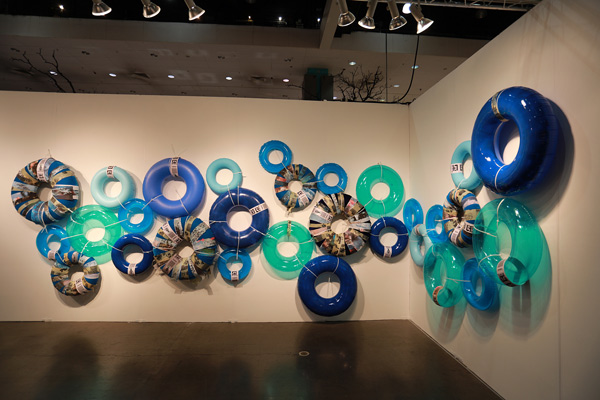
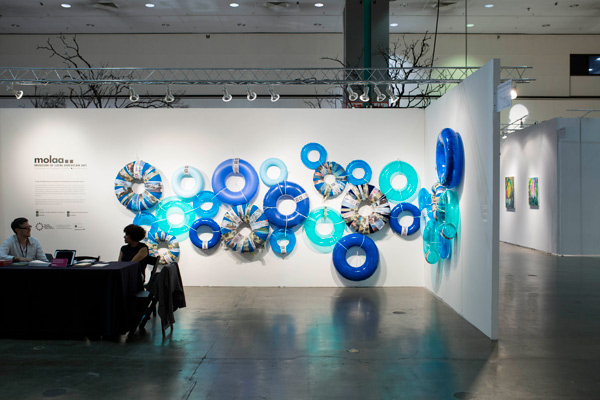
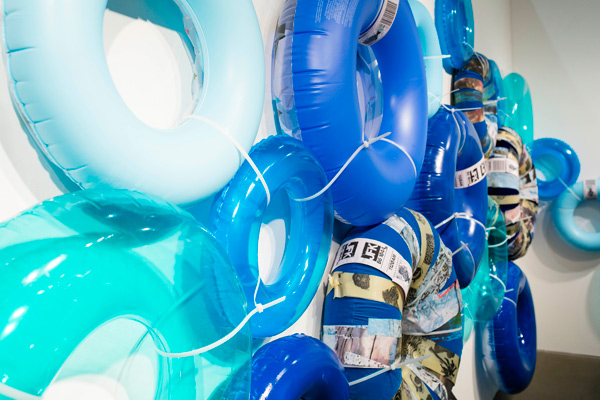
2026 Partners